
The $200 Question Nobody's Asking
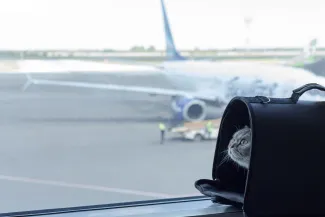
Picture this: you're settling into your economy seat for a cross-country Memorial Day weekend flight, ready to stretch out your legs after navigating TSA lines and gate chaos. Then you notice it; a large pet carrier sliding under the seat in front of your row neighbor, immediately claiming half the already-limited foot space between you. For the next five hours, you'll be sharing your legroom, air quality, and personal space with someone's Labradoodle. Meanwhile, your seatmate just paid Delta $200 for that privilege.
You? You get nothing. Not a discount. Not an apology. Not even advance notice during booking that a pet would be on your flight.
This is the economic reality of in-cabin pet travel in 2026. American Airlines charges $150 per pet, Delta commands $200, United takes $125, and Southwest ranges from $95 to $125. These fees generate significant revenue for carriers; the global pet travel services market is projected to reach $2.4 to $2.8 billion in 2025, with airlines capturing a substantial slice through cabin pet fees alone. Yet the passenger who actually absorbs the inconvenience, the lost legroom, the potential allergens, receives exactly zero compensation.
As summer travel season kicks into high gear, this tension is reaching a tipping point. The current model works beautifully for airlines pocketing pure profit and for pet owners gaining cabin access. But it leaves a growing segment of travelers wondering: shouldn't someone who loses half their under-seat storage and shares their breathing space with an animal get a cut of that $200 fee?
The question might sound radical, but it's increasingly relevant. Pet ownership surged during COVID-19, and millions of those pandemic puppies are now flying. Airlines have responded by raising fees rather than limiting capacity. And as flights fill to capacity this Memorial Day through Labor Day stretch, the math simply doesn't add up for non-pet-owning passengers stuck in an arrangement they never agreed to.
The Post-Pandemic Pet Travel Boom
COVID-19 fundamentally changed how Americans view their pets. Shelters emptied as isolated workers adopted companions; breeders couldn't keep up with demand. Now, three years past the pandemic peak, those pets aren't staying home. They're traveling, and they're flying in cabins at unprecedented rates.
Airlines noticed. Delta doubled its cabin pet fee from $125 to $200 in recent years, betting that demand was inelastic enough to absorb the increase. They were right. Bookings didn't decline; if anything, the willingness to pay higher fees signaled that pet owners view cabin travel as essential rather than discretionary. When your dog is family, $200 for a cross-country flight beats the alternative of leaving them behind or risking cargo holds.
The math for airlines is compelling. Most carriers limit cabin pets to four to seven animals per flight, depending on aircraft type and configuration. Alaska Airlines, for instance, caps capacity at three carriers in First Class and eight in Main Cabin. These animals require minimal service costs; there's no meal preparation, no beverage cart, no entertainment system. The airline simply reserves space that would otherwise remain empty under seats. At $100 to $200 per pet per segment, that's $800 to $1,400 in nearly pure profit on a single flight.
Current policies vary slightly by carrier, but the framework is consistent. Alaska Airlines charges $100 each way for cabin pets, making it one of the most affordable major carriers. American sits at $150, United at $125, and Delta leads the premium tier at $200. All require advance reservations on a first-come, first-served basis. All mandate that pets remain in carriers fitting under the seat, with combined pet and carrier weight typically capped at 20 pounds. Carriers must measure roughly 18 inches by 11 inches by 11 inches or smaller, depending on aircraft type.
These policies create perverse incentives. Airlines maximize pet capacity without any obligation to inform, compensate, or accommodate fellow passengers. A pet owner books weeks in advance, secures their spot, and knows exactly what they're getting. Their seatmate discovers the arrangement at boarding, after it's too late to change flights or rebook.
Memorial Day weekend through Labor Day represents peak collision season. Leisure travelers heading to beach destinations and summer vacation spots overlap with pet owners unwilling to board their animals for extended trips. Florida-bound flights carry snowbirds with small dogs. California routes see high pet volume year-round.
Airlines have every financial reason to maintain the status quo. They collect fees, fill otherwise-unused space, and face minimal complaint mechanisms. The U.S. Department of Transportation tracks pet incidents, injuries, and deaths; in 2024, airlines reported just 12 total incidents, including four injuries and eight deaths. But DOT data doesn't break down passenger complaints about cabin pets specifically. There's no official tracking of allergy issues, odor complaints, or legroom disputes. The system captures catastrophic failures but ignores the daily friction building between pet owners and their seatmates.
What Fellow Passengers Are Actually Giving Up
Let's talk about real estate. The standard airline seat in economy class offers precious little personal space to begin with. Your under-seat area, roughly 18 inches wide by 14 inches deep, serves as the only storage accessible during flight. That's where your backpack goes, your purse, your laptop bag, or your personal items you need within reach.
Now subtract an 18-by-11-by-11-inch pet carrier. Suddenly, you're fighting for inches. If the pet is directly in front of you, your feet have nowhere to go. If it's one seat over, you're still losing shared space and dealing with the reality that someone's animal is breathing, shifting, and potentially making noise within arm's reach for the duration of a three-to-five-hour flight.
The inconvenience isn't hypothetical. Even well-behaved pets create environmental changes. Dogs pant; the sound carries in the confined cabin. Carriers retain odors despite cleaning. Anxious animals whine or scratch at fabric walls. And then there's the allergy factor. Pet dander circulates through cabin air systems. Passengers with sensitivities can't opt out once they're seated.
Here's the asymmetry that makes this situation fundamentally unfair: pet owners know exactly what they're getting into. They book in advance, they pay their fee, they understand their responsibilities. They choose this arrangement. Their seatmates have no such agency. Unlike seat selection, where you can filter for aisle or window or extra legroom, there's no booking system that flags pet-adjacent seats. You can't avoid them. You can't plan around them. You discover them at boarding, when your options are limited to accepting the situation or causing a scene.
Consumer advocates would likely argue this constitutes a service downgrade. You purchased a seat with certain expectations about space and environment. The airline then modified those conditions without notice or compensation by allowing an animal into your immediate vicinity. In hotel terms, this would be like booking a quiet room and discovering construction noise; properties routinely offer discounts or amenities to offset such disruptions. Restaurants comp meals or desserts when service falters. Airlines? They collect an extra $200 and tell you to deal with it.
The comparison to other fee-based inconveniences is instructive. When someone reclines their seat into your lap, both passengers paid the same base fare; the recline feature is built into the product. When you're stuck in a middle seat, you knew that risk at booking and typically paid less than aisle or window passengers. But pet-adjacent seating is different. You're not paying less for diminished service. You're paying the same amount while someone else pays a premium to create your inconvenience. The airline profits twice: once from your ticket, once from their fee. You profit zero times.
The Case for Revenue Sharing
Here's the provocative idea that airlines haven't seriously considered: what if they gave seatmates $50 to $75 of that $150 to $200 pet fee?
The economic modeling is straightforward. Delta charges $200 for a cabin pet. Offer the adjacent passenger a $75 travel credit, automatically applied to their loyalty account. Delta still nets $125 in profit from a service that costs them virtually nothing to provide. The seatmate receives tangible compensation for tangible inconvenience. And suddenly, the psychological calculus shifts.
Behavioral economics tells us that small compensation often eliminates disproportionate complaints. It's not about making the situation perfect; it's about acknowledging the imposition and offering something in return. Seventy-five dollars doesn't fully offset lost legroom for five hours, but it transforms the experience from "this is unfair" to "this is a minor trade-off I'm being paid to accept."
You'd likely create a market. Some passengers would actively seek pet-adjacent seats for the credit, particularly on short flights where the inconvenience is minimal. Families traveling together might designate one member as the pet seatmate, pocketing the compensation while splitting responsibilities. Frequent flyers accumulating credits could view it as a bonus rather than a burden.
This model has precedents in other industries. Hotels routinely compensate guests facing construction noise or street-view downgrades with room credits, breakfast vouchers, or late checkout. High-end properties might offer spa credits or dining discounts. Restaurants provide complimentary items when kitchens run slow or tables aren't ready. Cruise lines offer onboard credit for cabin changes or itinerary modifications. The principle is universal: when you impose on someone's purchased experience, you acknowledge it with something of value.
Airlines would counter that pet fees barely cover administrative costs and liability insurance. This claim deserves scrutiny. What exactly does $200 buy? The pet owner handles carrier purchase, veterinary documentation, and animal preparation. The airline updates a reservation system field, verifies paperwork at the gate, and ensures the carrier fits under the seat. There's no specialized cleaning between flights; standard cabin service continues. Liability insurance exists, but cabin pet incidents are extraordinarily rare. DOT data shows 12 total pet incidents in 2024 across all U.S. carriers, with most involving cargo rather than cabin animals.
The reality is that cabin pet fees represent high-margin revenue. Airlines aren't running break-even charity services; they're monetizing empty space with minimal incremental cost. A $200 fee on a route where the pet displaces no cargo and requires no special handling is nearly pure profit. Setting aside $50 to $75 for seatmate compensation would still leave substantial margin while addressing the equity concern.
How Other Airlines and Countries Handle This
European carriers offer an interesting contrast to U.S. policies, though not necessarily a more passenger-friendly model. Most major European airlines permit small pets in cabins with a standard weight limit of 8 kilograms (roughly 17.6 pounds) including the carrier. Lufthansa, KLM, Air France, Finnair, and Austrian Airlines all follow similar frameworks: advance booking required, carriers must fit under seats, fees vary by route.
Brussels Airlines charges €80 for intra-Europe flights and €115 for transatlantic routes to the U.S. and Canada's East Coast. Air Europa allows up to five pets per passenger split between cabin and hold, though cabin capacity is limited. AeroItalia permits slightly heavier pets at 10 kilograms and charges €50-plus for short-haul routes, with up to six pets per flight.
What's notably absent from European policies? Any compensation or notification system for seatmates. The dynamic is identical to U.S. carriers: pet owners book and pay, fellow passengers discover and cope. EU regulations focus on pet welfare, requiring ISO microchips, rabies vaccinations, health certificates, and minimum age requirements of 12 to 15 weeks. They don't address the passenger experience gap.
Budget carriers provide minimal guidance for alternative approaches. Southwest keeps fees lower at $95 to $125, but still offers no seatmate transparency or compensation. Some carriers prohibit cabin pets entirely on certain routes; Icelandair, for instance, doesn't allow pets in cabins on international flights. This eliminates the seatmate issue but also removes options for pet owners who refuse to use cargo holds.
The cargo alternative has become less viable since 2020. Delta maintains an embargo on most checked pets following high-profile incidents and animal welfare concerns. American Airlines limits cargo pet services primarily to military moves. United still offers PetSafe for cargo transport, but at higher costs and with temperature restrictions that eliminate summer travel on many routes. The industry has effectively pushed pet owners toward cabin travel without building infrastructure to make that sustainable at scale.
Private carriers like JSX offer a glimpse of what premium pet service could look like. Higher fees; guaranteed space; passengers booking with full knowledge that pets are permitted and even encouraged. The model works because expectations align. Everyone on the flight knows it's pet-friendly. No one is surprised. The trade-off is explicit rather than hidden.
What could legacy carriers learn from this? Plenty. Transparency solves half the problem before compensation enters the equation. If passengers could see during booking that pets are confirmed on their flight and in which rows, they could make informed decisions. Choose a different flight. Select a seat farther from animals. Mentally prepare for the experience. The element of surprise creates much of the resentment; eliminate that, and you've reduced tension significantly.
Practical Solutions Airlines Could Implement Tomorrow
Airlines don't need years of study or technological breakthroughs to address this issue. Several solutions could roll out immediately with existing infrastructure.
Option 1: Transparent seat maps showing pet locations during booking. This is entirely technically feasible. Airlines already display seat characteristics like extra legroom, preferred status, and proximity to lavatories. Adding a pet icon to seats with confirmed animal reservations requires minimal system updates. Passengers could filter for pet-free rows or intentionally choose pet-adjacent seats. The knowledge alone defuses much of the complaint; you can't claim surprise when the information was available at purchase.
Option 2: Tiered compensation with automatic travel credits. When a pet is confirmed in a row, the airline's system automatically applies a $25 credit to adjacent passengers' loyalty accounts within 24 hours of the flight. It's not a massive windfall, but it's an acknowledgment. For passengers who fly frequently, these credits accumulate. For occasional travelers, it's a pleasant surprise that shifts perception from "I got screwed" to "they noticed and did something."
Option 3: Dedicated pet sections with opt-in pricing. Designate the last three rows of economy as the pet zone. Pet owners must book there; others can volunteer for discounted seats in that section. Maybe those seats cost $25 less than comparable rows, creating a market for budget-conscious travelers willing to accept pets nearby. This concentrates animals in one area, minimizes impact on passengers seeking pet-free environments, and offers choice on both sides.
Option 4: Raise pet fees but guarantee seatmate compensation and enhanced cleaning. Increase cabin pet fees to $300, split $100 to each adjacent seatmate as onboard credit or future travel vouchers, keep $100 as airline revenue. The higher fee might reduce demand slightly, easing capacity pressure. The compensation addresses equity. Enhanced cleaning between flights ensures carriers and surrounding areas receive extra attention, reducing odor concerns.
Option 5: Limit pets to specific flights during peak season, unlimited on off-peak. From Memorial Day through Labor Day, when flights run at highest capacity and passenger tensions peak, restrict cabin pets to certain flight times. Early morning and late evening departures might permit pets; midday peak flights might not. During shoulder and low seasons, remove restrictions. This balances access with passenger experience during the most friction-prone periods.
Which solutions preserve airline revenue while addressing passenger equity? Options 2 and 4 maintain or increase airline profit while providing compensation. Option 3 creates new revenue through dynamic pricing. Option 1 costs almost nothing and solves the transparency gap. Option 5 might reduce total pet revenue but could improve overall customer satisfaction scores and reduce complaint handling costs.
An airline operations perspective would likely favor Option 1 as the lowest-cost, highest-impact solution. Transparency requires minimal investment and empowers passengers to self-select, reducing gate conflicts and in-flight complaints. Pairing it with Option 2's modest compensation creates a comprehensive approach: informed passengers who also feel acknowledged if they do end up next to a pet.
What This Means for Your Memorial Day Flight and Beyond
Let's get practical. You're booking summer travel right now, with beach vacations filling calendars and Memorial Day weekend approaching fast. What do you need to know about the likelihood of sharing your flight with pets?
Certain routes see dramatically higher pet traffic from May through September. Seattle to Alaska corridor flights, particularly to Juneau and Ketchikan, carry cruise passengers bringing dogs for land excursions. Florida routes from major Northeast and Midwest hubs experience high pet volume year-round but peak in summer when families travel together. California coastal routes to San Diego, Los Angeles, and San Francisco regularly accommodate pets. Essentially, any leisure destination with outdoor activities and pet-friendly accommodations will see elevated cabin pet bookings.
Your options for checking if pets are likely on your specific flight are limited but not nonexistent. Some passengers call airlines directly after booking and ask gate agents about confirmed pet reservations. Success rates vary; agents may not have easy access to this data or may decline to share it citing privacy. During boarding, watch for passengers carrying soft-sided carriers; you'll know before takeoff whether animals are in your vicinity.
If you're surprised by a seatmate's pet and find it genuinely problematic, allergies being the most legitimate concern, your recourse is to politely request a seat change from flight attendants. Success depends entirely on load factor. On a half-full flight, they'll likely accommodate you. On a Memorial Day weekend departure at 95% capacity, you're probably out of luck. You can file a complaint with the DOT after the fact, but without specific tracking mechanisms for cabin pet complaints, the impact is unclear.
For pet owners reading this, a bit of etiquette goes a long way toward minimizing friction. Ensure your carrier is clean and odor-free before the flight. Tire out your pet beforehand so they sleep during travel. Bring waste bags just in case, even though pets should remain in carriers. Keep the carrier fully zipped and under the seat; don't let your dog's nose poke out, no matter how cute you find it. Acknowledge seatmates with a quick "I've got a small dog with me, let me know if you need anything" before departure. Most conflicts arise from pet owners acting oblivious to the imposition rather than from the animals themselves.
The service animal distinction matters here and deserves mention. Legitimate service animals, those trained to perform specific tasks for passengers with disabilities, fly free with proper documentation under Air Carrier Access Act requirements. They're not pets; they're medical equipment. Understanding this difference protects both service animal users from harassment and ensures accountability for those attempting to game the system with fake credentials. If you're seated near a working service dog, the animal is trained for in-cabin behavior at a level far exceeding pet standards.
What should you expect this summer? As flights fill to capacity and airlines continue maximizing pet fee revenue, this tension will only increase without policy changes. The current model can't scale indefinitely. At some point, the volume of frustrated passengers will create enough pressure, through complaints or competitive differentiation, to force airlines to reconsider their approach. Whether that happens this year or takes several more seasons remains to be seen.
Why Airlines Can't Ignore This Much Longer
Step back and look at the structural problem. The current cabin pet model optimizes for exactly two stakeholders: airlines maximizing ancillary revenue, and pet owners gaining access to in-cabin travel. It systematically ignores a third party, the non-pet-owning passenger, who bears concrete costs in space, comfort, and air quality without any offsetting benefit.
This might work fine if cabin pet travel remained a niche service, a few animals per week on select routes. But that's not the trajectory. Pet ownership surged during COVID-19 and shows no signs of declining. Those pets are now traveling regularly. Airlines have responded by raising fees rather than limiting capacity, signaling they view this as a growth revenue stream. The global pet travel services market reaching $2.4 to $2.8 billion in 2025 indicates strong demand across all transport modes, with airlines capturing substantial portions through cabin fees.
As pet travel normalizes and fees climb toward $200 to $250, expect more vocal pushback. The DOT doesn't currently track cabin pet passenger complaints in granular detail, but anecdotal pressure is building. Social awareness of the equity gap is growing. At some point, an airline will recognize competitive advantage in addressing this before they're forced to by regulation or consumer revolt.
Summer 2026 serves as a test case. Memorial Day through Labor Day will demonstrate whether current capacity limits and fee structures hold when leisure travel peaks overlap with high pet demand. If gate conflicts increase, if flight attendants spend more time mediating seatmate disputes, if customer satisfaction scores decline in correlation with pet travel growth, airlines will have data forcing their hand.
The real question isn't whether to allow cabin pets. That decision is settled; Americans view their pets as family members and demand travel access. The question is whether airlines can design equitable policies that scale with demand. Can you build a system where pet owners get access, airlines earn revenue, and fellow passengers aren't treated as collateral damage?
Simple transparency showing pets during booking and modest compensation in the range of $25 to $50 credits could defuse 90% of the tension. It's not about eliminating the inconvenience; flying economy is inherently uncomfortable. It's about acknowledging the imposition and treating all passengers as valued customers rather than dividing them into revenue sources and unfortunate bystanders.
What would make you comfortable sitting next to a pet for three hours? What feels like fair compensation? These aren't rhetorical questions airlines are asking, but they should be. In an industry that charges for seat selection, checked bags, carry-on bags on some carriers, early boarding, extra legroom, in-flight WiFi, meals, drinks, and blankets, it's strange that the one fee creating measurable discomfort for non-paying passengers gets no revenue sharing consideration whatsoever.
The status quo works until it doesn't. Cabin pet policies are approaching that inflection point, where growth and profitability collide with passenger experience in ways airlines can't indefinitely ignore. Whether they address it proactively with transparency and compensation, or wait for competitive pressure and regulatory scrutiny to force change, will say a lot about how they view the passengers who aren't generating ancillary revenue but are still buying tickets and expecting baseline fairness.
This Memorial Day weekend, as you board your flight and spot that carrier sliding under the seat two rows up, remember: someone paid $200 for that privilege. You're just subsidizing it with your legroom. Maybe that's fine with you. Maybe it's not. Either way, airlines have built a business model counting on you accepting it without question. The question is whether you'll keep doing so.
About the Author

Jennifer Wilmington
Jennifer Wilmington is Family Travel Editor at Jetsetter Guide, covering family and luxury travel from her base in Charleston, South Carolina.