
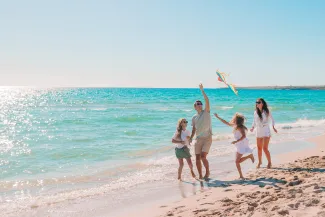
Summer travel isn't one-size-fits-all. Some destinations bloom in shoulder seasons, but there are places where every element aligns from June through August: weather patterns stabilize, infrastructure awakens, wildlife emerges, and the entire regional rhythm shifts into high gear. These aren't destinations that merely tolerate summer crowds; they fundamentally depend on those long, sunlit days to deliver their best experiences. For 2026, three American destinations stand out for offering dramatically different summer personalities, each hitting peak form when temperatures rise and daylight stretches past 9 p.m.
What makes summer 2026 particularly compelling is the convergence of infrastructure improvements and seasonal operations coming online after years of planning. Light rail extensions, reopened mountain passes, and renovated seasonal properties mean travelers gain access to experiences that simply weren't available or convenient in previous years. From the Pacific Northwest's waterfront-to-wilderness transitions to the Northern Rockies' adventure corridors and the Great Lakes' car-free island retreats, these destinations represent distinctly American summer travel at its most refined. The following three spots showcase what happens when geography, infrastructure, and seasonal timing align perfectly for travelers who want more than beach chairs and umbrella drinks.
1. Bellevue, Washington: Peak PNW, All Summer Long
Bellevue sits in that rare geographic sweet spot between Lake Washington and the Cascade Mountains, creating a city within a park that transforms completely when summer arrives. While Seattle grabs headlines, Bellevue operates at a different pace just minutes away, connected now by the East Link Light Rail that makes car-free exploration genuinely practical. The downtown station at Bellevue Downtown and East Main Station link to Seattle in 15 minutes, with pedestrian skybridges delivering visitors directly into a walkable core surrounded by 2,800 acres of green space. Summer here means consistent 70-degree days, minimal rain compared to the city's wet-season reputation, and sunlight that lingers until nearly 10 p.m. at the solstice.
The complimentary electric shuttle circulating through downtown, combined with e-bike rentals stationed near major trailheads, eliminates the typical Pacific Northwest reliance on personal vehicles. This infrastructure shift matters because Bellevue's best summer experiences spread across multiple zones: waterfront launch points at Meydenbauer Bay Park (299 99th Ave NE) and Enatai Beach Park (3519 108th Ave SE) for kayaking, the 53-acre Bellevue Botanical Garden offering free dawn-to-dusk access with peak bloom displays, and trail networks connecting toward Woodinville Wine Country. The Bellevue Club Hotel at 11200 SE 6th St sits 0.4 miles from the Eastside Rail Corridor, positioning luxury travelers within walking distance of both light rail and the botanical garden.
What distinguishes Bellevue from typical urban summer destinations is the integration of wilderness-level experiences without leaving city limits. The 320-acre Mercer Slough wetlands, accessible via paddle routes from downtown launch points, host river otters and great blue herons in a landscape that feels entirely removed from the high-rises visible on the horizon. Juanita Beach Park's 1,000 feet of Lake Washington shoreline includes a seasonal swimming area that locals pack on 80-degree days, while Marymoor Park on Lake Sammamish pulls 3 million annual visitors to its 640 acres of lakefront trails and open space. For travelers accustomed to choosing between urban amenities and nature access, Bellevue's summer setup delivers both without compromise.
Pro tip: Book accommodations near the 110th Avenue corridor for the shortest walk to both light rail stations and downtown waterfront access points. The Seattle Marriott Bellevue at 200 110th Avenue NE sits 0.5 miles from the rail corridor and within a 10-minute walk of multiple kayak launch sites.
Water Access: Kayaking and Paddleboarding from Downtown Shores
The standout feature of Bellevue's summer infrastructure is the ability to launch kayaks and paddleboards from parks integrated directly into the urban core. Best Kayak Rentals operates from both Meydenbauer Bay Park and Enatai Beach Park with 2026 pricing set at $29 for the first hour on a single kayak, $15 for each additional hour, with double kayaks at $39 plus $15 per additional hour, stand-up paddleboards at $29 plus $15, and canoes at $49 plus $15.
Guided experiences add structure for travelers unfamiliar with Lake Washington's conditions. The Urban Wetlands Tour runs $89 for 2.5 hours of paddling through the Mercer Slough, where naturalist guides point out native wildlife including beavers, river otters, and nesting herons amid cattail marshes and floating wetlands. The Learn to Kayak session costs $99 for three hours of instruction, covering strokes, safety protocols, and navigation techniques before heading onto open water. These aren't beginner-only offerings; the wetlands tour attracts experienced paddlers who want ecological context rather than just exercise.
Paddle routes from the downtown launch points follow the shoreline south toward the Mercer Slough entrance, a roughly 20-minute paddle at moderate pace. The slough itself offers miles of interconnected channels where motorized boats can't follow, creating a quiet-water environment ideal for photography and wildlife observation. Summer mornings before 9 a.m. provide the calmest conditions and best wildlife activity, though sunset paddles between 7 and 9 p.m. deliver dramatic light across the Cascade foothills. Juanita Beach Park on the north end adds another launch option with direct access to deeper water, favored by more confident paddlers heading toward Saint Edward State Park's forested shoreline.
Pro tip: Reserve the Urban Wetlands Tour for midweek mornings when fewer recreational paddlers crowd the slough channels. Weekend tours navigate around significantly more traffic, particularly near the I-90 floating bridge crossings.
Beyond the Water: Trails, Zip Lines, and Wine Country
Bellevue's summer menu extends well beyond paddling. Bellevue Adventures’ Zip Tour in Eastgate Park sends participants across seven ziplines reaching up to 80 feet above the forest floor, offering canopy-level views of old-growth Douglas fir and western red cedar. This isn't a quick tourist trap; the full course takes roughly three hours including safety briefings and the walk between platforms. Spring and summer bookings fill fast as families and adventure travelers discover this option literally minutes from downtown hotels.
Cycling infrastructure connects downtown to Woodinville Wine Country via the Sammamish River Trail and Burke-Gilman Trail, a mostly flat 20-mile route passing through Kirkland and Redmond. E-bike rentals make this feasible even for casual cyclists, with the gradient never exceeding moderate grades. Woodinville's tasting room corridor hosts more than 100 wineries, many with outdoor seating designed specifically for warm-weather visitors arriving by bike. The return route follows the same trail system, though smart travelers arrange tastings strategically to finish earlier rather than navigating trails after multiple pours.
Marymoor Park functions as the region's recreational anchor, pulling 3 million visitors annually to its 640 acres on Lake Sammamish's north shore. Summer brings concerts to the outdoor amphitheater, off-leash dog areas that extend across 40 acres, rock climbing walls, and velodrome racing. The park connects to regional trail networks extending east toward the Snoqualmie Valley and north toward Redmond's urban trails, positioning it as either a destination itself or a launching point for longer rides.
Families with kids gravitate toward Larsen Lake Blueberry Farm's U-Pick season running mid-June through October, where $3 per pound makes this cheaper than grocery store berries while delivering an agricultural experience rare in metro areas. Kelsey Creek Farm offers free access to historic barns and farm animals including goats, sheep, and chickens, operating dawn to dusk daily. The Bellevue Golf Course provides an 18-hole course with PGA-certified lessons for travelers who measure vacation quality by fairway time rather than trail miles.
Dining Scene: James Beard Recognition and Seattle Restaurant Week
Bellevue's culinary reputation rests on a mix of James Beard-recognized establishments and the diversity that comes from significant Asian-American populations shaping the food landscape. Seattle Restaurant Week participation in 2026 runs April 19 through May 2, with Bellevue restaurants including Baron's Sino Kitchen & Bar, Bis on Main, El Gaucho, Japonessa, La Mar Bellevue, Seastar Restaurant & Raw Bar, STK Steakhouse, and The Lakehouse offering prix-fixe menus. While this technically precedes peak summer, it signals the caliber of dining infrastructure available when the season fully arrives.
New 2026 openings add fresh options. Sabine Café at The Eight, located downtown at 10666 NE 8th St, brings Mediterranean all-day dining with an emphasis on Levantine flavors and ingredients sourced from regional farms. Sushi Tei opens fall 2026 at Bellevue Square as the chain's first U.S. location, featuring conveyor belt sushi that blends accessibility with quality rarely seen in automated formats. An unnamed Sichuan hot pot chain is opening near La Mar Bellevue in 2026, specializing in A5 wagyu and multiple broth options that cater to both novice and veteran hot pot diners.
The range spans upscale steakhouses like El Gaucho and STK to Pacific Northwest seasonal cuisine emphasizing Dungeness crab, wild salmon, and foraged ingredients at spots like Seastar Restaurant & Raw Bar. Asian fusion appears across price points, from quick ramen counters to refined omakase experiences. La Mar Bellevue delivers Peruvian ceviche and coastal cuisine with a strong summer patio scene. This isn't a dining scene requiring extensive research to avoid tourist traps; the baseline quality remains high even at casual spots.
Day Trip Base: Cascades, National Parks, and Mountain Towns
Bellevue's position delivers one-hour access to North Cascades, Mount Rainier, and Olympic National Parks, making it a credible base for multi-park summer itineraries. Snoqualmie Pass sits 30 minutes east via I-90, offering Snoqualmie Falls (268 feet of year-round flow that peaks with snowmelt in June), Summit Pancake House for post-hike fuel, and trail networks ranging from family-friendly to technical scrambles. The falls viewing platform requires no hiking, while the lower trail descends to the base for photographers willing to navigate 0.6 miles of switchbacks.
Snow Lake Trail, located 30 miles east of Bellevue, provides a 5.6-mile moderate hike climbing 1,800 feet to a turquoise alpine lake surrounded by granite peaks. July and August bring wildflower displays across the subalpine meadows approaching the lake, though the trail sees heavy weekend traffic. A Northwest Forest Pass costs $5 per day or $30 annually and must be displayed at the trailhead. Early starts (before 7 a.m.) secure parking and solitude; arrive after 9 a.m. on summer Saturdays and expect to park a mile down the access road.
Cascade Pass Trail requires a two-hour drive but delivers 7.4 miles of strenuous hiking with glacier views across Johannesburg Mountain and the Triplets. The $30 per vehicle park fee covers day use at North Cascades National Park. Accessible June through September depending on snowpack, the trail showcases the full alpine experience: switchbacks through old-growth forest giving way to meadows, then rocky terrain approaching the 5,400-foot pass itself. This isn't a casual day hike; proper footwear, layers, and lightning awareness matter here.
Leavenworth sits 1.5 hours northeast, a Bavarian-themed village hosting summer festivals including Maifest in June. River tubing down the Wenatchee River runs roughly $25 for a half-day rental, with multiple outfitters shuttling tubers to launch points upstream. The Enchantments hiking area, accessed via trailheads near Leavenworth, requires advance permits for overnight trips but allows day hiking without reservations. Reflection Lakes and the Paradise area at Mount Rainier become accessible June through September once Stevens Canyon Road opens post-snowmelt, offering meadow hikes and the iconic mountain vista that defines Pacific Northwest landscapes.
Pro tip: Check Washington State Department of Transportation pass reports even in summer. Surprise road closures for rock removal or wildfire smoke can derail day trip plans. Cascade Pass in particular sees occasional short-notice closures into July.
2. Jackson Hole, Wyoming: A Western Summer Escape
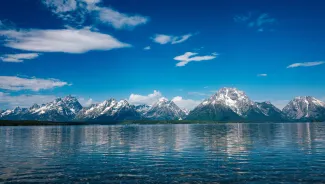
The spirit of Jackson Hole intensifies when summer arrives and the valley sheds its ski-town identity for something closer to its ranching roots. The Jackson Hole Rodeo runs summer nights, pulling crowds to watch actual working cowboys compete in events that haven't been sanitized for tourism. Town Square, centered around the iconic antler arches, transforms into a pedestrian-friendly zone where mom-and-pop shops stay open late and restaurant patios serve until sunset pushes past 9 p.m. This isn't manufactured Western theming; it's a functional mountain town that happens to offer world-class adventure access alongside its authenticity.
The valley spreads beneath the Teton Range in a way that makes the peaks feel immediately accessible rather than distant scenery. Hot air balloon rides lift off at dawn, floating over the valley floor with the range filling the entire western horizon. Grand Teton National Park's trail networks spread across terrain ranging from valley-floor lakeside paths to alpine scrambles requiring technical skills. The Snake River cuts through the valley, creating whitewater and scenic float options that range from family-friendly to genuinely challenging. Jenny Lake sits below the Cathedral Group peaks, offering kayaking in water so clear you can see trout from the surface.
Accommodation strategy matters here because travelers are balancing access to Grand Teton with access to Jackson itself. The Lodge at Jackson Hole at 80 Scott Lane works well for families and groups who want more space and on-site amenities. Wyoming Inn at 930 W Broadway Ave sits just outside downtown rather than functioning as a true downtown property. Neither is really walking distance to Town Square, the rodeo, or the Elk Refuge in the way some visitors might assume, but both still put travelers close to Jackson's core attractions with a short drive. Rusty Parrot Lodge & Spa, tucked in a quiet Town Square corner, offers 40 Western-inspired rooms and a full-service spa for travelers seeking elevated comfort after long trail days.
Pro tip: Book accommodations as early as possible for July and August; Jackson Hole's summer lodging fills faster than many assume, particularly properties packaging real value into the stay.
Grand Teton Adventures: Hiking, Rafting, and Wildlife
Grand Teton National Park summer conditions in 2026 bring daytime highs in the 70s at lower elevations, nighttime lows in the upper 30s to lower 40s, and frequent afternoon thundershowers with lightning risk above treeline. Main roads open May 1, but facilities stagger openings through June as snowmelt clears higher-elevation areas. Construction in the southern park zones including Moose-Wilson Road, Death Canyon, and Mormon Row starting in July will shift crowds toward Colter Bay, making early arrivals before 7 a.m. essential for parking at popular trailheads like Jenny Lake.
Hiking options span the full spectrum. Cascade Canyon Trail from Jenny Lake climbs gradually through classic Teton scenery, delivering 9.6 miles round-trip to Lake Solitude with roughly 2,300 feet of elevation gain. Paintbrush Canyon and the Paintbrush Divide connect to Cascade Canyon for experienced hikers tackling the 19-mile loop that crosses alpine passes above 10,000 feet. Delta Lake Trail provides a shorter, steeper option at 7.4 miles round-trip with 2,200 feet of gain, ending at a turquoise lake beneath the Grand Teton's north face. Wildlife viewing happens opportunistically; moose frequent the Moose-Wilson Road corridor, bears appear across the park (carry bear spray always), and pronghorn graze the sagebrush flats near Kelly.
Snake River rafting launches from Moose Landing, Deadmans Bar, Pacific Creek (open April 1 through December 15), and Jackson Lake Dam once spring snowmelt subsides. Whitewater sections through the canyon deliver Class II-III rapids suitable for families with older children, while scenic floats emphasize wildlife viewing and landscape photography. Operators like Triangle X Ranch, which opens May 22, 2026, offer half-day trips typically running $75 to $150 per adult depending on route and whether meals are included. Aquatic Invasive Species inspection stations at Moran and Moose, open May 16 through September 30, require mandatory stops for all watercraft including non-motorized kayaks and rafts.
Jenny Lake kayaking and canoeing peak in summer but require strategic timing. The Jenny Lake Boat Shuttle operates May 15 (ice-dependent) through September 30, charging $20 per adult and $12 per child for round-trip service that cuts hiking distances significantly. Jenny Lake General Store, open May 2 through October 4, rents kayaks and canoes for roughly $20 to $40 per hour based on historical pricing. Wind builds on the lake by midday, making early morning and evening the best windows for paddling. String Lake and Leigh Lake, connected to Jenny Lake via short portages, offer quieter alternatives with equally dramatic Teton views.
Where to Stay: From Family Lodges to Boutique Luxury
The Lodge at Jackson Hole operates year-round at 80 Scott Lane, offering spacious rooms that work well for families and groups who need actual breathing room after full days in the park. The property is about a 20 minute drive away from the base of Jackson Hole Mountain Resort. The on-site bar serves solid food, and the pool plus hot tubs provide post-adventure recovery. April 2026 base rates started around $149 nightly before taxes, but summer 2026 pricing likely climbs with seasonal demand. Complimentary shuttle service to Jackson Town Square runs regularly, eliminating parking hassles for guests wanting downtown access without driving.
Wyoming Inn at 930 W Broadway Ave sits just outside downtown Jackson rather than in the center of it. It is close to Town Square, the rodeo grounds, and the Elk Refuge by Jackson standards, but not close enough that most travelers should think of those as easy walking-distance attractions. This boutique property delivers clean, modern rooms and an excellent on-site restaurant called The Whistling Grizzly. There is one indoor hot tub, and the property has a loft-style sitting area. April rates start at $180, making it a useful option for travelers who want a polished stay that still keeps them a short drive from the heart of town.
Rusty Parrot Lodge & Spa occupies a quiet Town Square corner, offering 40 Western-inspired rooms, full-service spa treatments, and Wild Sage Restaurant & Bar for après-adventure dining. This family-owned boutique property emphasizes personalized service and elevated comfort without the large-resort feel. For summer 2026, the standout booking angle is the America 250th: Stay, Savor, Support Package, which includes a $250 credit with qualifying stays that guests can use on-property or direct toward supporting the parks. Couples gravitate here for the spa access and intimate scale, while solo travelers appreciate the restaurant's quality without needing to venture out after long trail days.
Pro tip: Wyoming Inn and The Lodge at Jackson Hole are the hotels offering the national park pass promotion, making those two worth checking directly before defaulting to third-party booking platforms.
3. Mackinac Island, Michigan: Bloom, Bike, & Bee
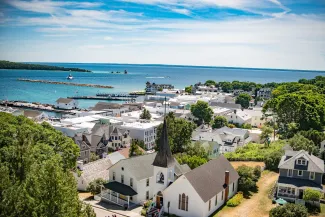
Mackinac Island earned recognition as the No. 1 Summer Travel Destination in the U.S. for 2026 from U.S. News and World Report, validating what regular visitors have known for decades. This entirely car-free, seasonal destination operates April through October, creating a compressed intensity where summer represents the full experience rather than just one option among many. Ferry horns echo across the Straits of Mackinac when the season opens, bicycles line the docks by mid-morning, and the familiar rhythm of hoofbeats returns to streets where horses and carriages provide the only motorized-alternative transportation.
The island's identity as the fudge capital of the world manifests in the sweet-scented air drifting from shops along Main Street, where traditional copper kettle methods produce fudge visitors watch being made through storefront windows. This isn't kitschy tourism; it's genuine craft confectionery that happens to smell incredible. Lake breezes off the Straits keep temperatures comfortable even on the hottest summer days, while the car-free mandate creates a quiet baseline broken only by bicycle bells, horse hooves, and conversation.
The Inn at Stonecliffe represents the island's most refined accommodation option, originally built in 1904 as a summer estate and recently reimagined following a major renovation completed in 2024. This Edwardian-style mansion operates April through October, embodying the classic American warm-weather escape where seasonal opening and closing dates matter as much as the experience itself. Days unfold with classic lawn games on the expansive green, hands-on beekeeping experiences in the orchard, and sweeping views over the Straits from elevated perches. Evenings end with fireside s'mores beneath genuinely dark skies; the lack of cars eliminates the light pollution that ruins stargazing in most tourist destinations.
Island Traditions: Lilacs, Fudge, and Horse-Drawn Carriages
The Mackinac Island Lilac Festival runs June 5 through 14, 2026, celebrating its 76th year with the theme "Stop and Smell the Lilacs." This is the largest and most historic festival on the island, marking peak bloom for thousands of historic lilac bushes planted across two centuries. The festival attracts visitors from across the country for ten days of guided lilac walking tours, planting seminars, a 10K run/walk, live music, Michigan Cornhole tournament, vintage bicycle rallies, art exhibits, and the signature Grand Parade on Sunday, June 14 at 4 p.m.
Peak lilac bloom occurs late May through early June, shortly after Memorial Day weekend, meaning festival timing captures the landscape at maximum color and fragrance. Comfortable daytime temperatures and long evenings make early June ideal for exploration before peak summer crowds arrive in July. The parade route runs entirely on foot through downtown Mackinac Island, with horse-drawn carriages, marching bands, and the Lilac Queen and Court processing past viewers who line the walking paths. Arriving by 3 p.m. allows you to watch parade assembly and secure optimal viewing positions.
Leisurely shoreline bike rides define the island experience beyond festival dates. The 8.2-mile perimeter road circling the island offers flat, paved riding with lake views and frequent stops at historical markers, beaches, and scenic overlooks. Bike rentals cluster near the ferry docks, with pricing typically running $10 to $15 per hour or $40 to $60 for full-day rentals depending on bike style. Horse-drawn carriage tours provide narrated island history for visitors who prefer someone else handling navigation; these run roughly $35 to $45 per adult for the standard island tour.
Fudge shops operate as serious businesses rather than mere tourist attractions. Traditional copper kettle methods require skill and timing, with batches mixed on marble cooling tables visitors watch through windows. Murdick's, Ryba's, and May's Fudge each claim historical primacy and distinct recipes; sampling across multiple shops becomes its own itinerary item for travelers who care about craft food production.
The Inn at Stonecliffe: Mackinac's Most Refined Retreat
The Inn at Stonecliffe perches on the island's west bluff, 1.4 miles from British Landing Beach and accessible by carriage, bike, or walking paths. The mansion itself anchors a larger property including Summer House suites and three-bedroom cottages suitable for families and groups needing full kitchens and multiple bedrooms. The major renovation was completed in 2024, bringing refreshed amenities while preserving the historic character that defines the property's appeal.
On-site dining includes Horsey's Pub for cocktails and beer, The Backyard for fish boils, barbecue, and wood-fired pizza with Straits views, plus in-room dinner service for guests who prefer private dining. Nightly s'mores around firepits have become a signature ritual, gathering guests for casual conversation beneath star canopy skies unmarred by light pollution. The beekeeping program in the orchard allows hands-on interaction with hives producing honey used in property restaurants; this isn't passive observation but actual participation in apiary management under supervision.
Pro tip: Book midweek Tuesday through Thursday arrivals for lower rates and crowds compared to weekend peaks, especially during July and August when the island reaches maximum seasonal capacity. Summer House suites with full kitchens and sofa beds provide best value for families of four or more.
Three Summers, Three Distinct American Experiences
These destinations represent fundamentally different expressions of American summer travel, each hitting peak form when warm weather arrives and seasonal infrastructure activates. Bellevue delivers the accessible urban-nature hybrid where Pacific Northwest refinement meets genuine wilderness access, all connected by light rail that eliminates the car dependency typically required for this combination. The East Link extension opening in 2025 marks a genuine infrastructure shift rather than incremental improvement, making car-free Pacific Northwest travel viable for the first time.
Jackson Hole maintains adventure-driven Western authenticity anchored by world-class national park access, where working ranches and rodeos coexist with luxury lodges and polished boutique stays. Smart hotel selection matters here less for pure walkability and more for how efficiently each property connects travelers to both Jackson and Grand Teton. For 2026, that means thinking beyond generic rate talk and paying attention to packages and park-oriented offers that actually add value to the stay.
Mackinac Island provides the nostalgic, car-free seasonal escape where timeless Great Lakes traditions meet one of the region's most polished retreats. The Inn at Stonecliffe's renovation is already complete, and that makes the appeal more immediate: travelers are no longer anticipating a reopening, they are booking into a fully reintroduced property that has already reestablished itself as one of the island's standout stays.
Summer 2026 timing advantages stack across all three destinations. Bellevue's light rail system will have completed its first full operational year, working out initial scheduling kinks. Grand Teton's visitor management strategies respond to recent crowd pressures with improved systems and shifting traveler patterns. Mackinac Island continues to benefit from renewed attention around Stonecliffe and the enduring draw of the Lilac Festival. These aren't destinations that merely tolerate summer visitors; they exist to deliver peak experiences when the season aligns with geography, infrastructure, and regional culture at their absolute best.
About the Author

Jeff Colhoun
Jeff Colhoun is a photographer and filmmaker whose work has appeared in The Wall Street Journal, the Los Angeles Times, Matador Network and Barron’s.