Stay current with our travel advisories coverage.
What Level 2 Means for Travelers
A Level 2 advisory does not mean avoid travel. It means increase caution. The State Department uses a four-tier system: Level 1 is normal precautions, Level 2 is increased caution, Level 3 is reconsider travel, and Level 4 is do not travel. Grenada sits at the midpoint of concern, below outright warnings but above baseline tourism conditions. The advisory outlines practical realities on the ground. Police response times lag significantly behind what Americans expect at home, according to the State Department. That delay stems from funding shortages, equipment gaps, training limitations, and understaffing, all factors that shape what happens after a crime occurs. If you're robbed at knifepoint outside your hotel or face a break-in at your rental villa, the response may not mirror what you'd see in a U.S. city with robust municipal policing. The State Department also advises travelers not to leave valuables unattended, avoid walking alone at night, and exercise caution when answering doors at hotels or residences. "Do not answer your door at your hotel or residence unless you know who it is," the advisory states, language that suggests opportunistic crime and the potential for forced entry or impersonation schemes.Grenada's Tourism Profile and Regional Context
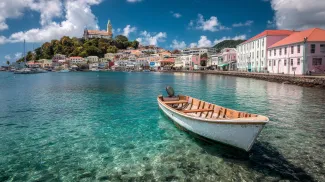
Grenada sits roughly 125 miles north of Venezuela in the eastern Caribbean Sea. The tri-island nation, comprising Grenada, Carriacou, and Petite Martinique, has built a reputation as a quieter Caribbean alternative to bustling resort hubs. Its capital, St. George's, hosts the U.S. Embassy and serves as the main gateway for cruise passengers and international arrivals. Just last year, Grenada appeared among the 10 safest Caribbean destinations according to travel experts at Always All-Inclusive, a ranking that now sits awkwardly against the elevated advisory. That disconnect underscores how quickly on-the-ground conditions can shift or how crime patterns affecting locals and tourists can diverge from broader destination marketing narratives. The Caribbean drew 16.8 million American visitors in 2024, making it one of the most traveled regions for U.S. tourists. Grenada's share of that traffic has grown steadily, fueled by expanded air access, cruise itineraries, and marketing campaigns positioning the islands as an authentic, less-commercialized Caribbean experience. The new advisory does not halt that momentum, but it does inject a layer of risk assessment into pre-trip planning that many travelers may not have previously associated with Grenada.Practical Considerations for Photographers and Expedition Travelers
For photographers working in Grenada, particularly those shooting in urban areas, rural villages, or during low-light hours, the advisory's emphasis on opportunistic crime warrants operational adjustments. High-value camera gear attracts attention in any developing-world setting, and Grenada's relatively small population means that conspicuous equipment can mark you quickly as a target. Standard protocols apply: minimize visible gear when moving between locations, avoid solo shoots in isolated areas after dark, and maintain situational awareness in crowded markets or transport hubs. The advisory does not single out any specific region of Grenada as particularly dangerous, meaning the risk is diffuse rather than concentrated in predictable hotspots. Expedition cruise passengers visiting Grenada as part of broader Caribbean itineraries should note that shore excursions typically remain within monitored areas where local authorities and tour operators maintain a visible presence. The advisory's warnings apply more directly to independent travelers, long-term stays, and those venturing beyond standard tourist circuits.What This Means for Winter and Spring Bookings
The timing of the advisory, issued in early January, coincides with peak booking season for Caribbean winter and spring travel. Travelers with existing reservations to Grenada now face a decision point: proceed with adjusted caution, modify plans to stay within organized tours and resort zones, or pivot to alternative destinations. Travel insurance policies vary in how they treat advisories. A Level 2 designation typically does not trigger automatic cancellation coverage, meaning travelers may not recoup costs simply because the State Department raised the warning level. Those with cancel-for-any-reason policies have more flexibility, but standard trip protection often requires a Level 3 or Level 4 advisory to qualify for claim payouts related to safety concerns. The advisory does not recommend that Americans avoid Grenada. It advises increased caution, a distinction that leaves room for informed travel but removes the assumption of baseline safety that many associate with Caribbean tourism. For travelers accustomed to treating the region as low-risk, the shift is worth internalizing. Grenada remains open, accessible, and actively courting visitors, but the conditions on the ground now carry an official State Department asterisk.More travel news
U.S. Keeps Saudi Arabia at Level 3, Adds Government Employee Curbs
U.S. government employees cannot travel within 20 miles of the Yemen border or make nonessential trips to Qatif; Americans are advised not to visit Level 4 border areas.

U.S. Level 3 Advisory Covers Dubai and Abu Dhabi
The nationwide Level 3 advisory is not a travel ban; Americans can still visit Dubai and Abu Dhabi but should assess the risks and prepare for possible flight changes.

US Visa Bonds for 50 Nations Alarm Tourism Industry
WASHINGTON, United States - A permanent U.S. visa bond program covering 50 countries has alarmed tourism leaders after visa issuance fell 83% during its pilot.

US Warns Bahamas Travelers of Crime and Water Risks
NASSAU, Bahamas - State Department updates advisory summary for The Bahamas, detailing crime hot spots, jet ski assault risks, and severe penalties for firearms possession.
About the Author
Jeff Colhoun
Jeff Colhoun is a photographer and filmmaker whose work has appeared in The Wall Street Journal, the Los Angeles Times, Matador Network and Barron’s.