Stay current with our travel advisories coverage.
WASHINGTON — An autumn update from the U.S. State Department has reshuffled Mexico’s safety map, pushing six states into the highest Level 4 “do not travel” category and flagging eight others for Level 3 “reconsider travel” status. The bulletin, issued earlier this month, is officially categorized as a Level 2 alert for the nation as a whole, yet the granular breakdown highlights pockets of extreme risk that travelers cannot afford to overlook. The advisory, which centers on persistent concerns about violent crime, kidnappings and limited consular reach, places Mexico squarely back on the radar for Americans plotting Riviera beach getaways, cultural city breaks or business trips south of the border. Within the first page, the document warns that U.S. personnel “may have little ability to help” in certain regions—underscoring why tourists should build self-reliance into their itineraries.
Why the Mexico travel advisory matters now
Travel warnings are hardly new for America’s southern neighbor, but timing is everything. Peak holiday travel to coastal resorts and colonial heartlands surges from late November through Easter. Airlines have been restoring capacity, and tourism boards from Cancún to Cabo San Lucas are trumpeting new hotels and nonstop flights. Yet the State Department’s updated matrix adds fresh nuance: danger zones sit shoulder-to-shoulder with tourist favorites, sometimes inside the same state. In a statement, the agency cautioned that “the U.S. government has limited ability to help in many parts of Mexico,” noting that its own employees are prohibited from entering certain areas.
Level 4 ‘do not travel’ states
A Level 4 warning is reserved for regions where life-threatening risks prevail and U.S. assistance is improbable. Six Mexican states now fall under that banner: Colima, Guerrero, Michoacán, Sinaloa, Tamaulipas and Zacatecas. Each location brings its own red flags—whether cartel clashes near Pacific ports, highway robberies in mountain corridors, or urban violence in border cities. For perspective, Guerrero contains the prized resort nucleus of Acapulco. Although the advisory does not single out individual municipalities, the statewide designation means American federal employees cannot go there without a waiver—and leisure travelers are urged to follow suit.
Level 3 ‘reconsider travel’ states
Eight additional states merit a Level 3 rank, nudging travelers to weigh the necessity of their trip: Baja California, Chiapas, Chihuahua, Coahuila, Guanajuato, Jalisco, Morelos and Sonora. Notably, several of these regions host marquee tourism hubs:
- Baja California surrounds Tijuana and Ensenada.
- Chiapas is home to the Mayan ruins of Palenque.
- Jalisco includes the capital Guadalajara and the beach town of Puerto Vallarta.
Risk in these states tends to spike after dark or along interior highways. The advisory emphasizes daytime driving on toll roads, avoidance of isolated rural zones and immediate relocation to a safe hotel if trouble erupts nearby.
What stays at Level 2—and why that’s still significant
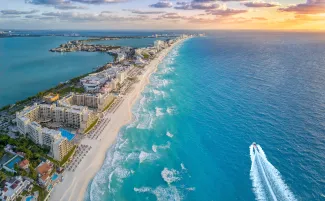
Mexico’s overall Level 2 label instructs Americans to “exercise increased caution,” the same tier applied to the United Kingdom and Spain. On paper, that level invites travel with heightened situational awareness. Yet the State Department’s patchwork approach means a single holiday could thread multiple classifications. A traveler flying into Cancún (Quintana Roo, Level 2) might add a side trip to Valladolid (Yucatán, Level 2) but then look longingly toward Mexico City (also Level 2) or San Miguel de Allende (Guanajuato, Level 3). The takeaway: even if your bucket-list destination holds a relatively mild tag, airport layovers, road trips or regional tours might drag you through riskier territory.
Essential safety habits for navigating Mexico
Veteran Latin America travelers know that common-sense protocols reduce exposure to theft or worse. The State Department’s document codifies many of those habits, instructing both government personnel and private citizens to:
- Travel in groups when possible.
- Avoid nighttime driving, particularly on secondary roads.
- Use pre-arranged or app-based rides rather than hailing taxis curbside.
- Stop at military or police checkpoints and comply with all instructions.
- Monitor local media and official social feeds for developing security incidents.
Tips for travelers
1. Register your trip: Enrollment in the Smart Traveler Enrollment Program (STEP) allows the nearest U.S. embassy to push security alerts directly to your phone and email. 2. Carry local cash: Card payment networks can crash after violent incidents, but cash remains king for essentials. 3. Split valuables: Keep backup credit cards and photocopies of passports in a separate bag or hotel safe. 4. Know emergency numbers: Mexico’s nationwide 911 system connects to police and medical services. 5. Consider travel insurance: Policies that cover medical evacuation and trip interruption can offset worst-case scenarios.
Frequently asked questions
Does the advisory mean Mexico is off-limits to tourists? No. Millions of Americans safely visit Mexico each year. The advisory pinpoints specific states where violence or kidnappings are acute and asks travelers elsewhere to remain alert. Is Cancún safe? Cancún sits in Quintana Roo, which retains Level 2 status. However, travelers should stay in well-lit tourist zones at night and rely on licensed transportation. Are cruise ports affected? Most Mexican cruise stops, such as Cozumel and Cabo San Lucas, lie in Level 2 or Level 1 states. Cruise lines constantly monitor advisories and may adjust calls if security deteriorates. What if I have family in a Level 4 state? Consider meeting in a lower-risk region. If travel is unavoidable, inform relatives, register with STEP and adhere strictly to daylight transit on major highways.
The bottom line for U.S. tourists
Mexico’s allure—from cenote-studded jungles to Pacific surf breaks—remains powerful, and the majority of visits conclude without incident. Yet the State Department’s latest map is a blunt reminder that safety is a postcode lottery. A dream vacation can pivot within a few kilometers, and advance planning is no longer optional. As airlines expand seat capacity and resorts unveil winter-sun packages, savvy travelers will dig beneath headline risk levels, cross-reference itineraries against the advisory’s state-by-state matrix, and calibrate their movements—whether that means adding an extra domestic flight to bypass a conflict zone or scheduling inter-city drives exclusively between dawn and dusk. Research, vigilance and flexibility are the new passports to Mexico’s deeper rewards. Take the guidance seriously, adapt on the ground, and you can still savor street-corner tacos in Mérida, whale-watch in Los Cabos or wander Oaxaca’s craft markets—with confidence born of preparation. — as the State Department said in a written advisory.
More travel news
U.S. Keeps Saudi Arabia at Level 3, Adds Government Employee Curbs
U.S. government employees cannot travel within 20 miles of the Yemen border or make nonessential trips to Qatif; Americans are advised not to visit Level 4 border areas.

U.S. Level 3 Advisory Covers Dubai and Abu Dhabi
The nationwide Level 3 advisory is not a travel ban; Americans can still visit Dubai and Abu Dhabi but should assess the risks and prepare for possible flight changes.

US Visa Bonds for 50 Nations Alarm Tourism Industry
WASHINGTON, United States - A permanent U.S. visa bond program covering 50 countries has alarmed tourism leaders after visa issuance fell 83% during its pilot.

US Warns Bahamas Travelers of Crime and Water Risks
NASSAU, Bahamas - State Department updates advisory summary for The Bahamas, detailing crime hot spots, jet ski assault risks, and severe penalties for firearms possession.

About the Author

Mariana Torres
Mariana Torres is South America Editor at Jetsetter Guide, covering backpacking and off-the-beaten-path travel in the Andes and the Amazon.