
Stay current with our travel advisories coverage.
New U.S. Border Rules Trigger Canadian Backlash
At the root of the problem is a new U.S. border rule described as "harsh" by Canadians who have felt its impact firsthand. The policy has prompted a wave of declarations from Canadian travelers that "they will never go back," fueling what's now being characterized as a Canadian boycott of U.S. travel. The result is a major drop in southbound crossings, creating an unusual scenario where reduced traffic hasn't translated into faster processing times. For context, the U.S.-Canada border has historically been one of the most efficient and high-volume crossings in the world, handling millions of tourists, business travelers, and commercial vehicles annually. Canadians have long represented the largest group of international visitors to the U.S., making the current downturn particularly notable for border communities and tourism sectors on both sides.Why Wait Times Persist Despite Fewer Crossings
The contradiction is confounding on its face. If crossings are down by more than 30%, why are travelers still waiting longer? The likely culprits are a combination of stricter enforcement protocols, more intensive scrutiny per traveler, and reduced staffing flexibility. New biometric screening measures, enhanced device inspections, and additional security layers all add processing time per vehicle or individual, even when total volume is lower. Infrastructure constraints also play a role. Several major crossings are undergoing redevelopment or lane closures, compounding delays. At the same time, CBP has been managing political pressure to tighten enforcement, which often translates to longer secondary inspections and more granular questioning, particularly for business travelers or those with frequent cross-border activity. The Canadian government's December 31, 2025, travel advisory underscored the seriousness of the situation, warning citizens of potential delays, heightened risks of detention or denial, and complications tied to device searches and lengthy questioning. That advisory didn't just inform travelers; it actively discouraged many from making the trip, amplifying the boycott effect and redirecting Canadian tourism dollars toward domestic destinations or international markets outside the U.S.Impact on Border Communities and Travel Patterns
The drop in southbound traffic is already being felt in U.S. border towns that rely on Canadian visitors for retail, hospitality, and seasonal tourism. A 30% decline in car traffic translates directly into fewer hotel nights, restaurant reservations, and gas station stops. For regions like northern New York, Michigan, Washington, and Montana, where Canadian shoppers and tourists form a substantial portion of the customer base, the downturn is economically significant. On the Canadian side, the boycott reflects more than inconvenience. It signals a shift in perception about cross-border mobility and the ease of access that once defined the relationship. Travelers who previously made quick day trips or weekend excursions are now opting out entirely, unwilling to navigate what they view as unpredictable and invasive processing.What Travelers Should Know
For those still planning to cross, preparation is more important than ever. Expect longer secondary inspections, particularly if traveling with business equipment, laptops, or if you've had prior complications at the border. NEXUS and other trusted traveler programs remain the most reliable way to expedite processing, though even those lanes are seeing intermittent slowdowns. Document everything. Carry clear proof of travel purpose, return plans, accommodation details, and any business invitations or conference confirmations. Be ready for questions about social media, device access, and the nature of your visit. Refusals to unlock devices or provide requested information can result in denial of entry or prolonged detention. Timing matters. Mid-week crossings during off-peak hours typically experience shorter waits than weekend or holiday traffic. Real-time wait time tools provided by CBP can help, though they don't account for secondary screening durations.The Larger Geopolitical Picture
This isn't just a border operations issue. It's a reflection of broader geopolitical tension and shifting policy priorities. The U.S. has signaled that border security, even with low-risk neighbors like Canada, is a higher priority than convenience or tourism facilitation. That calculus has consequences, both in bilateral relations and in how millions of travelers make decisions about where to spend their time and money. For now, the U.S.-Canada border remains open, functional, and manageable for those willing to navigate the new reality. But the combination of stricter rules, longer waits, and a Canadian public increasingly unwilling to tolerate the hassle has fundamentally altered one of the world's most seamless travel corridors. The question isn't whether things will return to the way they were; it's whether both governments recognize the cost of letting them stay this way.More travel news
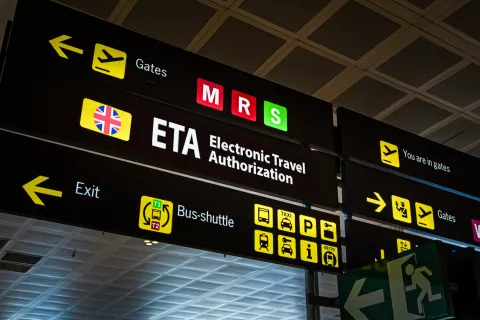
United Kingdom ETA checks require British-Canadian entry proof
Since Feb. 25, 2026, British-Canadian dual citizens flying to the UK need a valid British passport or a right-of-abode certificate in their Canadian passport.
U.S. Customs and Border Protection to End Routine Passport Stamps
CBP announced routine passport stamping will end during primary inspection, with limited exceptions; foreign visitors can access admission and authorized-stay details through I-94 or CBP Link.

United Flight Attendants Can Refuse ICE Questions
Washington, United States - United flight attendants were told they may remain silent when ICE asks about passengers or coworkers as airport arrests increase nationwide.

Airlines Put Elite Status on a Higher Price Tag
NEW YORK, United States - Delta, United and other major airlines are raising elite status hurdles, leaving frequent flyers on discounted fares with less credit.

About the Author

Jeff Colhoun
Jeff Colhoun is a photographer and filmmaker whose work has appeared in The Wall Street Journal, the Los Angeles Times, Matador Network and Barron’s.