
Stay current with our travel industry news coverage.
The U.S. Embassy in Saudi Arabia has urged Americans to reconsider traveling to the country because of risks from drone and missile attacks on American interests, according to News.Az, citing Al Jazeera. The report follows deadly attacks on Riyadh’s King Khalid International Airport, where passenger facilities have been struck and flights disrupted.
News.Az published its account on Oct. 13, 2026, attributing the threat cited by the embassy to Iran and the Iranian-supported Houthis. Its account does not establish when the embassy issued the warning or whether it represents a formal change to the State Department’s country advisory level. It should be read as a reported embassy warning, not evidence of a newly assigned advisory category.
For travelers, the immediate concern is concrete: attacks have reached airport terminals. Reporting also establishes that the strikes began before Oct. 10, when an especially deadly attack forced the Riyadh airport to close.
Riyadh Airport Attacks Reached Passenger Terminals
Saudi aviation authorities reported that attacks on the airport and a Saudia aircraft killed three Saudi citizens on the Thursday before the Oct. 10 attack, according to The Associated Press. Other people were injured. The General Authority of Civil Aviation did not identify the weapons or those responsible, although the Houthis claimed they had targeted the airport with a ballistic missile.
The violence intensified on Saturday, Oct. 10. In its subsequent report, Reuters put the toll from that attack at 13 people killed and more than 300 wounded. The airport closed afterward and remained closed on Sunday, Oct. 11.
Reuters described Saudi state television footage showing religious pilgrims lined up at a gate before a bright flash sent people running. Parts of the roof appeared to collapse. That places the consequences directly inside the passenger journey, where people were waiting to travel, rather than outside the airport perimeter.
Another attack on Sunday targeted Terminal 4 with an unidentified projectile and caused a fire, Saudi-led coalition forces said, according to Reuters. The Saudi civil aviation authority reported one person killed and 11 wounded. Coalition forces separately reported intercepting a cruise missile near King Khalid International Airport.
Flight Suspensions Have Different Reporting Windows
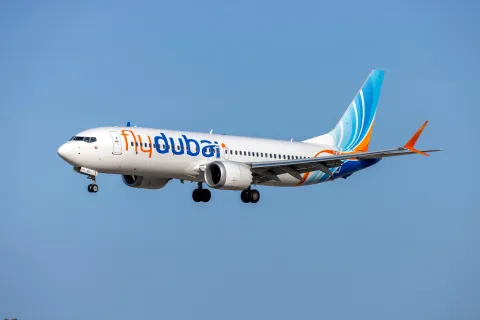
Airline disruption was already developing before the Saturday closure. In its Friday report, AP said FlyDubai had announced cancellations to Riyadh and Yanbu through Saturday and to Abha through Sunday. Pakistan International Airlines had also suspended flights to Riyadh.
Those announcements establish the disruption at that point; they are not confirmation that the same cancellation periods remain in effect on Oct. 14. Likewise, Reuters’ confirmation that Riyadh airport remained closed on Sunday does not establish its operating status today. A review of these reports provides no confirmation of a subsequent reopening, current airline schedules or passenger rebooking arrangements.
The effects were not confined to Riyadh. Reuters reported that the Saudi civil aviation authority confirmed a strike on Dammam’s King Fahd International Airport late on Sunday. That matters when evaluating another Saudi arrival airport: the reporting does not support treating Dammam as an unaffected substitute.
Air Defense Investigation Follows Further Attacks
Saudi Arabia launched an investigation into how missiles and drones penetrated its air defenses, according to a separate AP report covering developments from Monday. AP attributed the investigation details to two regional officials who were not authorized to speak publicly.
Those officials said initial findings indicated the Houthis had launched drones ahead of a combination of cruise and ballistic missiles. One official said investigators were also examining why the defenses had not provided earlier warning. These are reported preliminary findings, not a published final assessment from Saudi authorities.
The Saudi-led coalition said it intercepted and destroyed ballistic missiles launched toward Riyadh twice on Monday, AP reported. Explosions were heard that night, and civil defense officials subsequently said the danger had passed. The Houthis also claimed they had targeted King Khalid Airport on Monday.
The distinction matters: an interception report, an attacker’s claim and a confirmed terminal strike are not interchangeable. Together, however, the reports document continued attacks after the deadly weekend, rather than an isolated incident followed by an established return to normal operations.
AP also reported that the Houthis warned international airlines that all Saudi airports, except those in the Muslim holy cities of Mecca and Medina, were unsafe. That was a warning from the group carrying out attacks, not an independent assessment that the airports it excepted were safe.
Separate the Embassy Warning From Airport Status
The embassy warning reported by News.Az concerns Americans reconsidering travel to Saudi Arabia. The same account says the embassy also urged people to avoid Yemen because of terrorism-related risks.
For a traveler deciding whether to proceed, airport availability and the security warning answer different questions. A confirmed flight would establish a transport option; it would not, by itself, resolve the risk identified in the reported embassy warning. The dated closure and suspension reports describe the disruption surrounding the attacks, while the Oct. 13 account brings the reported warning to Americans into focus.
More travel news
King Khalid International Airport attacks halted flights
The Riyadh airport canceled 99.7% of scheduled flights Sunday after two attacks killed 14; Lufthansa Group cancellations run until Oct. 16, while Air France-KLM’s Riyadh suspension lasts until the end of October.
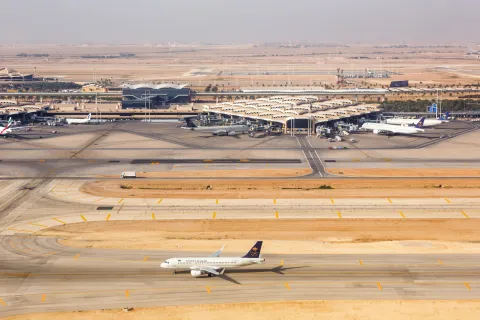
FAA warns operators of U.S.-registered aircraft in Saudi airspace
Citing military activity and navigation-system interference, the FAA urges operators of U.S.-registered aircraft to use extreme caution during overflight, arrival and departure in Saudi Arabia through Dec. 10.

Flydubai passengers reach Tel Aviv after cockpit attack
Passengers reached Tel Aviv after Israeli officials said passengers and crew stopped a co-pilot’s attempt to crash Flight FZ1073.
U.S. Keeps Saudi Arabia at Level 3, Adds Government Employee Curbs
U.S. government employees cannot travel within 20 miles of the Yemen border or make nonessential trips to Qatif; Americans are advised not to visit Level 4 border areas.

About the Author

Jeff Colhoun
Jeff Colhoun is a photographer and filmmaker whose work has appeared in The Wall Street Journal, the Los Angeles Times, Matador Network and Barron’s.