Stay current with our travel industry news coverage.
Why Montmartre Made the List
Fodor's "no list" is not a travel ban but a strategic signal to conscientious travelers: some places need a pause. Montmartre's case centers on two critical pressure points. First, the sheer density of visitors has made daily life difficult for long-term residents. "Some 11 million visitors now throng the basilica each year, more even than the Eiffel Tower," according to Travel. That concentration, funneled through narrow medieval lanes designed for foot traffic and horse carts, creates logistical chaos and erodes the neighborhood's historic character. Second, the economics of overtourism have reshaped the district's residential landscape. Real estate prices in Montmartre have skyrocketed 35% in just the past year, according to Travel, driven largely by demand for short-term rentals and investor purchases targeting the Airbnb market. Anne Renaudie, president of the Association for the Safeguarding of Montmartre, has been vocal about the consequences, highlighting how local residents are being priced out and neighborhood fabric is unraveling under commercial pressure. The result is what some locals describe as "unlivable" conditions: streets clogged with tour groups, essential services replaced by souvenir shops, and a housing market that increasingly excludes the very people who give Montmartre its soul.The Larger Context of European Overtourism
Montmartre is far from alone. Cities across Europe, particularly those with UNESCO World Heritage designations and compact historic cores, are grappling with similar dynamics. What makes Montmartre's situation particularly acute is the concentration of attractions within a small geographic footprint. The Sacré-Cœur Basilica, Place du Tertre, and the surrounding streets form a dense tourism circuit that channels millions through a neighborhood never designed for such volume. For urban travelers, this raises a familiar question: when does a destination's popularity undermine the very qualities that made it attractive? Montmartre's charm has always been its village-like intimacy within a global capital, its sense of artistic history embedded in everyday cafés and corner bakeries. Strip that away, and what remains is a stage set rather than a living neighborhood. Fodor's decision to spotlight Montmartre is part of a growing editorial movement within travel media to encourage more thoughtful destination choices. The "no list" is less about shaming travelers than redirecting energy toward places that can absorb visitors sustainably or toward alternative experiences within crowded cities.What This Means for Travelers
If you're planning a Paris itinerary, does this mean skipping Montmartre entirely? Not necessarily. The goal is awareness and strategy. Consider visiting during off-peak hours, early morning or late evening, when tour groups thin out and the neighborhood reclaims some breathing room. Avoid peak summer weekends when foot traffic peaks. Prioritize spending at locally owned businesses rather than tourist traps along Rue Lepic or Place du Tertre. Better yet, explore Paris's lesser-known districts that offer similar architectural charm without the crush. Belleville, Buttes-Chaumont, and La Campagne à Paris deliver village atmospheres, local culture, and far fewer selfie sticks. These neighborhoods offer the same layered storytelling that makes Paris compelling, just with more space to experience it on human terms. For those committed to seeing Montmartre, consider booking a guided walk led by a local historian or cultural association. These smaller-scale experiences funnel tourist euros directly into community hands and provide context that generic group tours miss. It's a smarter spend and a more respectful engagement with a place under pressure.The Bigger Picture for Urban Travel
Montmartre's placement on Fodor's "no list" is a useful reminder that sustainable travel isn't just about carbon footprints and eco-lodges. It's also about understanding the social and economic footprints we leave in the places we visit. When real estate prices surge 35% in a single year, driven by tourism demand, that's a signal worth heeding. When long-term residents describe their own neighborhood as unlivable, that's a call to reconsider how we engage with beloved destinations. Urban travel at its best is about connection, not consumption. It's about experiencing cities as living ecosystems, not open-air museums. Montmartre will endure, but how it endures depends partly on whether travelers choose thoughtfulness over hype, depth over checklist tourism. For now, Fodor's message is clear: Paris has plenty to offer beyond the postcard hilltop. Maybe it's time to explore what else the city has been trying to show you.More travel news
Delta Unveils First Austin Paris Nonstop for 2027
AUSTIN, Texas - Delta's first long haul route from Austin will add daily seasonal flights to Paris, new European connections and a 281-seat Airbus A330-900neo.

Europe's 193 Million Face Deadly Heat Emergency
PARIS, France — A historic heatwave grips 193 million Europeans with record temperatures in Denmark and Germany as The Economist warns of catastrophic mortality rates.

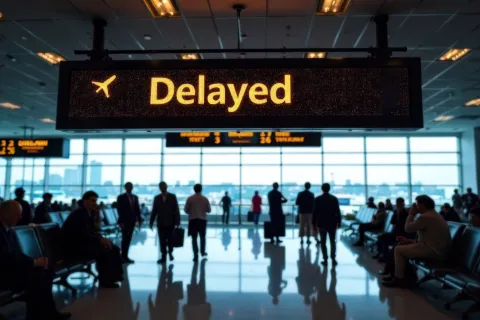
Europe Grinds to Halt With Nearly 2000 Flights Delayed
BERLIN, Germany - Budget travelers face widespread disruptions as France, Norway, Switzerland delay 1,927 flights and cancel 70 more, hitting Eurowings, KLM, and Ryanair.
Three French Palace Hotels Stripped of Elite Status
PARIS, France - Park Hyatt Paris-Vendome, Mandarin Oriental Paris, and Hotel du Palais in Biarritz lost their elite Palace designation, the first withdrawals since the label began in 2010.
About the Author

James Anthony
James Anthony specializes in redefining luxury for the next generation.