Stay current with our travel industry news coverage.
Chuck Heathco, founder of the John Wesley Heathco Legacy Foundation, is urging travelers to make room for a portable carbon monoxide detector. In a travel-safety guide published Sept. 15, 2026, The Points Guy outlines his advice for protecting against a gas that guests cannot see or smell, and that accommodation safety rules do not consistently address.
Heathco’s advocacy is deeply personal. According to The Points Guy, the foundation is named after his son, who died alongside his girlfriend from acute carbon monoxide poisoning at a luxury resort in Mexico in 2023. The foundation raises awareness of carbon monoxide dangers, while Heathco works to prevent further deaths through education and public policy efforts.
For travelers keeping their packing lists lean, his message deserves attention: a battery-powered alarm is a small addition with a serious purpose.
Why carbon monoxide belongs on your travel checklist
Carbon monoxide can enter indoor spaces from fuel-burning appliances, including heaters, ovens and fireplaces, according to The Points Guy. Because the gas is odorless and colorless, travelers cannot rely on noticing an unusual smell or seeing something wrong.
The publication explains that poisoning symptoms can resemble the flu or food poisoning, potentially delaying medical attention. People exposed while sleeping may not recognize symptoms in time. Heathco also warns that surviving carbon monoxide poisoning does not necessarily mean escaping lasting harm.
The risk is not limited to the tragedy behind Heathco’s foundation. The Points Guy reports that a 14-year-old boy died from carbon monoxide poisoning at a Costa Rican resort in 2025. It also reports that three American tourists died at a Belize hotel with a faulty water heater that same year.
Those incidents reinforce a useful distinction for travelers: spending more on a room is not a substitute for checking its safety provisions. Heathco’s son was staying at a luxury resort.
Ask about alarms before you arrive
The Points Guy reports that detector regulations vary between states and countries. Many countries outside the United States have limited or no requirements for detectors in hotels or vacation homes; where requirements exist, enforcement may be inconsistent.
The publication also cites the U.S. Embassy in Costa Rica as saying most countries in Latin America lack widespread laws mandating carbon monoxide detectors. That does not establish whether any particular property has working alarms. It makes checking the accommodation itself more useful than assuming a destination-wide standard applies.
The Points Guy recommends calling your accommodation and asking:
- Are carbon monoxide detectors installed in guest rooms?
- Are detectors also installed in public spaces?
- Are they routinely tested and maintained?
The guide also advises researching previous carbon monoxide incidents at the property and in the surrounding area. For an existing reservation, these are concrete questions you can raise with the accommodation before arrival. The focus is not simply whether an alarm exists, but whether someone is maintaining it.
Even installed detectors are not guaranteed to work all the time, The Points Guy cautions. Its recommendation is to bring your own portable detector when in doubt, rather than treating a property’s assurances as the only precaution.
Choose for portability, power and testing standards
According to The Points Guy, Heathco recommends buying a detector that meets Underwriters Laboratory, or UL, standards, which the publication describes as testing for accuracy and efficacy. He also recommends battery operation, or a plug-in detector with a backup battery, so a power outage does not leave it without power.
Portability matters, too. The publication recommends something lightweight and small enough to fit in a suitcase or backpack, reasoning that a cumbersome device is more likely to stay home. It describes a travel detector as taking up about as much luggage space as a smartphone.
For a tight-budget purchase, those are useful features to prioritize: the testing standard, a suitable power source and a size you will actually carry.
Heathco’s packing habit is straightforward, according to The Points Guy: keep the detector in a plastic bag in your suitcase between trips, with the battery removed while stored. The idea is to make the alarm part of the luggage routine rather than another item to remember from scratch.
Set it up where you sleep
Once you arrive, The Points Guy recommends setting up the detector in your sleeping area, away from vents, windows, ovens and fireplaces. It also notes that a carbon monoxide detector does not need to sit near the floor. The publication cites First Alert’s explanation that carbon monoxide is slightly lighter than air and diffuses evenly through a room or house.
Follow the manufacturer’s instructions for your particular device. The guide calls for regular testing, replacing batteries as needed and replacing the detector when it reaches the end of its service life, typically between 5 and 10 years. Many devices provide alerts when their batteries or the units themselves need replacement, according to The Points Guy.
If the alarm sounds, leave immediately
Heathco’s emergency advice, as reported by The Points Guy, is to leave the building immediately, alert hotel management and have yourself or hotel staff call 911 or the local emergency number. Other rooms may also be affected. The guide warns that acute exposure from a malfunctioning device can cause impairment within minutes.
A detector in your sleeping area does not cover every place you visit. The Points Guy notes that exposure can also happen in restaurants, hotel common areas and even on open-air boats. It lists the symptom reminder HEADS UP: headache, exhaustion, aching muscles, dizziness, sick stomach, unclear thinking, and pale or cool skin.
If those symptoms occur, the publication advises getting to fresh air rather than assuming flu or food poisoning. Packing the alarm is the first step; knowing to leave promptly when it sounds is just as important. For minimalist travelers, this is one item worth evaluating for protection, not just pack weight.
More travel news
Italy rain forecast: Yellow alerts cover parts of six regions
Two fronts are forecast to bring repeated rain across Italy, while Oct. 7 yellow alerts apply to designated areas in Abruzzo, Campania, Lazio, Liguria, Molise and Tuscany.

Tourist Japan inquiries beyond Golden Route rise 65%
The provider’s inquiries beyond Tokyo, Kyoto and Osaka rose 65% year over year, while more than 95% of its package travelers still started in Tokyo.

Blue Ridge Parkway reopens roads and campground loops
Recent reopenings restore uninterrupted driving from James River in Virginia to Little Switzerland in North Carolina; Julian Price Campground loops B and D are also open.

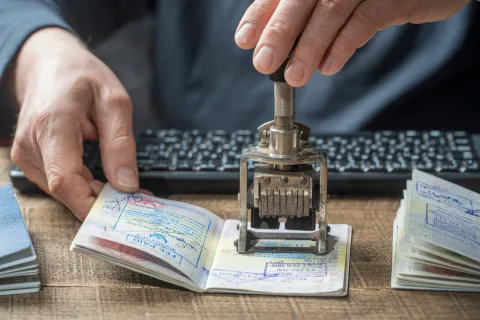
U.S. Customs and Border Protection to End Routine Passport Stamps
CBP announced routine passport stamping will end during primary inspection, with limited exceptions; foreign visitors can access admission and authorized-stay details through I-94 or CBP Link.
About the Author

Dana Lockwood
Dana Lockwood is a Travel Writer at Jetsetter Guide covering budget solo travel from her base in Denver, Colorado.