Stay current with our travel industry news coverage.
The U.S. Department of State updated its France travel advisory on Oct. 21, 2026, keeping the country at Level 2 while emphasizing ongoing unrest and terrorism risks. The recommendation remains to exercise increased caution, not to cancel travel to France, according to Thetraveler.
The distinction matters for Americans with upcoming vacations, business trips or study programs. The national warning level has not risen, but the advisory draws attention to conditions that can interfere with a visit: demonstrations, violence, heavily policed streets and short-notice transportation disruptions. Thetraveler reports that the effects are generally localized, with temporary restrictions capable of making individual neighborhoods difficult to access even while tourism continues elsewhere.
What changed in the France travel advisory
The Oct. 21 revision updated the advisory summary to reflect current conditions rather than changing France’s overall rating, according to Men’s Journal, republished by Yahoo Travel. Its account describes warnings about recent violence and rioting, possible further unrest, and the need to avoid demonstrations and areas with substantial police activity.
This was the first update to the France advisory since May, WDSU reported. State Department Deputy Spokesman Luke Ortega told the station that the department considers factors including civil unrest, crime and terrorism when assessing conditions in a country.
Level 2 signals heightened safety and security risks requiring additional caution. It is distinct from Level 3, which advises reconsidering travel, and Level 4, which advises against travel, according to Cleveland.com. France remains below those stronger warning categories.
An unchanged rating should not be mistaken for unchanged conditions. The updated summary places renewed emphasis on avoiding unrest and responding to local restrictions. For someone already booked, the useful question is where disruption is occurring and whether it affects the next part of the itinerary, rather than treating the countrywide rating as a neighborhood-by-neighborhood assessment.
Unrest has affected museums and Paris transit
The disruption is not limited to warnings on a government website. Visitors found the Louvre closed on Oct. 19 after students from the École du Louvre blocked its entrances in support of demonstrations over conditions in French high schools, according to Travel Noire, republished by Yahoo Travel. The report, citing Le Monde, said the museum described the protest as not directly linked to the Louvre, although the blockade prevented normal opening.
Travel Noire also reported that Paris transit operator RATP closed several Metro stations on Oct. 22, including Bastille, Saint-Paul and Gare d’Austerlitz, and interrupted Line 10 service between Gare d’Austerlitz and Jussieu. Those are concrete examples of unrest affecting access, not evidence that the entire transit network stopped operating.
For Oct. 24, the same report described announced security closures at stations including Charles de Gaulle–Étoile, Concorde and Tuileries, with reopening subject to police authorization. It also reported tourism-office announcements of museum closures that day, including the Louvre and Musée d’Orsay.
Those dates are now past. Travel Noire reported that nighttime restrictions around Place de la République and Les Halles had been extended through the morning of Oct. 26; that reporting does not establish whether restrictions continued afterward. Travelers should use current police, transit and venue notices rather than treat last week’s closure list as today’s operating schedule.
Thetraveler describes the broader pattern as sudden street closures, diversions and nearby Metro or tram shutdowns during unrest or security operations. Its account also notes that temporary curfews have restricted nighttime activity in particular districts. The relevant unit of planning is often the affected street, station or venue, not France as a whole.
Terrorism remains a separate concern
The advisory also retains terrorism as a reason for increased caution. According to Men’s Journal, the State Department warns that terrorist groups continue planning possible attacks in France and could act with little or no warning. Potential targets include tourist locations, major transportation hubs, restaurants, shopping areas, and major sporting and cultural events.
That concern is separate from whether a protest is scheduled nearby. Avoiding a demonstration addresses one part of the advisory; remaining alert in crowded public places addresses another. Cleveland.com reports that the department specifically recommends heightened awareness at tourist locations and in crowded public spaces.
Thetraveler reports reinforced patrols at transport hubs, tourist attractions, religious sites and large public events. Visitors may also encounter bag scans and other security checks at museums, department stores and major train stations. Its account recommends allowing additional time for airport and station security rather than building plans around the fastest possible transfer.
How to handle an existing France booking
The advisory does not recommend abandoning an entire France itinerary, according to Thetraveler. A more useful response is to keep daily plans flexible and check access before heading out. Travel Noire specifically advises travelers with advance museum tickets to contact venues before traveling, while Thetraveler recommends allowing for changes when streets or transit lines close.
The State Department’s instructions, as reported by Cleveland.com, are direct: avoid demonstrations and areas with significant police activity, follow local authorities’ instructions, and comply with movement restrictions connected to police operations. Monitor local media for breaking developments and be prepared to adjust plans.
Leaving is not always the safest immediate option. Cleveland.com reports that the department advises sheltering in place if travelers cannot leave the immediate area of a demonstration. It also notes that some protests have turned violent or damaged property, prompting police responses involving tear gas and water cannons.
For alerts, the department recommends enrolling in the Smart Traveler Enrollment Program, or STEP, according to Cleveland.com. The program provides U.S. Embassy messages and alerts and helps officials locate travelers during an emergency. That is a more useful companion to an existing booking than relying on the unchanged Level 2 label alone: keep the trip’s overall risk assessment in view, but make daily decisions using current local information.
More travel news
Paris Imposed Localized Curfew, Not Citywide Order
Paris imposed a localized curfew around Place de la République and Les Halles until 6 a.m. Oct. 20; Reuters’ Oct. 19 report did not establish a Tuesday-night renewal.
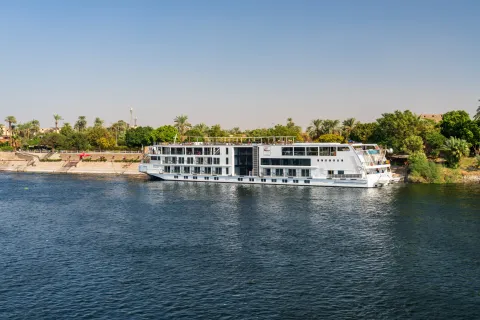
Viking Names Seven River Ships for Europe and Egypt
Four newly named Viking ships are assigned to the Rhine, Main and Danube, two to the Nile and one to the Seine; two were still in final construction. Guests must be 18 or older.
Italy Travel Advisory Update Keeps Level 2 Rating
The State Department revised its Sept. 10 summary without raising Italy’s Level 2 rating, advising Americans visiting the country to stay alert to terrorism and opportunistic theft.

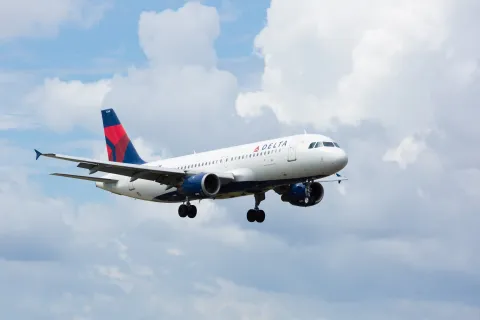
Delta Unveils First Austin Paris Nonstop for 2027
AUSTIN, Texas - Delta's first long haul route from Austin will add daily seasonal flights to Paris, new European connections and a 281-seat Airbus A330-900neo.
About the Author

Jeff Colhoun
Jeff Colhoun is a photographer and filmmaker whose work has appeared in The Wall Street Journal, the Los Angeles Times, Matador Network and Barron’s.