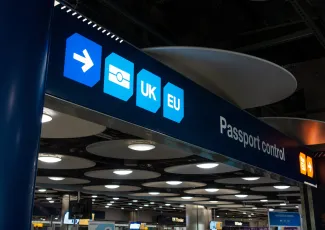
Stay current with our travel industry news coverage.
Three Pillars: Security, Growth, and Talent
The framework rests on three core objectives. First, enhanced security through stronger screening, artificial intelligence integration, and tighter monitoring of visa-free travel arrangements. Second, leveraging visa policy to drive economic growth and tourism by making legitimate travel "faster, more predictable, and more accessible," according to Commission guidance. Third, positioning the EU as a destination for global talent by simplifying pathways for skilled professionals, researchers, students, and entrepreneurs. In 2024, EU member states issued 10.3 million Schengen visas. The Commission is targeting a 30% increase in issuance by 2030, a goal that reflects both rising demand and the bloc's willingness to open channels for visitors who contribute economically. The average rejection rate stood at 12.5% in 2024, a figure that varies widely by applicant nationality and consular capacity. Tourism alone contributes €2.2 trillion to EU GDP, representing 9.5% of the bloc's economic output. Travel industry groups have welcomed the strategy, projecting 5% to 7% tourism growth if visa processing becomes more efficient and predictable. For destination markets heavily reliant on non-EU visitors, particularly in Southern and Central Europe, the reforms could translate directly into arrivals and revenue.ETIAS and Digital Visa Processing Roll Out in 2026
The European Travel Information and Authorization System, or ETIAS, is expected to launch in the fourth quarter of 2026, with a transitional period extending into 2027. ETIAS will require visa-exempt travelers to obtain pre-travel authorization, adding a new security layer while still offering faster entry than traditional visa routes. The system will integrate with existing databases and use AI-driven risk assessments to flag irregular patterns or security concerns. Parallel to ETIAS, the Commission is piloting an EU Visa Portal in the second quarter of 2026. The portal aims to centralize application submission, fee payment, and appointment scheduling across member states. Currently, 60% of Schengen visa applications are submitted online; full digitalization is targeted for 2028. For travelers accustomed to fragmented national systems, inconsistent documentation requirements, and opaque processing timelines, the shift represents a meaningful upgrade in user experience. A revision of the EU Visa Code is also slated for 2026. The strategy provides "a multi-year roadmap for reforms to the EU Visa Code, stronger oversight of visa-free travel, and expanded use of digital systems," according to Commission documentation. Specific amendments will likely address biometric data handling, consular cooperation, and reciprocity mechanisms with third countries.Talent Attraction: Legal Gateway Offices and New Visa Tracks
Recognizing acute labor shortages in sectors like IT, healthcare, and engineering, the Commission is establishing Legal Gateway offices in key origin markets. A pilot office is opening in India in 2026, targeting IT engineers and tech professionals. The offices will provide information, pre-screening, and streamlined application processes for workers whose skills align with EU labor market needs. The strategy also includes a recommendation to make the EU more attractive for skilled professionals, students, researchers, and entrepreneurs. While details remain under development, the intent is to reduce bureaucratic friction, offer clearer long-term residency pathways, and differentiate high-value applicants from general tourism flows. China and India, two of the largest sources of Schengen visa applications, have expressed interest in bilateral talks to facilitate visa access. Both countries view visa policy as a trade and diplomatic lever, and the EU's willingness to negotiate reflects recognition that restrictive policies can deter investment and business travel.Security Measures and Visa-Free Travel Monitoring
The strategy includes provisions to monitor visa-free travel arrangements more closely and suspend visa exemptions for countries deemed high-risk. This mechanism, already in place but rarely invoked, allows the EU to respond to sudden shifts in migration patterns, security threats, or diplomatic breakdowns. AI-driven screening tools will scan applications for inconsistencies, fraudulent documentation, and connections to criminal or security databases. Migration NGOs have criticized the security focus, warning it could disproportionately target applicants from developing nations and reinforce discriminatory patterns in visa rejection rates. The balance between openness and control will define how the strategy performs in practice. For travelers from regions with historically high rejection rates, little will change if consular discretion and risk profiling remain opaque. For those from countries with strong diplomatic ties and low overstay rates, processing times and approval odds should improve.What This Means for Travelers
If you're planning Europe travel in 2026 or beyond, expect gradual but tangible shifts. Digital application systems will reduce paperwork and appointment bottlenecks. ETIAS will add a step for visa-exempt nationals but eliminate border delays. Talent visa tracks will matter most to professionals in high-demand fields, particularly those willing to navigate new Legal Gateway channels. The 30% issuance target by 2030 suggests the EU intends to grow, not restrict, visitor flows. But that growth will be managed, monitored, and increasingly automated. For travelers accustomed to unpredictable consular outcomes, the strategy offers a clearer framework. Whether it delivers on speed, fairness, and accessibility will depend on implementation, consular capacity, and political will across 29 member states.More travel news
Italy fast-tracks facial recognition despite outcry
Rome, Italy - New biometric surveillance rules permit police to retain facial data for seven days before a crime occurs, shifting Italy's security framework toward preemptive monitoring.

Europe Unveils Biometric Travel App for Faster Borders
LISBON, Portugal - Portugal joins Sweden in full digital border adoption as the EU's Travel to Europe app rolls out across Schengen states, promising faster entry checks amid operational challenges.
EU Bans Airline Fees for Carry-On Bags
Brussels, Belgium - After a decade of negotiations, European lawmakers finalize passenger protections that will eliminate carry-on fees and family seating charges starting next year.

Armenia Unlocks EU Visa-Free Travel in 2026
YEREVAN, Armenia - Armenia moves toward visa-free travel with the European Union, a shift that could reshape backpacker routes through the Caucasus if the reforms actually stick.

About the Author

Jeff Colhoun
Jeff Colhoun is an acclaimed travel writer, photographer, and filmmaker, whose work is respected both in the United States and internationally.