Stay current with our airline news coverage.
What Changes for Budget Travelers
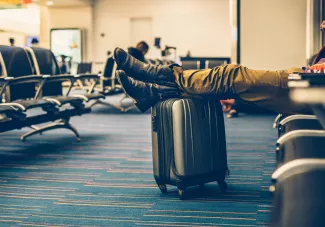
Under the new regulations, passengers will be entitled to a free personal item measuring 40 by 30 by 15 centimeters and a small wheeled suitcase with a maximum weight of 7 kilograms, Nltimes reported. That's essentially a daypack and a carry-on roller, the exact setup most backpackers and budget travelers already use to avoid checked baggage fees. For anyone who's flown Ryanair, Wizz Air, or similar low-cost carriers across Europe, this is a fundamental shift. Those airlines have made carry-on fees a core part of their pricing model, often charging €10 to €30 just to bring a standard-sized suitcase into the cabin. The new rules eliminate that charge entirely. The agreement maintains existing compensation levels for flight delays of three hours or longer. Passengers are still entitled to compensation between €250 and €600, depending on flight distance, according to Nltimes. Over the past decade, several member states pushed to scale down those compensation amounts, but the final agreement keeps the current structure intact.How Airlines Are Reacting
Airlines have warned that the stricter rules will create operational challenges, Nltimes reported. The concern centers on overhead bin space and boarding times, the usual arguments carriers make when defending ancillary fees. But for travelers, especially those on tight budgets, the trade-off is straightforward: guaranteed access to carry-on luggage without surprise charges. The family seating provision is particularly significant for solo travelers who often end up seated next to unaccompanied children whose parents couldn't afford, or didn't realize they needed to pay for, adjacent seats. That awkward dynamic disappears under the new rules.Timeline and Enforcement
The provisional agreement still needs formal approval, but with both the Parliament and Council signed on, implementation is expected to proceed on schedule for 2027. The exact rollout date hasn't been specified, but travelers booking flights for next year should watch for announcements from individual airlines about when the policy takes effect. This isn't retroactive. If you've already paid carry-on fees for flights booked before the rules go live, you won't see refunds. But once the regulations are in force, any flight departing from or arriving in an EU member state falls under the new protections.The Real Cost Calculus
I've spent enough time routing budget flights through Europe to know exactly how carry-on fees distort trip planning. You find a €19 fare from Budapest to Barcelona, then watch it balloon to €45 once you add a suitcase, seat selection, and priority boarding just to guarantee overhead space. The advertised price becomes meaningless. This regulation cuts through that. A backpack and a 7-kilogram roller is more than enough for a week-long trip if you pack strategically. That's a full change of clothes, toiletries, a laptop, and room for a jacket. For hostel-hopping and public transit navigation, it's the ideal setup anyway. The question now is whether budget carriers will offset lost baggage revenue by raising base fares. They might. But even if ticket prices tick up €10 or €15, the transparency helps. You'll know the real cost upfront instead of discovering fees at checkout or, worse, at the gate. For travelers moving between European cities on a shoestring budget, this levels the playing field. You can compare fares accurately, pack light without penalty, and avoid the gate-side shuffle where half the plane is trying to stuff oversized bags into undersized bins because they refused to pay the carry-on charge. The family seating protection matters less for solo travelers directly, but it improves the overall flight experience. Fewer delays from parents negotiating seat swaps, less stress in the boarding area, and a clearer sense that passenger rights actually mean something in practice. Airlines will adapt. They always do. But for once, the adaptation favors the traveler who shows up with a single bag and a tight budget, ready to move.More travel news
ETIAS Stays Offline as EU Holds Back Launch Date
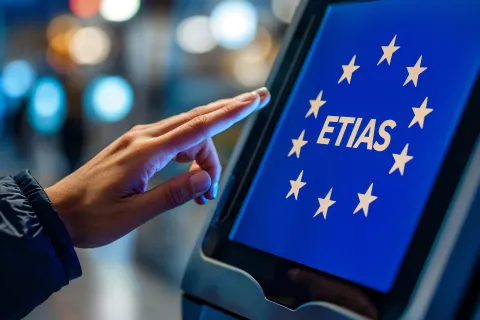
BRUSSELS, Belgium - The EU has left visa-exempt travelers in limbo after confirming ETIAS is not operating and applications remain closed without a launch date.
Italy fast-tracks facial recognition despite outcry
Rome, Italy - New biometric surveillance rules permit police to retain facial data for seven days before a crime occurs, shifting Italy's security framework toward preemptive monitoring.

Europe Unveils Biometric Travel App for Faster Borders
LISBON, Portugal - Portugal joins Sweden in full digital border adoption as the EU's Travel to Europe app rolls out across Schengen states, promising faster entry checks amid operational challenges.

Armenia Unlocks EU Visa-Free Travel in 2026
YEREVAN, Armenia - Armenia moves toward visa-free travel with the European Union, a shift that could reshape backpacker routes through the Caucasus if the reforms actually stick.

About the Author

Dana Lockwood
Dana Lockwood is a rising journalist who specializes in budget-friendly solo travel.