Stay current with our cruise news coverage.
ANCONA, Italy - Viking is planning six years ahead, and in the cruise business, that’s not being overly cautious. It’s the price of getting a shipyard slot.
The cruise line has ordered two new ocean ships from Italian shipbuilder Fincantieri, with both vessels scheduled for delivery in 2032, according to Bloomberg. Viking exercised existing options for the ships, according to TravelPulse.
Each ship will accommodate 998 passengers in 499 cabins and measure 54,300 gross tons, Bloomberg reported. Fincantieri will construct the vessels at its shipyard in Ancona, Italy.
The two-ship contract is valued between €500 million and €1 billion, roughly $584 million to $1.2 billion, according to Bloomberg. That’s an unusually broad range, but even the lower end makes clear that Viking’s quiet, destination-focused style still requires a very serious checkbook.
Viking Sticks With a Familiar Ocean Ship Formula
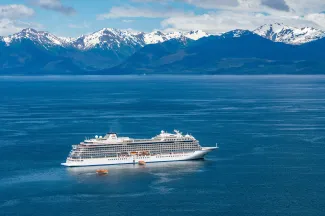
The forthcoming vessels won’t represent a sudden turn toward the floating-resort model. Their planned capacity is consistent with Viking’s existing small to mid-size ocean fleet, according to TravelPulse.
That continuity matters. Viking welcomed its 15th ocean ship, Viking Mira, in June, Bloomberg reported. Viking Mira has the same passenger capacity and tonnage as the two ships ordered for 2032.
In other words, Viking isn’t using this order to chase size for size’s sake. It’s repeating a format already found in its fleet: 998 passengers, 499 cabins and 54,300 gross tons. Cruise fans who prefer a vessel that doesn’t require a color-coded map and a weekend orientation course will probably find that reassuring.
The order also extends Viking’s long-running relationship with Fincantieri, which has produced the company’s current ocean fleet, according to TravelPulse. Building the new ships in Ancona should allow the line to maintain consistency across its ocean product rather than introduce an entirely unfamiliar vessel type.
Strong Demand Supports Viking’s 2032 Expansion
A delivery date in 2032 may feel distant to travelers currently shopping next year’s cruise, but Viking’s recent booking position helps explain the timing.
Viking reported $2.19 billion in revenue for the quarter ending June 30, 2026, a 16.5% increase year over year, according to TravelPulse. Adjusted earnings before interest, taxes, depreciation and amortization reached $748.4 million during the same quarter, up 18.2% from the previous year.
The forward-booking numbers are equally notable. As of Aug. 9, Viking had sold 96% of the available passenger cruise days for its core products during the 2026 season, TravelPulse reported.
For 2027, the company plans to increase capacity by about 15% compared with 2026. It had already booked 53% of that 2027 capacity, according to TravelPulse and Bloomberg.
Those figures provide useful context for the ship order. Viking isn’t merely adding vessels and hoping passengers appear later. Its current inventory is heavily sold, while more than half of the next year’s larger capacity is already booked.
Viking has also been adding ships in the near term. The company recently took delivery of Viking Mira and four river vessels, with another ocean ship and five more river ships expected by the end of 2026, according to TravelPulse.
Where This Leaves Viking Cruise Travelers
For travelers, the most interesting part of this order is its restraint. My read is that Viking sees room to grow without abandoning the ship size that defines its ocean offering. Plenty of cruise lines can add capacity by going much bigger. Viking is choosing to add capacity by repeating a roughly 1,000-passenger design.
That doesn’t create an immediate booking decision. The ships aren’t due until 2032, and the available details establish their builder, capacity, cabin count, tonnage and contract value, not their eventual itineraries. There’s no reason to delay a current Viking reservation while waiting for these vessels.
The booking data does offer a more immediate lesson, though. With 96% of available passenger cruise days for Viking’s core 2026 products sold as of Aug. 9, and 53% of its expanded 2027 capacity already booked, travelers targeting a particular sailing shouldn’t assume abundant late availability. That doesn’t mean grabbing the first cabin at any price; it does mean treating dates and itineraries with limited flexibility as an earlier planning exercise.
The 2032 order also suggests that Viking’s ocean identity is staying put. The new ships will match Viking Mira in both capacity and tonnage, according to Bloomberg. For loyal guests, that offers a degree of predictability. For travelers who want the latest mega-ship spectacle, this order probably won’t change their minds.
A Long Wait, but a Clear Direction
Ship orders this far out can feel a little abstract. Most of us haven’t decided what we’re doing next summer, never mind where we’ll cruise in 2032. Still, these contracts reveal where a cruise line is placing its confidence.
Viking is betting on more ocean capacity, a proven ship size and a familiar builder. With strong current sales and substantial 2027 bookings already on the books, the company appears comfortable extending that formula well into the next decade. It’s not a flashy move, but then again, flashy has never really been Viking’s thing.
More travel news
Ryanair begins winter rollout with 45-plus new routes
The airline has announced at least 140 new winter 2026/27 routes, with launches staggered from Oct. 25 into December across the UK, Italy, Poland and Morocco.
Viking Names Seven River Ships for Europe and Egypt
Four newly named Viking ships are assigned to the Rhine, Main and Danube, two to the Nile and one to the Seine; two were still in final construction. Guests must be 18 or older.
Italy rain forecast: Yellow alerts cover parts of six regions
Two fronts are forecast to bring repeated rain across Italy, while Oct. 7 yellow alerts apply to designated areas in Abruzzo, Campania, Lazio, Liguria, Molise and Tuscany.
Italy Travel Advisory Update Keeps Level 2 Rating
The State Department revised its Sept. 10 summary without raising Italy’s Level 2 rating, advising Americans visiting the country to stay alert to terrorism and opportunistic theft.

About the Author

Bob Vidra
Bob Vidra is News Editor at Jetsetter Guide, covering airlines, airports and the travel industry since 2023.