Stay current with our airline news coverage.
CHICAGO - If you're flying business class on Singapore Airlines or Air Canada and were planning to relax in a United Polaris lounge before your flight, well, those plans just changed. United Airlines quietly but decisively restricted access to its flagship airport lounges starting April 15, 2026, cutting out the vast majority of Star Alliance partners in what amounts to a dramatic reshaping of alliance lounge benefits. According to Travel Weekly, United now limits Polaris lounge access to its own eligible passengers and business and first class travelers on select joint venture partners only. Passengers flying on other Star Alliance airlines, even in premium cabins, are no longer welcome.
Who Still Gets In
The new policy creates a tight circle of access. United's own passengers traveling in standard or flexible Polaris business class fares still get access, naturally. But here's where it gets specific: first class passengers on ANA, Lufthansa, and SWISS can enter, along with business class travelers on ANA, Air New Zealand, and ITA Airways. Those flying basic or flex business class fares on Lufthansa, SWISS, Austrian Airlines, and Brussels Airlines also make the cut. Notice who's missing? Air Canada, despite being part of a joint venture with United. Singapore Airlines. Air India. EgyptAir. LOT Polish. These carriers' premium passengers, who until April 14 could waltz into Polaris lounges at Chicago O'Hare, Newark, Houston, and other United hubs, now find themselves redirected to standard United Clubs instead. And those travelers on United's own cheapest business class fares, the recently introduced basic Polaris tickets? They get United Club access, not Polaris, even though they're flying the same cabin as passengers who paid more.
Why Now
This isn't happening in a vacuum. United's Polaris lounges have been straining under demand for months, sometimes years. The airline has invested heavily in these spaces, positioning them as genuine premium amenities with restaurant-quality dining and shower suites, not just another lounge with pretzels and soda. But as more airlines added premium seats and more travelers sprung for business class, the lounges grew packed at peak times. The timing here lines up with United's broader push to tier its premium cabins. Earlier in April 2026, the airline introduced basic Polaris fares that stripped away lounge access and other perks in exchange for lower prices. That move signaled a shift toward monetizing individual benefits rather than bundling everything into one fare, and this lounge restriction fits the same playbook. Joint venture partners make sense as the dividing line. These are the airlines with which United shares revenue and coordinates schedules under antitrust immunity, partnerships that go far deeper than the standard Star Alliance handshake. ANA, Lufthansa Group carriers, Air New Zealand; these are the partners that matter most to United's network and bottom line. Everyone else? They're alliance partners in name, but not in the ways that count when lounge capacity gets tight.
For Travelers Who Just Lost Access
So what does this mean if you're booked on, say, Air Canada business class through Newark next month? You'll still get lounge access, just not in a Polaris lounge. Star Alliance Gold members and business class passengers on non-eligible partners can use United Clubs, which are perfectly functional but lack the full-service dining, premium liquor selection, and quieter atmosphere that define Polaris lounges. It's a meaningful downgrade, especially for long-haul travelers who chose their flights partly based on lounge access. And it raises a broader question about what alliance membership actually delivers anymore. Star Alliance has long sold itself on reciprocal benefits, the idea that flying any member airline gets you consistent treatment across the network. United's move chips away at that premise, putting its own passengers and closest partners first and treating everyone else as second tier. Should you book differently because of this? Maybe. If lounge access matters to you and you're choosing between, say, Singapore Airlines and ANA for a trip connecting through a United hub, this policy now tilts the scales toward ANA. Same goes for Lufthansa versus Air India, or Air New Zealand versus other Pacific carriers. The product in the air might be identical, but the ground experience just diverged.
A Logical, If Frustrating, Shift
It's easy to see why United made this call. Polaris lounges are expensive to run, and overcrowding degrades the experience for everyone, including United's own highest-paying customers. Limiting access to those who contribute most directly to United's revenue, either as its own passengers or through joint ventures, is rational business. But rational doesn't always mean customer-friendly. This change reduces the value proposition for anyone loyal to Star Alliance as a whole rather than to United specifically. And it sets a precedent; if United can restrict lounges to joint venture partners, what's stopping Delta or American from doing the same with SkyTeam or Oneworld? For now, the new rules are in effect at all Polaris locations. If you're traveling soon on an affected airline, double-check your lounge access before you arrive. And if you've got status or hold a credit card that promises lounge entry, read the fine print; some access methods may still work even when alliance benefits don't. The message from United is pretty clear: alliances are nice, but partnerships that share revenue matter more. And if the lounges are full, not everyone's getting a seat.
More travel news
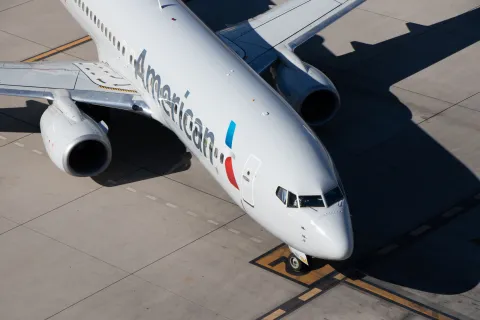
American Airlines may adjust capacity if fuel prices stay high
American Airlines says persistently high fuel prices may force further capacity changes, while United Airlines has cut capacity roughly 5% and Southwest Airlines has modified schedules.
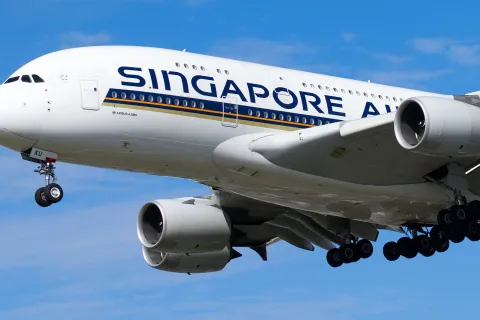
Singapore Airlines Rolls Out 100-Plus Dishes Across All Cabins
The phased refresh spans every cabin, with remaining enhancements from November 2026; selected premium cabins also get new wines and Christofle serviceware.
Southwest, United seek older software on new 737 MAX jets
Southwest and United want earlier software on new 737 MAX deliveries as the FAA reviews a glitch that can block automated guidance after a missed approach if pilots alter the flight path.
United investigates in-flight sexual misconduct allegation
The passenger said she reported the alleged misconduct before a crew on the Republic Airways-operated flight required her to sit beside the man again for landing.
About the Author

Jeff Colhoun
Jeff Colhoun is a photographer and filmmaker whose work has appeared in The Wall Street Journal, the Los Angeles Times, Matador Network and Barron’s.