Stay current with our airline news coverage.
Uganda Challenges U.S. Travel Restrictions
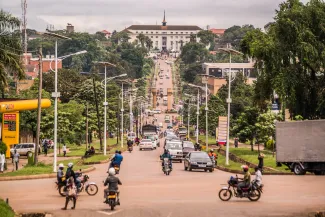
KAMPALA, Uganda - The Ugandan government has publicly criticized international air travel restrictions imposed by the United States, calling them "unfair" and disproportionate to the actual public health risk posed by an ongoing Ebola outbreak in the country, according to Travel and Tour World. The diplomatic dispute centers on the United States' decision to implement travel bans affecting travelers from Uganda amid the viral hemorrhagic fever outbreak. Ugandan officials argue that the restrictions are excessive relative to the containment measures already in place and the limited scope of confirmed cases.Limited Case Numbers, Aggressive Containment
Uganda's response to the outbreak has been highly effective, with only two deaths out of 19 confirmed cases recorded domestically, according to Travel and Tour World. The government has pointed to this containment record as evidence that broad travel restrictions are unnecessary and punitive rather than protective. The low mortality rate and relatively small case count stand in contrast to the sweeping nature of the U.S. travel bans, which Ugandan officials describe as disproportionate. The country has implemented aggressive surveillance, contact tracing, and isolation protocols designed to prevent transmission beyond identified chains of infection. Despite these measures, the United States moved forward with what Uganda characterizes as "blanket border" restrictions, a policy that has triggered a broader debate over how international travel policy should respond to localized outbreaks in developing nations.Diplomatic Fallout and Regional Precedent
The clash between Kampala and Washington reflects longstanding tensions over how wealthy nations respond to infectious disease outbreaks in Africa. Uganda's public criticism of the U.S. measures signals frustration with what officials perceive as an overreaction that damages the country's tourism sector, discourages international business travel, and stigmatizes a nation that has rapidly contained a dangerous pathogen. Ebola outbreaks have historically triggered swift, often severe travel responses from Western governments. The 2014-2016 West African Ebola epidemic led to widespread flight cancellations, border closures, and entry screening protocols that persisted long after transmission had been controlled. Uganda's current stance suggests a determination to avoid the economic fallout that accompanied those earlier responses, even as it manages active cases. The timing of the U.S. restrictions, coming as Uganda reports only 19 confirmed cases and maintains effective containment, suggests that political risk calculations may be driving policy as much as epidemiological assessments. For travelers, this dynamic creates uncertainty: restrictions may reflect bureaucratic caution rather than on-the-ground danger.Risk Calculus for Travelers and Tour Operators
The gap between Uganda's containment performance and the severity of U.S. travel restrictions raises practical questions for anyone with plans in East Africa. Two deaths from 19 cases is a roughly 10.5 percent case fatality rate, far lower than historical Ebola outbreaks and indicative of early detection and effective clinical management. For context, that ratio suggests Uganda's health infrastructure is catching cases quickly and treating them aggressively. Travelers should distinguish between the risk of visiting Uganda and the risk of being caught in a policy escalation. The actual threat to tourists in areas outside outbreak zones is minimal if containment protocols are functioning as Uganda claims. However, the risk of sudden flight cancellations, expanded entry bans, or mandatory quarantines upon return to the United States is real and increasing. Tour operators and safari companies operating in Uganda face a different calculation. Even if the on-the-ground risk is low, client cancellations driven by media coverage and government advisories can devastate bookings. The diplomatic row may paradoxically worsen this dynamic by amplifying awareness of the outbreak without clarifying the actual geographic scope of risk. For business travelers and conference organizers, the U.S. restrictions are already a fact. Anyone who has been in Uganda within a certain timeframe faces entry barriers or mandatory health screenings when returning to the United States, regardless of whether they visited outbreak zones. That administrative friction alone may be enough to divert travel to neighboring Kenya or Tanzania, which complicates Uganda's economic recovery from the outbreak even if transmission stops tomorrow. The broader lesson here is one I've seen repeatedly in developing regions: political and regulatory responses to health crises often outlast the crises themselves. Uganda may eliminate its last active Ebola case within weeks, but the U.S. travel ban could persist for months as bureaucracies move slowly and risk-averse policymakers wait for absolute certainty. Travelers and tour operators planning East Africa itineraries should assume restrictions will remain in place longer than the epidemiological data justifies and build contingency plans accordingly.More travel news
Summer Travel Costs Soar as Americans Rethink Plans
WASHINGTON, D.C. - Rising travel costs reshape summer vacation strategies as Americans modify itineraries and spending patterns in response to sharp price increases.

US Launches $750 Fast-Track Option for Tourist Visas
Washington, D.C. - Travelers applying for U.S. business and tourist visas can now pay $750 to skip ahead in the interview queue under a six-month pilot program.

New Federal Rule Transforms Air Travel for Disabled
Washington, D.C. - A federal regulation unveiled in June could reshape how airlines serve passengers with disabilities, marking a watershed moment for accessible air travel in the United States.

American Airlines Chaos Sparks Summer Travel Fears
UNITED STATES - American Airlines faced operational challenges on June 8, 2026, serving as a fresh reminder for summer travelers to plan flexibly amid nationwide flight schedule concerns.
About the Author

Jeff Colhoun
Jeff Colhoun is an acclaimed travel writer, photographer, and filmmaker, whose work is respected both in the United States and internationally.