Stay current with our airline news coverage.
The Cheapest Fare Wins
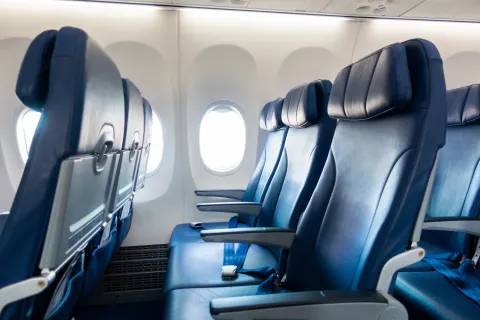
Walk into any online booking site and watch what happens. You sort by price. We all do. And airlines have spent the past three decades perfecting the art of giving us exactly what we ask for: the absolute lowest possible fare. The catch? That fare comes with about as much personal space as a crowded elevator. Economy class seat pitch; that's the distance from one point on your seat to the same point on the seat in front of you; now averages 28 to 31 inches across most carriers. Rewind a few decades and you'd have found 35 inches or more as standard. That's not a small difference when you're folded into a middle seat for six hours. The trend accelerated in the 1990s when low-cost carriers like Ryanair and Wizz Air proved passengers would tolerate almost anything for a dirt-cheap ticket. Traditional airlines watched, learned, and started squeezing too. It's basic economics: more seats per plane means lower costs per passenger, which means you can undercut the competition by five dollars and watch the bookings roll in.Not All Squeeze Is Created Equal
But here's where it gets interesting. While airlines have been ruthless about shrinking seat pitch, they actually have limited control over seat width. Those measurements; typically 16 to 18 inches in economy on narrow-body jets; are largely dictated by aircraft fuselage dimensions. You can't just make a Boeing 737 wider because passengers are grumbling. The tube is the tube. And speaking of passengers: we're getting bigger. Average weights have climbed steadily over the same period that seat dimensions have shrunk, creating a perfect storm of discomfort. Airlines rarely acknowledge this elephant in the cabin, but it's part of the equation whether we like it or not.The Regulatory Vacuum
You'd think somebody would step in and mandate minimum comfort standards, right? Not quite. The FAA and EASA; the major aviation regulators on both sides of the Atlantic; focus their seat requirements almost entirely on evacuation timelines. Can everyone get off the plane in 90 seconds during an emergency? Great, you're certified. Whether you can actually sit in that seat without your circulation cutting off for four hours? That's between you and the airline. Petitions have circulated for years asking regulators to establish minimum seat dimensions. They've gone nowhere. The industry argument is simple: if you want comfort, pay for it. Premium economy, business class, and even extra-legroom economy seats exist precisely for people willing to spend more.The Complaint Surge
The frustration is showing up in the data. Wizz Air, one of Europe's ultra-low-cost stalwarts, recorded 10,548 complaints in the UK alone during 2025. The Civil Aviation Authority upheld 47% of them; a staggering number that suggests these aren't just whiny passengers but legitimate grievances. The airline averaged 918 complaints per million passengers in 2025, absolutely dwarfing Ryanair's 188 per million. American Airlines flight attendants even issued a vote of no confidence against their CEO in late 2025, with service quality concerns playing a significant role. When your own crew is publicly unhappy, you know something's gone sideways.The Counter Movement
Not every airline is racing to the bottom. Japan Airlines and ANA have stuck with a 34-inch seat pitch as part of their "Sky Wider" strategy, betting that comfort can be a competitive advantage. JetBlue maintains 32.3 inches of pitch, well above the U.S. average, and continues to market itself on having "the most legroom in coach." Even WestJet, which densified cabins in recent years, is now updating configurations based on passenger feedback. There's a quiet legroom arms race happening among carriers that think they can charge a modest premium for treating humans like humans. Delta Air Lines is taking a different approach entirely, forecasting significant growth in premium cabins for 2026. Their bet: forget about making economy comfortable. Just give people a clear upgrade path and enough aspirational marketing to make them pay for it.What's Really Happening Here
So when passengers say air travel is becoming unbearable, what they're often really saying is that low-cost flying is becoming unbearable. And they're not wrong. The social contract of budget aviation was always pretty clear: you get a seat that moves through the air for less than a tank of gas, and in exchange, you accept some discomfort. The problem is that this model has crept upward. Legacy carriers that once offered reasonable space as standard now reserve it for elite status holders and people willing to pay extra. The squeeze isn't just at the bottom anymore; it's become the default. Airlines will tell you they're just responding to market forces, and there's truth in that. But it's also true that once you've conditioned an entire generation of travelers to prioritize price above all else, it's hard to reverse course. We've created a race to the bottom, and now we're surprised the bottom isn't comfortable. The solution, if there is one, probably isn't regulatory. It's passengers voting with their wallets for something other than the absolute cheapest option. But given how we actually book flights? Don't hold your breath.More travel news
Las Vegas Heat Grounds Planes as Temps Hit 115
LAS VEGAS, Nevada - Extreme weekend temperatures force airlines to remove passengers, cut fuel loads, and adjust departure schedules as desert heat pushes aircraft to performance limits.

Flight Attendant Reveals Free First Class Upgrade Secrets
Global - After years of speculation and social media advice, a veteran flight attendant sets the record straight on what actually secures free upgrades and what never will.
Booze Sales Boost Revenue But Ground Flight Safety
Airlines worldwide are confronting a costly paradox: onboard alcohol sales drive ancillary revenue, but drunk passengers are creating expensive diversions and safety crises that may outweigh the profits.
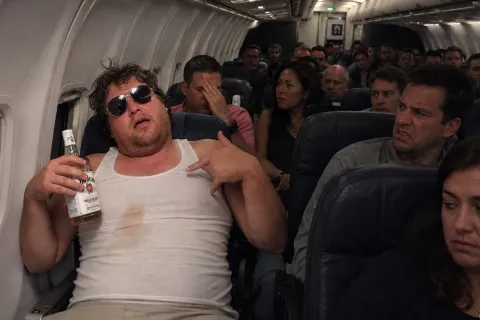
Airlines Target Bad Manners With New Flight Rules
Stricter airline policies crack down on headphone use, loud audio, and personal space violations as unruly passenger incidents soar since 2021.
About the Author

Jeff Colhoun
Jeff Colhoun is a photographer and filmmaker whose work has appeared in The Wall Street Journal, the Los Angeles Times, Matador Network and Barron’s.