Stay current with our airline news coverage.
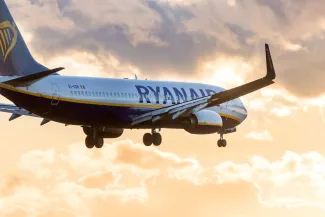
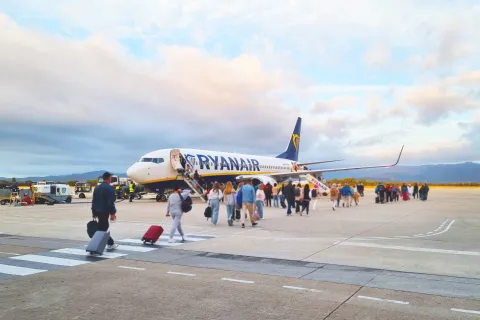
DUBLIN, Ireland - It's not every day an airline CEO publicly names the competitors he thinks won't make it to Christmas, but Michael O'Leary has never been one for subtle diplomacy. The Ryanair boss just doubled down on his favorite pastime: predicting which European airlines are about to run out of runway. This time, though, he's got receipts. And jet fuel prices that are making even the biggest carriers sweat.
The Fuel Bill Nobody Ordered
O'Leary told Italian newspaper Il Sole 24 Ore that the Iran war has already cost Ryanair an extra $50 million in fuel costs in April alone. That's just one month. For context, that's roughly what some regional carriers spend on fuel in a quarter when things are calm. "If oil stays at these levels, two or three European airlines in October or November could go bankrupt like Wizz Air, which wants to sue me but won't have enough time to do so, and airBaltic," O'Leary said, according to Simple Flying. That dig about Wizz Air not having time to sue? That's classic O'Leary; the Hungarian ultra low cost carrier had previously threatened legal action over his doubts about their financial health. Now he's basically saying they'll be too busy filing for bankruptcy protection to bother with a lawsuit.
Why These Two Airlines?
O'Leary isn't just throwing darts at a board here. Both Wizz Air and airBaltic have been showing cracks for months. The difference between them and Ryanair? Scale, cash reserves, and crucially, fuel hedging strategies. According to Simple Flying, Ryanair has hedged about 80% of its fuel at $67 per barrel. Meanwhile, airlines buying fuel on the spot market right now are facing prices around $150 per barrel for unhedged fuel. That's not a rounding error; that's the difference between profit and financial catastrophe when you're operating on the razor thin margins that define European low cost aviation. airBaltic's situation looks particularly precarious. Just last month, Latvia's parliament approved a €30 million short term loan to the carrier "to mitigate the negative financial situation," according to Simple Flying. The kicker? That loan has to be repaid by Aug. 31 this year. It's essentially a Band Aid on a compound fracture.
The Broader Energy Crisis
O'Leary noted this could be "a good thing for our business" because fewer competitors means more pricing power for survivors. Cold? Sure. Wrong? Probably not. The International Energy Agency has warned that several European countries may start to face shortages of jet fuel in the next six weeks, according to Simple Flying. That's not just expensive fuel; that's potentially no fuel at all in some markets. If oil prices stay elevated and Ryanair's hedges eventually run out, the carrier itself could face up to $600 million in additional fuel costs within a year, Simple Flying reported. Even for Europe's biggest airline, that's a number that demands attention.
Recent Casualties
This isn't theoretical. Magnicharters recently suspended flights, and H Bird went bankrupt, joining a growing list of carriers that couldn't weather the combination of post pandemic recovery costs and energy price shocks.
Should You Worry About Your Booking?
If you've got tickets on Wizz Air or airBaltic for late fall or winter, this isn't the kind of news you want to read over your morning coffee. But let's be clear about what O'Leary's actually saying: he's predicting potential bankruptcies in October or November if oil stays at current levels. That's a conditional prediction, not a certainty. Still, there are some practical steps worth considering. If you booked with a credit card, you've likely got some protection built in. If you paid cash or used a debit card, you might want to think about travel insurance if you haven't already purchased it. And if you're booking new travel for late 2026, maybe consider whether you want to roll the dice on carriers that a well informed industry insider is publicly betting against. airBaltic is Latvia's flag carrier, which means the government has already shown willingness to prop it up with emergency loans. But those loans come with strings and deadlines, and there's a limit to how many times taxpayers will bail out an airline that can't make the numbers work. For Wizz Air, the calculus is different; it's a publicly traded company without the same government backstop. If the fuel crisis deepens and cash burns through reserves, shareholders and creditors make cold blooded decisions fast. O'Leary's track record on these predictions is better than you might think. He's been calling out financially wobbly competitors for years, and while his timing isn't always perfect, the broad strokes tend to land. When someone who buys jet fuel by the supertanker tells you that fuel prices are about to bankrupt smaller players, it's worth at least checking your booking confirmations. The next few months will tell us whether this is O'Leary being his usual provocateur self or whether he's genuinely spotted airlines flying into a storm they can't navigate. Either way, it's a reminder that ticket price isn't the only number that matters when you're choosing an airline.
More travel news
Tourism Ireland Optimizes Content for AI Travel Answers
The agency is making its content readable by generative AI and promoting smaller regional experiences; Skift did not report the methodology behind its influence claim.

UK Plans to End Family Seating Fees for Children Under 14
Parliament is considering rules for airlines operating in the UK that would seat children under 14 beside a parent or accompanying adult at no added cost and make simple booking name corrections free; paid seat selection would remain.
Ryanair Cuts German Winter Schedule, Will Close Berlin Base
Ryanair will remove 700,000 winter seats in Germany and close its Berlin base Oct. 24, halving capacity there but continuing flights to and from the capital.
United Schedules A321XLR Flights to Amsterdam and Dublin
Starting Dec. 1, United is scheduled to use A321XLRs daily from Washington Dulles to Amsterdam and Dublin, with 20 Polaris suites and 12 Premium Plus seats.

About the Author

Jeff Colhoun
Jeff Colhoun is a photographer and filmmaker whose work has appeared in The Wall Street Journal, the Los Angeles Times, Matador Network and Barron’s.