Stay current with our airline news coverage.
Charter Costs Double Amid Shrinking Availability
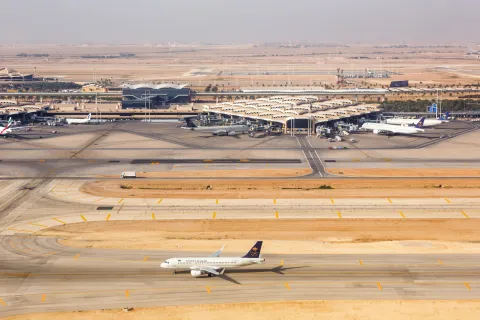
The numbers are blunt. A private charter flight for 16 passengers from Riyadh, Saudi Arabia, to Porto, Portugal, previously cost around $115,000, according to the Associated Press. That same route, or comparable short-haul flights from Dubai to Istanbul or Cairo, now runs closer to $200,000. In some cases, operators are pricing flights between $175,000 and $235,000, according to Business Insider. This is not typical market fluctuation. This is supply and demand colliding with geopolitical instability in real time. The surge reflects two realities: fewer aircraft willing to operate in or near contested airspace, and a client base with both the means and the urgency to pay whatever it takes to leave.Who Is Buying These Flights
The buyers are not your typical business travelers rerouting through alternate hubs. These are high-net-worth individuals, families, and corporate executives who either waited too long to leave or found themselves caught in the region when the situation deteriorated faster than expected. They are paying not just for speed, but for certainty in an environment where commercial aviation has become unreliable at best and grounded at worst. Private aviation operators have noted a clear emphasis on speed and flexibility, echoing what one industry source told the Associated Press. Clients want immediate departures, direct routing, and guarantees that their aircraft will not be delayed, diverted, or caught in airspace closures that have already disrupted hundreds of commercial flights across the Gulf.What This Means for Commercial Travelers
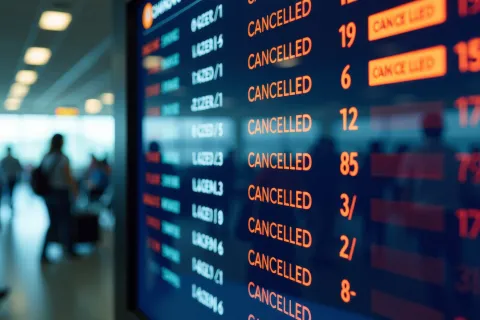
For travelers without access to six-figure charter budgets, the situation is more complicated. Commercial airlines have canceled or suspended routes into and out of major Middle Eastern hubs, including Dubai, Abu Dhabi, and Riyadh. Rebooking options are limited, and many passengers are being rerouted through secondary airports in Europe, North Africa, or Asia with long layovers and no guarantees of smooth connections. Travel insurance policies that exclude coverage for acts of war or political unrest are leaving many passengers financially exposed. Those who booked through third-party platforms or budget carriers are finding customer service response times stretched thin, with little recourse beyond waiting for the situation to stabilize.The Broader Aviation Picture
This is not the first time geopolitical conflict has reshaped aviation economics, but the speed and scale of the current disruption are notable. The Middle East sits at the crossroads of intercontinental air traffic, and when that corridor becomes unstable, the ripple effects extend far beyond the region. Airlines are adjusting flight paths to avoid contested airspace, adding time and fuel costs to long-haul routes between Europe, Asia, and Africa. Private aviation, which typically operates with more flexibility and fewer regulatory constraints, is absorbing some of that demand, but at a steep premium. The operators willing to fly into or out of the region are pricing in the risk, the limited aircraft availability, and the logistical complexity of coordinating departures in a volatile environment.What Travelers Should Know
If you are currently in the Middle East or planning travel to the region in the near term, understand that the situation remains fluid. Commercial flight schedules are being revised daily, and airport operations are subject to abrupt changes based on security assessments and airspace restrictions. Check your embassy's travel advisories and register with consular services if you have not already. Maintain copies of your travel documents, including passport, visa, and any tickets or confirmations, in both physical and digital formats. Keep cash reserves in multiple currencies, as ATM access and electronic payment systems may be disrupted. For those with the means to consider private charter options, be prepared for volatile pricing and limited availability. Operators are prioritizing existing clients and high-value bookings, and slots are filling quickly. Confirm all details in writing, including departure times, routing, fuel stops, and contingency plans if airspace conditions change.No Easy Exits
The reality is that when a region becomes this unstable this quickly, the cost of leaving escalates far beyond the price of a plane ticket. The travelers paying $200,000 or more for charter flights are not irrational; they are responding to a narrowing window of safe departure options in an environment where delay carries its own risks. For everyone else, the calculus is different but no less urgent. Monitor the news, stay in contact with your airline or travel provider, and be ready to move when the opportunity arises. The longer this conflict persists, the fewer good options remain.More travel news
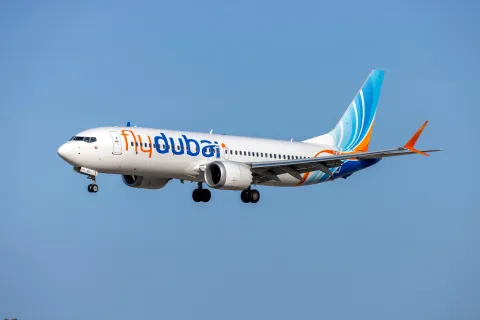
Flydubai passengers reach Tel Aviv after cockpit attack
Passengers reached Tel Aviv after Israeli officials said passengers and crew stopped a co-pilot’s attempt to crash Flight FZ1073.
Lonely Planet releases Best in Travel 2027 list
The 50 selections range from California’s coastal redwoods to a Galápagos expedition cruise, with exclusive destination content available in the Lonely Planet app.

U.S. Level 3 Advisory Covers Dubai and Abu Dhabi
The nationwide Level 3 advisory is not a travel ban; Americans can still visit Dubai and Abu Dhabi but should assess the risks and prepare for possible flight changes.

Airlines Extend Middle East Flight Suspensions to 2027
LONDON, England - Virgin Atlantic has suspended Dubai flights until October 2027 as global carriers reroute, delay returns and cautiously rebuild Middle East service.
About the Author

Jeff Colhoun
Jeff Colhoun is a photographer and filmmaker whose work has appeared in The Wall Street Journal, the Los Angeles Times, Matador Network and Barron’s.