Stay current with our airline news coverage.
The Spend-to-Status Model That Actually Works
Let's be clear: this isn't some gimmick where you need to spend a small fortune to unlock marginal perks. The Atmos Rewards Summit Visa Infinite card offers 1 status point for every $2 you spend. That might not sound groundbreaking at first, but do the math. Silver status requires 20,000 status points. That's $40,000 in annual spending; totally doable if you're running most of your household or business expenses through the card. Gold status sits at 40,000 points, or $80,000 in spending. "Atmos Rewards offers one of the easiest paths to elite status, and it doesn't require much flying on either Alaska or Hawaiian Airlines," according to The Points Guy. And they're right. Compare that to traditional airline programs where you'd need to rack up dozens of qualifying flights or tens of thousands of miles actually in the air. For someone who travels occasionally but spends regularly, this is a completely different ballgame.What You're Actually Getting
So what does Silver or Gold status mean in practical terms? Priority boarding, free checked bags, and bonus points on flights, for starters. As you climb higher, you unlock Oneworld partner benefits, which means perks on airlines like American, British Airways, and Cathay Pacific. Not bad for putting your groceries and gas on a card. The Summit card itself sweetens the deal with 8 lounge passes annually. If you've ever paid $59 for a day pass just to escape a chaotic terminal, you know that's real value right there. There's also a welcome bonus: 70,000 points after you spend $4,000 in the first 90 days. That's enough for a solid domestic roundtrip or a chunk of an international award ticket, especially with Neighbor Island awards starting at just 4,500 points one-way.The Business Card Option
Small business owners might want to look at the Atmos Rewards Business Visa Signature instead. It comes with a $70 company fee plus $25 per additional card, but the same 70,000-point welcome bonus after $4,000 in spend within 90 days. If you're already putting business expenses on plastic, this could be a no-brainer way to build status while earning transferable points. The earning structure mirrors the personal card: 1 status point per $2 spent. For a business that runs $5,000 or $10,000 a month through cards anyway, you're looking at Silver status before you even think about it.When Flying Still Matters (A Little)
Now, let's talk reality. Platinum and Titanium status are a different animal. Those tiers require north of $100,000 in credit card spending, according to The Points Guy. At that level, you're probably better off just flying organically unless you're running serious volume through the card for other reasons. But here's where it gets interesting. Starting in 2026, Atmos Rewards is introducing customizable status-earning paths. You'll be able to choose between distance-based earning (1 status point per mile), segment-based (500 points per segment), or spending-based (5 status points per dollar on flights). That flexibility is pretty much unheard of in legacy airline programs. "Atmos Rewards is more than a loyalty program – it's a reflection of how guests travel today. We're putting our members in the pilot's seat," according to an Alaska Airlines announcement.The Sale You Should Know About
If you're considering jumping into Atmos Rewards, timing matters. Through February 27, 2026, the program is running its Global Getaways sale with up to 60% off award flights to Europe and Japan. If you've been sitting on points or just earned that welcome bonus, this is your window. Award availability fluctuates, obviously, but discounted redemptions to Tokyo or Paris could be the sweetest way to use those initial points.Is This the Right Move for You?
Here's the bottom line: if you fly Alaska or Hawaiian even occasionally and you're looking for a low-effort way to unlock elite perks, the Atmos Summit card is worth serious consideration. You don't need to be a road warrior. You just need to spend strategically. For frequent flyers chasing top-tier status, organic flying still makes more sense. But for everyone else; the occasional vacationer, the credit card optimizer, the person who just wants free checked bags and priority boarding without the hassle; this might be one of the most accessible elite status programs out there. And honestly? It's refreshing to see a loyalty program that doesn't require you to restructure your entire life around flight schedules just to feel valued.More travel news
Alaska Airlines plans screens in select 737 MAX 10 premium cabins
Alaska plans seatback screens from 2028 for Aurora Suites and Premium Reserve passengers on select transcontinental 737 MAX 10s, while the main cabin will rely on personal devices.
Alaska Airlines Plans Lie-Flat Boeing 737 MAX 10s for 2028
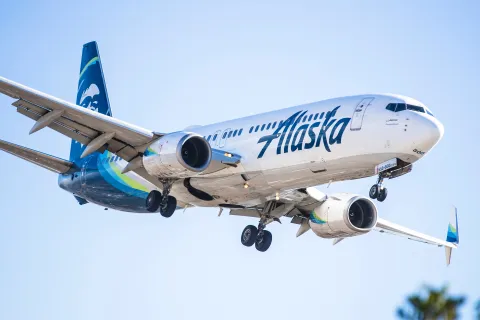
Alaska Airlines plans a dedicated subfleet of at least 25 MAX 10s for select transcontinental routes, each with 12 lie-flat Aurora seats and Premium Reserve; the first are expected in 2028.
Hawaiian Restores Kauai Schedule Amid Recovery
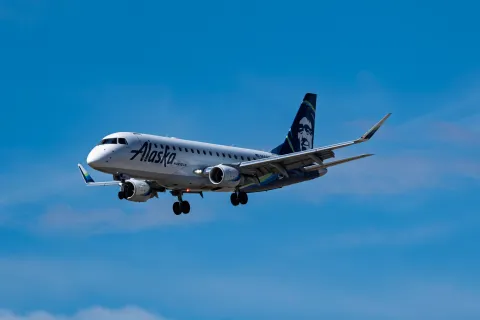
After Hurricane Lowell, Hawaiian restored its Kauai schedule and added flights to accommodate passengers and cargo while officials urged travelers to reschedule Kauai trips.

Passenger threats trigger emergency landings and lockdowns
MILWAUKEE, Wis. - Passenger threats on United and Alaska Airlines flights prompted lockdown protocols and emergency responses, adding to 2026's growing tally of in-flight disruptions.

About the Author

Bob Vidra
Bob Vidra is News Editor at Jetsetter Guide, covering airlines, airports and the travel industry since 2023.