Stay current with our airline news coverage.
When Wildlife Encounters Become Medical Emergencies
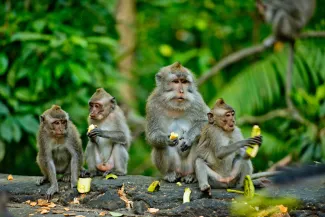
The speed at which these situations escalate is perhaps the most unsettling aspect. One moment, you're capturing what seems like a charming interaction with seemingly docile primates. The next, you're navigating hospital visits in a foreign country, confronting language barriers, and managing costs that can spiral into the tens of thousands of dollars. Consider the UK family whose child was bitten by a macaque in Bali. According to ERV, which noted a 28% year-over-year increase in such claims in 2025, the family paid $12,000 for post-exposure prophylaxis (PEP) treatment. In another case, a six-year-old German child bitten at India's Galtaji Temple in October 2025 required airlift evacuation for rabies treatment, with total costs reaching €15,000. These figures reflect not merely the price of medical care but the cascading complexity that follows. Rabies is nearly 100% fatal without prompt treatment, making it non-negotiable. The protocol demands immediate action, specialized vaccines, and in some cases, medical supervision that standard travel insurance may not fully cover.The Hidden Costs of Evacuation
Beyond initial treatment lies an even more daunting financial reality: medical evacuation. "In some situations, getting home safely isn't as simple as booking a standard flight. Customers may need to travel with a medical team, which often means an air ambulance or chartered flight, with costs climbing into six figures," according to Southern Cross Travel Insurance. This is where comprehensive travel insurance becomes essential, yet many families purchase policies without fully understanding what constitutes adequate coverage for such scenarios. The difference between basic medical benefits and true emergency evacuation coverage can mean the difference between managed stress and financial devastation.The Primate Theft Problem
While bites command the most serious medical attention, theft by monkeys represents another dimension of this phenomenon. These animals have learned to target high-value items with surprising precision. Phones, cameras, sunglasses, and jewelry regularly disappear into the forest canopy, often during what tourists perceive as playful interaction. Russian insurer T-Insurance reported that monkeys cause 20% of all animal bite claims, with an average payout of 25,000 rubles (approximately $250). Thailand leads destinations at 38% of such incidents. Allianz data from 2023 showed that animal encounters accounted for 2.5% of medical claims overall, with primates representing 15% of those cases. The average monkey bite claim totaled $4,200. Latvia's Balcia insurance captured the range of encounters in actual claim descriptions: "Two monkeys jumped on my head and broke part of my front tooth!" "A wild monkey put its foot in my mouth, and I needed a vaccine against rabies!" "I gave a monkey in Bali a banana, and it bit me!"The Behavioral Factor
Insurance providers are increasingly scrutinizing the circumstances surrounding these claims. Feeding wildlife, attempting selfies with wild animals, or deliberately provoking encounters can result in claim denials. "If you taunt a baboon for a selfie or decide to pet a wild animal, that's not an insurable risk. We expect travellers to exercise basic caution, as well as respect for the host country and its wildlife," said Veitch of Cover.co.za. Bali itself introduced $500 fines in 2025 for visitors entering monkey forests without proper insurance, a reflection of both the frequency of incidents and the burden placed on local medical facilities.What Families Need to Know
For families planning travel to destinations where wildlife interactions are common (Thailand's Lopburi, Bali's Ubud, India's temple sites), several precautions merit attention. First, verify that your travel insurance includes comprehensive medical coverage with no exclusions for animal encounters, provided they occur without reckless behavior. Second, ensure evacuation coverage extends to medical team accompaniment and chartered flights if necessary. Third, understand the claims process before departure, including how to access emergency medical networks abroad. The reality is that these encounters represent a collision between tourism infrastructure and wild animal habitats. As travel rebounds post-pandemic, the volume of visitors to these sites has intensified, and with it, the statistical likelihood of incidents. Insurers are responding with both increased premiums for certain destinations and more detailed policy exclusions. For parents, the calculus is straightforward: rabies treatment is not optional, evacuation may be medically necessary, and the costs associated with either can dwarf the price of a comprehensive insurance policy. The child struck in the eye at Ubud Monkey Forest serves as a sobering reminder that what begins as a photo opportunity can escalate into a medical emergency requiring immediate, expensive, and logistically complex intervention. The lesson is less about avoiding wildlife destinations entirely and more about approaching them with informed respect, appropriate insurance, and the understanding that wild animals remain exactly that, regardless of how accustomed they appear to human presence.More travel news
Over 200 Asian Flights Canceled Across 3 Countries
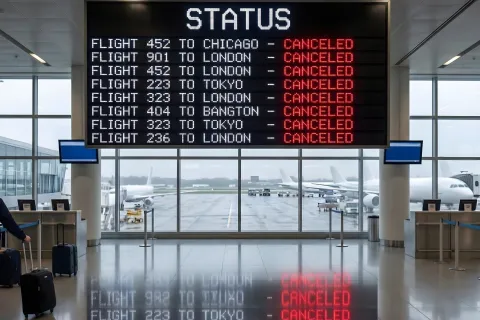
JAKARTA, Indonesia - Garuda, AirAsia, Malaysia Airlines, Lion Air, and Batik Air face over 200 flight cancellations across Indonesia, Malaysia, and Hong Kong, stranding travelers on domestic and international routes.
Jakarta Airport Ceiling Caves In During Storm
JAKARTA, Indonesia — Ceiling collapse at Indonesia's busiest airport disrupts 40 flights after heavy monsoon rains, but quick evacuations prevent injuries.

Overwhelmed Hotspots Now Tell Tourists to Stay Away
DENPASAR, Indonesia — Tourism authorities are encouraging travelers to reconsider visits to saturated destinations like Bali and Venice, where the convergence of masses following identical itineraries has created severe environmental and cultural strain.

Bali Tourist Loses $18K to Card Cloning Scammers
BALI, Indonesia — An Australian traveler woke to find his bank account drained by card cloners who hit 10 to 15 ATMs in a single night.

About the Author

Jennifer Wilmington
Jennifer Wilmington is a distinctive voice in the world of family and luxury travel, offering unique perspectives derived from her diverse background and experiences.