
Stay current with our airline news coverage.
The Gulf's Traditional Transit Advantage Has Evaporated
The spring shoulder season typically delivers the year's best Europe-Asia flight deals, but 2026 has rewritten the routing playbook. Emirates is operating at roughly 53% of normal capacity at Dubai International, Qatar Airways has parked an estimated 43% of its fleet, and European carriers have suspended Gulf routes through May and beyond. For travelers booking summer or fall trips to Asia or Australia right now, the Gulf hubs that once offered the most efficient connections, the smoothest premium cabins, and the most competitive fares no longer deliver reliability or value.
The European Union Aviation Safety Agency's conflict zone information bulletin, extended through April 24, 2026 and likely to run into July or beyond, advises avoidance of most Middle East flight information regions. Airlines have responded by implementing northern and southern bypass routes that add between one and three hours to Europe-Asia flight times. The geographic advantage that made Dubai, Doha, and Abu Dhabi essential transit points hasn't disappeared from the map, but the operational reality has changed completely.
By early March 2026, over 3,400 global flights had been canceled or diverted due to Middle East airspace restrictions, with an estimated 13% drop in effective global air cargo capacity. The same constraints affecting freight are squeezing passenger capacity, driving fare premiums on routes that avoid the region entirely and forcing travelers to rethink itineraries that would have been straightforward six months ago.
Which Hubs Actually Work Right Now
Muscat has emerged as the southern corridor's most reliable staging point despite GNSS interference and flow management measures across the region. Oman Air operates a narrower network than the ME3 carriers, but it's handling traffic that would have transited Dubai or Doha. The connections are more limited, focused primarily on peak Asian cities, and the airport experience doesn't match the polish travelers expect from Gulf hubs. But flights are operating, and that consistency matters more than lounge quality when your itinerary depends on it.
Cairo is supporting increased southern bypass traffic, though its infrastructure is struggling with the volume. Expect longer connection times and less seamless operations than you'd encounter at a purpose-built Gulf megahub. Turkey's Istanbul handles northern detours effectively, but Turkish Airlines' Asia connectivity is limited compared to Emirates or Qatar. For travelers accustomed to the ME3 product, these are functional workarounds with clear tradeoffs, not drop-in replacements.
European majors have responded by routing through their home hubs with extended flight times but better operational consistency. Lufthansa Group added four extra Munich-Singapore flights and deployed 10 special Vienna-Bangkok roundtrips through Austrian Airlines earlier in the disruption period. Air France deployed larger aircraft on routes to Bangkok, Singapore, Delhi, Mumbai, Shanghai, Tokyo, and Phuket while adding frequency to Bangkok, Singapore, and Delhi. These carriers offer redundancy through their alliances; a missed connection in Frankfurt or Amsterdam has more rebooking options than a disrupted itinerary through a capacity-constrained Gulf hub.
Singapore and Hong Kong have regained importance as Asia-side connection points, avoiding the Middle East entirely. Cathay Pacific expanded spring 2025 service to London, Paris, and Zurich, launched a Munich route in June 2025, and returned to Rome and Brussels in summer 2025. The airline now serves twelve European airports, positioning Hong Kong as a viable alternative for travelers routing eastbound from Europe.
Kuwait and eastern Iran flight information regions technically reopened after April 24, but most Western carriers are still avoiding them due to high-risk designations and operational restrictions. The reopening is theoretical; the practical routing environment remains constrained.
What This Means for Your Booking Strategy
Direct Europe-Asia routing, even if it adds two or more hours to your flight time, is now more reliable than traditional Gulf connections. Fewer variables mean lower cancellation risk. According to current Google Flights data, a roundtrip New York to Bangkok itinerary departing May 30 and returning June 6 costs $1,469 and averages 22 hours and 41 minutes, with options through Air India, Asiana Airlines, Cathay Pacific, and Qatar Airways. That routing through Asian hubs or longer European connections represents the current reality; chasing cheaper Gulf options introduces rebooking risk that isn't worth the savings.
Multi-ticket itineraries through Gulf hubs carry extreme rebooking risk if disruptions continue. Single-ticket protection is essential; if your outbound and return are on separate bookings and one leg gets canceled, you're managing the mess yourself. Fare premiums for Gulf-avoiding routes are running 15% to 30% higher than pre-disruption Gulf fares, but operational reliability justifies the premium. This isn't the season to chase marginal savings through uncertain airspace.
Alliance routing matters more than it has in years. Lufthansa Group via Frankfurt or Munich, Air France-KLM via Paris Charles de Gaulle or Amsterdam, and British Airways through London offer the best Europe-Asia redundancy. If something goes wrong, you're inside a network with options. Flows between Europe and Asia-Pacific rose 13% in 2025 versus 2024, with China including Hong Kong averaging 278 daily flights, up 20%. That capacity is shifting toward alliance hubs and away from Gulf transit points.
Avoid booking anything through Dubai, Doha, or Abu Dhabi for June through September travel unless you have extreme flexibility and backup plans. Etihad is operating an expanded but phased schedule to roughly 80 destinations from Abu Dhabi, with minute-by-minute monitoring and route adjustments. Rare cancellations trigger emails with rebooking or refund options, and from May 16, 2026, canceled tickets allow free refunds or rebooks through June 15. Qatar Airways is facing ongoing disruptions with high call volumes, providing accommodation and rebooking assistance in Doha for stranded passengers. These aren't conditions that support predictable travel planning.
The Secondary Hub Gamble
Amman is theoretically open, and Royal Jordanian could handle some Europe-Asia flow, but EASA cautions remain active and the airline isn't processing significant transit traffic yet. It's a possibility on the board, not a solution you should build an itinerary around.
Larnaca is emerging as a secondary option for some indirect routings, but Cyprus has capacity constraints and operational caveats that limit its usefulness. It's a niche workaround for specific city pairs, not a scalable alternative to Gulf capacity.
Muscat works for southern bypass routing, but Oman Air's network is narrower than the ME3 carriers. If you're connecting to Tokyo, Singapore, or Bangkok, you'll likely find options. If you're routing to secondary Asian cities, the network gaps become restrictive.
Cairo's infrastructure is struggling with increased transit volume. The airport wasn't designed to absorb the kind of traffic currently flowing through southern bypass routes. Longer connection times and less seamless operations are the norm, and that's unlikely to improve while the pressure remains.
None of these secondary hubs replicate the efficiency Gulf carriers built over two decades. They're functional stopgaps with clear limitations.
What's Still Broken and Unlikely to Fix Soon
No central Middle East corridor restoration is expected before fall at the earliest. The current southern and northern bypass routes are the medium-term reality, not a temporary inconvenience. Emirates, Etihad, and Qatar are scaling back long-haul Europe-Asia operations indefinitely, with fleets parked and crews reassigned. This isn't a short operational hiccup; it's a structural shift requiring network rethinking across the industry.
Award availability through Gulf carriers has collapsed. Mileage redemptions that once offered the best value for premium cabin travel are largely unavailable. Existing award bookings on impacted routes qualify for free rebooks or refunds similar to cash tickets, but new searches yield few options as capacity contracts in real time.
Business travelers who relied on the Dubai, Doha, or Abu Dhabi premium transit experience are facing a six-month minimum adjustment to less polished European or Asian connection points. The Gulf product set a standard; the alternatives function, but they don't match the experience level.
Regional political factors suggest this isn't purely an operational issue with a clear resolution timeline. The disruptions stem from geopolitical escalations, and those drivers aren't on a predictable path to stabilization.
Route Accordingly
For immediate spring and summer bookings, prioritize European hub connections through Frankfurt, Munich, Paris, or Amsterdam, or Asian hubs through Singapore or Hong Kong over any Gulf routing. Pay the fare premium for operational simplicity. This isn't the season to chase cheap connections through uncertain airspace.
Monitor EASA conflict zone bulletins for any flight information region status changes. The next update is expected before the current bulletin's expiry, and any reopenings or extensions will shift the routing landscape.
If you have existing Gulf bookings for summer travel, contact airlines now about rerouting options before irregular operations force reactive rebooking. Etihad, Qatar, and Emirates are prioritizing safety assessments and allowing free changes on affected flights, but proactive rebooking gives you more control than waiting for a cancellation email.
The Middle East's geographic advantage for Europe-Asia routing hasn't changed. The operational reality has. Plan routes that acknowledge ground truth, not the map.
More travel news
Finnair Promotes UK and Ireland Links to Finnish Lapland
The planned schedule lists flights from Edinburgh, Dublin, Manchester and London Heathrow that feed onward Lapland connections via Helsinki.

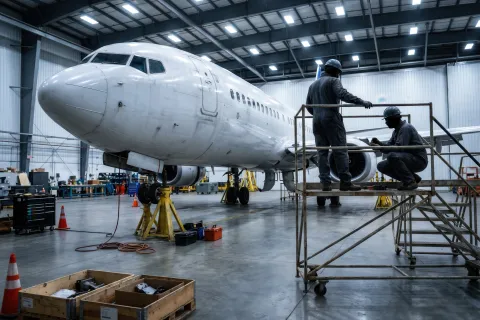
Boeing 737NG tail inspections ordered for 1,987 U.S. jets
Effective Nov. 23, 2026, the mandate covers 1,987 specified U.S.-registered 737NG aircraft, not the 737 MAX, and may require repeat checks or repairs based on findings.
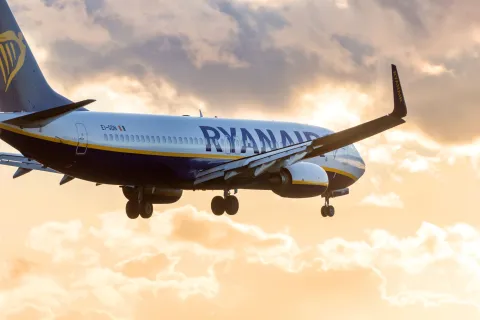
Ryanair begins winter rollout with 45-plus new routes
The airline has announced at least 140 new winter 2026/27 routes, with launches staggered from Oct. 25 into December across the UK, Italy, Poland and Morocco.
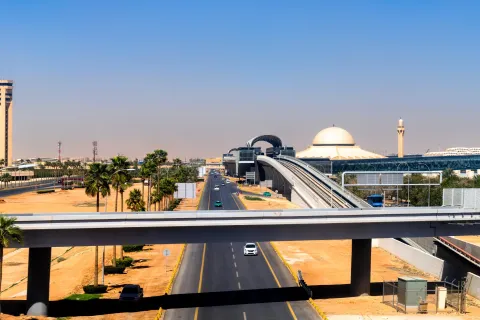
King Khalid International Airport partially reopens for domestic flights
The airport resumed limited domestic operations with prior permission; Saudia and FlyNas were flying, while Lufthansa and Air France kept Riyadh flights canceled through mid-November.
About the Author

Jeff Colhoun
Jeff Colhoun is a photographer and filmmaker whose work has appeared in The Wall Street Journal, the Los Angeles Times, Matador Network and Barron’s.