Stay current with our airline news coverage.
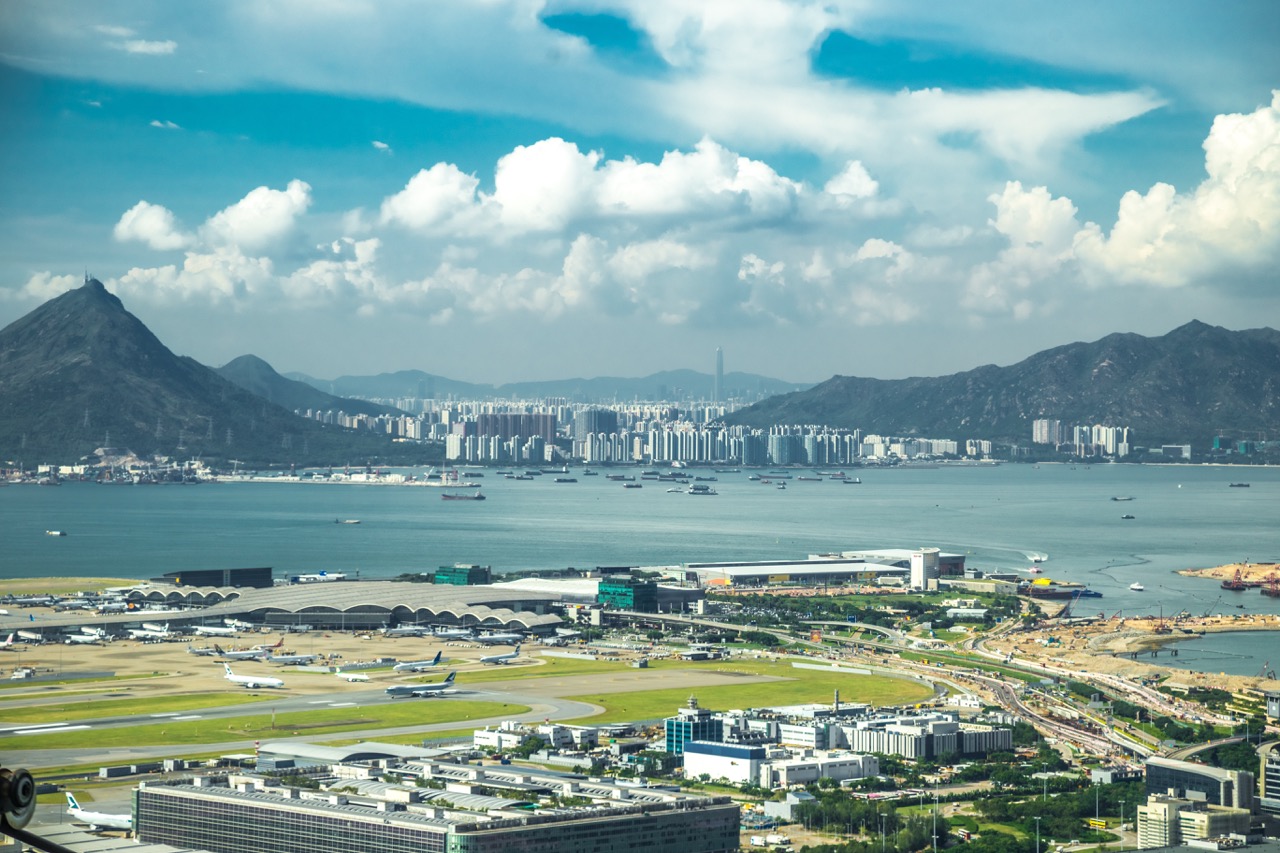
HONG KONG — Long immigration lines and gate-change scrambles may soon feel like relics from a pre-pandemic era. The city’s Civil Aviation Department has switched on an Approach Spacing Tool—AST for short—that promises tighter arrival sequencing, fewer tarmac holds, and a lighter carbon footprint, according to a press release by Thales.
How the Approach Spacing Tool works
The new software module sits inside TopSky-ATC, the air-traffic management suite already used in Hong Kong and more than eighty other control centers worldwide. As aircraft begin their descent, AST continuously calculates each jet’s optimal distance from the one ahead, factoring in live weather, aircraft weight, wake-turbulence category, and runway occupancy. Results are displayed on a color-coded timeline so controllers can see, at a glance, which flights need a speed tweak or minor vector to stay “on slot.” For travelers, the math equates to steadier arrival rates, more predictable gate time,s and fewer last-minute diversions to mainland alternates when Chek Lap Kok’s tightly packed schedule hits a snag.
Cutting emissions without cutting capacity
When every nautical mile counts, shaving even a sliver of airborne loitering can yield tangible environmental gains. Thales estimates that Hong Kong’s rollout alone could spare more than 16,500 tons of jet-fuel burn each year while trimming roughly 52,000 tons of carbon-dioxide emissions. Those numbers represent the equivalent of taking over 11,000 Hong Kong–registered private cars off the road, based on the city’s Environmental Protection Department conversion factors. Crucially, officials say the savings do not come at the expense of throughput. By reducing the buffer once required to absorb “unknowns” such as sudden wind shifts, AST is designed to keep both of the airport’s parallel runways operating near planned capacity, even during the city’s seasonal downpours or abrupt wind-shear alerts.
Why Hong Kong needed a smarter arrival flow
Chek Lap Kok handled just under 5 million passengers in January 2024, placing it firmly on the rebound trajectory after pandemic lows. Slot congestion, particularly for mid-morning arrivals from Southeast Asia and late-evening long-haulers from Europe, was already creeping back toward 2019 levels. Traditional tools relied heavily on static wake-turbulence tables that forced controllers to “round up” spacing margins, creating a cascade of vectoring, speed brakes, and holding patterns. By bringing in aircraft-specific performance data in real time, AST can tighten or loosen separations dynamically. The practical outcome is fewer go-arounds, less fuel-guzzling step-descent,s and a better shot at catching the Airport Express train that departs every 10 minutes for Central.
Recognition for greener skies
Even before its official handover, Hong Kong’s implementation received a runner-up award in the “Greener Skies” category at the 2023 Air Traffic Management Awards organized by CANSO, the Civil Air Navigation Services Organisation. The accolade placed the city’s Civil Aviation Department alongside global heavyweights experimenting with trajectory-based operations from Europe to Oceania.
What passengers can expect day to day
- Shorter holding patterns: Flights joining the arrivals stream over the South China Sea should experience fewer racetrack loops.
- On-time gates: Tighter spacing means airlines can build flight plans with greater confidence, reducing scheduled block-time padding.
- Smoother descents: Continuous-descent operations are easier to maintain when controllers do not need abrupt speed reductions to open gaps.
- Lower cabin noise and fuel odor while taxiing: Less idling on approach and at gates translates into fewer minutes with auxiliary power units humming under the fuselage.
Tips for Travelers
1. Monitor arrival gates in real time through the Hong Kong International Airport mobile app—improved sequencing should make updates more reliable.
2. Early-bird immigration counters in Terminal 1 now open when the first wave from Australia lands around 5 a.m.; expect this rhythm to stabilize under AST. 3. Consider booking shorter connections: Airlines operating under the new system may start publishing tighter layover minimums.
A regional test bed with global ambitions
Hong Kong is not the first to deploy AST, but its dense airspace makes it an influential showcase. Thales says variants of the same algorithm are already running in control centers on five continents. The city’s dual-runway configuration, mountain-ringed approaches, and monsoon weather provide a stress test that smaller airports cannot replicate. If results match projections, neighboring hubs—from Taipei to Manila—could use Hong Kong’s data set as a blueprint for their own modernizations, potentially creating a network effect that ripples across some of Asia’s busiest flight corridors.
One concise voice from the cockpit
“The tool bridges safety, efficiency, and sustainability without forcing pilots to reinvent procedures,” Philippe Bernard-Flattot, vice president for airspace mobility solutions in Asia and the Pacific at Thales, said.
The road or air lane ahead
With Asia-Pacific passenger numbers forecast to double over the next two decades, incremental gains such as the Approach Spacing Tool play a pivotal role in keeping skies both safe and sustainable. For Hong Kong travelers, the immediate payoff is simpler: fewer delays mean more time exploring the city’s neon-lit streets—or making that onward ferry to Macau—without sprinting through Terminal 1. — Source: Thales press release
More travel news
Lufthansa Blocks First Class Awards for Millions
FRANKFURT, Germany - Lufthansa blocks first-class award redemptions for frequent flyers in three major markets, eliminating a prized benefit for millions of travelers who've been banking miles for premium cabin flights.

Over 200 Asian Flights Canceled Across 3 Countries
JAKARTA, Indonesia - Garuda, AirAsia, Malaysia Airlines, Lion Air, and Batik Air face over 200 flight cancellations across Indonesia, Malaysia, and Hong Kong, stranding travelers on domestic and international routes.
China Mandates New Digital Arrival Card for All Visitors
BEIJING, China — The National Immigration Administration debuts a mandatory digital arrival system requiring online submission up to 72 hours before entry, streamlining mainland China's border control.

China Builds Tourist Sub for 3280 Foot Deep Dives
WUXI, China — Scientists unveil plans for a panoramic submersible reaching 1,000 meters underwater, with prototypes expected by year's end and commercial operations launching in 2030.

About the Author

Bob Vidra
Bob Vidra, based in scenic Tahoe, is an esteemed tech editor known for his deep understanding of the dynamic intersection of technology, travel, and the outdoors.