Stay current with our airline news coverage.
A cheap flight gets less exciting when bringing a small bag and sitting beside your child start pushing up the total. Those two frustrations are central to an EU passenger-rights overhaul described in a September 8 report by Yahoo Creators; importantly, the changes aren’t in effect yet.
In the opinion piece, an American parent living in Denmark describes how budget airlines make European trips with her son possible, while baggage and seating charges complicate the bargain. According to Yahoo Creators, the Council gave final approval to the legislation on July 13, 2026. The reported provisions include a free personal cabin item, clearer baggage disclosures and no-cost adjacent seating for someone accompanying a child under 14.
That’s not the same as making every carry-on or seat choice free. The distinction matters, especially before you decide which fare to buy.
EU airline fee changes aren’t in effect yet
According to Yahoo Creators, the updated rules would take effect 12 months and 20 days after publication in the EU’s Official Journal. July’s approval therefore shouldn’t be confused with the date travelers can start relying on the new provisions.
Based on the timing information in the opinion piece, a calendar start date cannot yet be confirmed. The details below reflect the publication’s account of the legislation, rather than an independently verified reading of the regulation.
For an upcoming booking, don’t treat the reported approval as proof that these inclusions are already available. The timing is part of the story, not fine print.
A free personal item, not every cabin bag
Yahoo Creators reports that passengers would be entitled to bring one personal item into the cabin at no additional cost. Its description specifies an item measuring up to 40 by 30 by 15 centimeters, or one that can be safely stored beneath the seat in front.
The useful distinction is between that small personal item and the larger cabin bag travelers may think of as their carry-on or trolley bag. According to the publication, the overhaul doesn’t eliminate checked-bag charges or guarantee that every larger cabin bag will be free.
Instead, airlines and booking intermediaries would have to display fares with the hand-baggage allowance clear before the booking process begins, Yahoo Creators reports. Airlines could still offer cheaper fares to passengers who voluntarily travel without a larger piece of hand baggage.
So the reported change has two parts: a no-fee allowance for the small item, plus earlier clarity about larger hand baggage. The stripped-down fare survives; travelers should have a clearer view of what they’re stripping out.
For the Denmark-based parent writing in Yahoo Creators, the small bag holds more than a wallet and passport. She describes carrying snacks, wipes, spare clothes, headphones, coloring supplies and a water bottle. That’s why the distinction resonates with families: the bag may be called personal, but its contents can serve the child as much as the adult.
Free seating beside a child comes with conditions
The family-seating provision is similarly specific. According to Yahoo Creators, a person accompanying a child under 14 on the same air transport contract must be offered an adjacent seat at no extra cost.
Both conditions matter: the child must be under 14, and the accompanying person and child must be traveling under the same air transport contract. The publication also reports a fallback when adjacent seats aren’t available: the airline must make efforts to help the accompanying person and child sit together.
That availability language matters, too. The account doesn’t describe an unconditional guarantee of adjacent seats regardless of circumstances.
Nor does it describe free rein over the seat map. Yahoo Creators explains that the provision wouldn’t automatically give a family of four an entire preferred row, a window seat, extra legroom or another premium position without payment.
There’s a sensible line here between choosing a nicer seat and sitting beside a young child. The former is a preference; the latter involves the ordinary work of helping a child through a flight. The reported rule addresses that distinction without turning premium seat selection into a free inclusion.
Americans can qualify, but not every flight does
These are EU passenger protections, not worldwide airline rules. Yahoo Creators describes their general coverage as flights within the EU, departures from the EU to a destination outside the bloc, and arrivals into the EU from outside it when operated by an EU airline.
Passenger nationality doesn’t determine eligibility, according to the publication. An American visitor therefore doesn’t need EU citizenship to benefit on a covered journey.
For readers building a European trip around budget flights, that distinction is useful: look at the journey and, where relevant, the operating airline, rather than the passport in your bag. Simply traveling to Europe isn’t the coverage test described in the report.
The overhaul extends beyond booking fees
Yahoo Creators also reports that the updated framework retains compensation of €250, €400 or €600, depending on journey distance, for qualifying disruptions. Its account describes arrivals more than three hours late or cancellations less than 14 days before departure, subject to the rules and exceptions.
Qualifying extraordinary circumstances beyond an airline’s control can exempt it from compensation, the publication notes. It also describes stronger protections concerning assistance, information, communication with airlines, rerouting after cancellations and major delays, and passengers with disabilities or reduced mobility.
But for the parent whose account brought attention to the changes, baggage and adjacent seating are the provisions that would show up in routine bookings. That’s the appeal here: not an end to budget flying, and not a promise that every extra disappears. It’s a clearer boundary between an optional upgrade and a basic inclusion. Until the rollout is established, though, that remains a reported change to watch rather than an entitlement to assume at checkout.
More travel news
Spain Now Demands Cash Proof at Border Entry
MADRID, Spain — Border officers now assess travelers individually for proof of funds based on stay length and purpose, raising stakes for unprepared visitors.

United Airlines plans two winter San Francisco-Barcelona round trips
Two planned Boeing 777-300ER round trips will operate Feb. 27-28 and March 3-4, 2027, around Mobile World Congress; they do not extend the route through winter.

flydubai co-pilot reportedly planned attack before hire
Sources briefed on the investigation say the co-pilot sought an airline serving Tel Aviv and abandoned an earlier crash plan before the Sept. 30 attack.
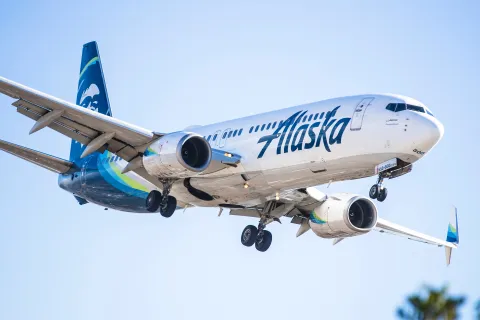
Alaska Airlines plans screens in select 737 MAX 10 premium cabins
Alaska plans seatback screens from 2028 for Aurora Suites and Premium Reserve passengers on select transcontinental 737 MAX 10s, while the main cabin will rely on personal devices.
About the Author

Jeff Colhoun
Jeff Colhoun is a photographer and filmmaker whose work has appeared in The Wall Street Journal, the Los Angeles Times, Matador Network and Barron’s.