Stay current with our airline news coverage.
DHS Shutdown Drags On as Congress Returns, TSA Pay Still Up in the Air
WASHINGTON, D.C. - If you've flown lately, you might've noticed a little extra tension at the security checkpoint. And no, it's not just post-holiday travel blues. Lawmakers returned to Capitol Hill this week with a partial Department of Homeland Security shutdown still very much unresolved; and the big question looming over all of it is whether roughly 50,000 Transportation Security Administration officers will actually keep getting paychecks if Congress can't get its act together. That's not a small number. We're talking about the people who screen you, your bags, and everyone else passing through security at airports across the country. And right now, their financial future is caught in the middle of a political stalemate that shows no sign of breaking anytime soon.The Split That Started It All
The impasse didn't exactly sneak up on anyone. Just before the Easter recess, Senate and House Republicans found themselves split over how to handle DHS funding, according to Benzinga. Senate Republicans advanced a bill that would fund most of DHS, while House Republicans rejected that approach, leaving everyone in a holding pattern. So lawmakers left town without a deal. And when they came back this week, nothing had changed except the calendar. It's the kind of legislative gridlock that sounds abstract until you start thinking about what it actually means for the people who work for DHS. TSA officers, in particular, are stuck in an uncomfortable spot; they're considered essential personnel, which means they have to show up for work even if their paychecks are on hold. It's a rough deal, especially if you're already living paycheck to paycheck.Staffing Strain Is Already Showing
Here's the thing: this isn't the first time TSA has been caught in a shutdown squeeze, and we already know what tends to happen. DHS figures reported that nearly 500 TSA officers quit during the shutdown, according to Benzinga. That's a meaningful chunk of an already stretched workforce. And then there's the absentee rate. It topped 10% nationally during the shutdown, with some major airports seeing much worse, Benzinga reported. Think about that for a second. One in 10 TSA officers calling out sick, or simply not showing up, because they're not sure when their next paycheck is coming. At busy hubs, that percentage climbed even higher. If you're a frequent traveler, you probably don't need me to spell out what that looks like on the ground: longer lines, slower processing, more stressed out officers trying to pick up the slack. It's not a recipe for a smooth airport experience, especially as we head deeper into spring travel season.What Happens Next?
The current shutdown is partial, which means it doesn't affect every corner of DHS. But the TSA piece of it is impossible to ignore, especially when you're looking at potential staffing shortages at some of the country's busiest airports. Reuters reported on April 2 that Speaker Mike Johnson and Senate Majority Leader had been in discussions, according to Benzinga, but so far there's no indication that a breakthrough is imminent. The longer this drags on, the more likely it is that staffing problems get worse. And if officers start leaving in larger numbers or absentee rates keep climbing, travelers are going to feel it. Congress has pulled off last-minute funding deals before, and there's always a chance they figure something out before things really deteriorate. But right now, it's hard to say when that might happen. The political will to compromise doesn't seem particularly strong on either side, and that's leaving tens of thousands of federal workers in limbo.The Real-World Fallout for Travelers
For anyone planning to fly in the coming weeks, this is worth paying attention to. TSA staffing shortages don't just mean you might wait a little longer at security; they can ripple out into real operational headaches. Airports struggling with staffing might consolidate security lanes, which slows everything down. Some smaller checkpoints might close altogether during off-peak hours. If you've got a flight booked, the usual advice applies, but maybe add a little extra cushion. Arriving two hours early for domestic flights and three for international isn't just TSA's suggestion anymore; it might be genuinely necessary if staffing issues get worse. And if you've got PreCheck or Clear, those lanes could be your saving grace, though they're not immune to slowdowns either. The frustrating part is that none of this is in travelers' control. You can plan all you want, but if Congress doesn't sort out DHS funding and TSA officers keep walking out the door, airport delays are going to be a fact of life for a while. Keep an eye on wait times at your departure airport; some publish real-time updates, and that can at least help you plan your arrival. It's one of those situations where the political drama in Washington translates directly into hassle at the gate. And until lawmakers actually sit down and cut a deal, there's not much anyone can do except build in buffer time and hope for the best.More travel news
US Launches $750 Fast-Track Option for Tourist Visas
Washington, D.C. - Travelers applying for U.S. business and tourist visas can now pay $750 to skip ahead in the interview queue under a six-month pilot program.

New Federal Rule Transforms Air Travel for Disabled
Washington, D.C. - A federal regulation unveiled in June could reshape how airlines serve passengers with disabilities, marking a watershed moment for accessible air travel in the United States.
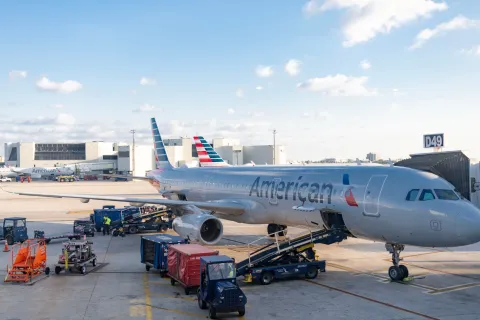
American Airlines Chaos Sparks Summer Travel Fears
UNITED STATES - American Airlines faced operational challenges on June 8, 2026, serving as a fresh reminder for summer travelers to plan flexibly amid nationwide flight schedule concerns.
US Warns Americans of Mexico Crime Risks for Summer
WASHINGTON - New State Department advisory warns Americans of heightened crime and kidnapping risks in Mexico as summer travel season and 2026 FIFA World Cup approach.

About the Author

Bob Vidra
Bob Vidra, based in scenic Tahoe, is an esteemed tech editor known for his deep understanding of the dynamic intersection of technology, travel, and the outdoors.