Stay current with our airline news coverage.
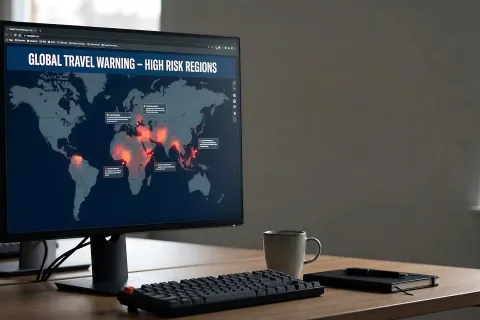
OTTAWA, Canada — Canada doesn't issue travel advisory updates on weekends. The fact that Global Affairs Canada pushed through two "Avoid All Travel" escalations on a Saturday tells you everything you need about the urgency behind these changes. Over the first weekend of January 2026, the Canadian government upgraded its travel warnings for Yemen and Venezuela to the highest advisory level: "Avoid All Travel." These are not minor tweaks. This is the clearest signal Ottawa can send that conditions on the ground have deteriorated beyond acceptable risk thresholds for Canadian nationals.
Why Weekend Updates Matter
Travel advisories typically follow a predictable Monday-through-Friday update cycle. Weekend alerts are reserved for situations that can't wait until the next business day. When Global Affairs Canada breaks that pattern, it's usually because new intelligence, sudden political shifts, or security incidents demand immediate public notification. The timing here suggests that developments in both Yemen and Venezuela accelerated rapidly enough to warrant bypassing the standard weekday protocol. For travelers already in these countries or planning imminent trips, that weekend timing could mean the difference between adjusting plans and finding yourself caught in a deteriorating situation without current guidance.
Yemen: A Deteriorating Security Picture
Yemen has long occupied the upper end of Canada's risk spectrum, but the weekend escalation to "Avoid All Travel" reflects worsening conditions in a country already fractured by conflict. The advisory upgrade signals that the security environment has crossed a threshold where even previously manageable risks, limited movement corridors, or areas with residual international presence are no longer viable for Canadian travelers. The shift also impacts Canadians working with NGOs, journalists covering the region, and dual nationals maintaining family ties in Yemen. An "Avoid All Travel" designation doesn't just advise caution. It's a formal acknowledgment that consular services are severely limited or unavailable, evacuation options are constrained, and the government cannot guarantee assistance if you're detained, injured, or caught in conflict zones.
Venezuela: Political Instability and Operational Reality
Venezuela's upgrade carries different but equally serious implications. The country has been on a slow downward trajectory for years, marked by economic collapse, political repression, infrastructure failures, and rising crime. A weekend escalation suggests a specific trigger: a political event, a spike in violence, or new restrictions that fundamentally altered the risk calculation for Canadian nationals. For travelers, this means Venezuela is no longer a place where calculated risk and local knowledge can safely navigate you through. The advisory reflects the reality that rule of law is inconsistent, arbitrary detention is a risk, and the Canadian government's ability to intervene on your behalf is minimal. If you're detained, injured, or face a medical emergency, you're largely on your own. This also impacts business travelers, particularly those in the energy sector, who have historically maintained a presence despite broader instability. An "Avoid All Travel" advisory forces companies to reassess whether operational presence is tenable, and whether insurance, liability, and duty of care obligations can even be met under current conditions.
The Singapore Context
The weekend updates came on the heels of another unusual Canadian alert: travelers being detained in Singapore, alongside new entry bans taking effect in the city-state. While Singapore was not upgraded to "Avoid All Travel," the alert highlights a separate concern around arbitrary enforcement and sudden policy shifts that can catch travelers off guard. Singapore's new Non-Boarding Directive policy, effective late January 2026, shifts immigration screening upstream to departure airports. Travelers flagged as "prohibited or undesirable" or those failing to meet entry requirements can now be denied boarding before they ever reach Singapore. Airlines face fines up to SGD 10,000 for allowing flagged passengers to board, and crew members risk jail time. For Canadians, this means even routine visits could be disrupted if passport validity falls short of six months, SG Arrival Card submissions are incomplete, or prior immigration flags exist in the system. The detentions referenced in the Canadian alert suggest enforcement is already underway, and travelers may not receive advance notice before being barred from boarding or detained upon arrival.
What This Means for Travelers
An "Avoid All Travel" advisory is not a suggestion. It's a formal warning that the Canadian government considers the destination too dangerous for any non-essential travel. If you choose to go anyway, you're assuming full responsibility for your safety, with limited or no consular support available. For dual nationals or those with family ties in Yemen or Venezuela, this creates difficult choices. The advisory doesn't make it illegal to travel, but it does mean that if something goes wrong, evacuation, legal assistance, or even basic consular contact may be impossible. For adventure travelers, journalists, or photographers drawn to high-risk environments, the weekend escalation is a clear signal to reassess. These are not destinations where experience, local contacts, or situational awareness can reliably mitigate risk anymore. The conditions that allow safe passage have collapsed.
The Bigger Picture
January 2026 is shaping up as an unusually active month for Canadian travel advisories. The combination of weekend upgrades, detention alerts, and new border enforcement policies in Singapore suggests that Global Affairs Canada is tracking multiple emerging risks simultaneously. For travelers, this underscores the importance of checking advisories immediately before departure, not just during the planning phase. Conditions can shift rapidly, and the difference between a manageable risk and a locked-down "Avoid All Travel" zone can materialize in days. If you're headed to a developing region, a politically unstable country, or anywhere with a track record of sudden policy shifts, build flexibility into your plans. Weekend advisories are rare. When they happen, pay attention.
More travel news
Imposter Pilot Flew Air Canada Jets for 16 Years
TORONTO, Canada - A 59-year-old captain allegedly operated commercial flights worldwide from 2009 to 2025 with only a basic commercial license, sparking criminal charges and industry scrutiny.
Air Canada Slashes 13 Global Routes Through Fall 2026
TORONTO, Canada - Air Canada suspends 13 international routes across Europe, Asia-Pacific, and Latin America despite maintaining dominant position with 274 daily international departures.
Canadian Tourist Killed in Teotihuacan Pyramid Attack
TEOTIHUACAN, Mexico - A lone gunman killed a Canadian tourist and wounded at least five others at one of Mexico's most visited archaeological sites before taking his own life.

Tourists Bypass America Despite Worldwide Travel Surge
WASHINGTON, D.C. - The United States is losing ground in global tourism as visitors skip American destinations for faster-growing markets in Asia-Pacific and Europe, despite the strongest worldwide travel boom in years.
About the Author

Jeff Colhoun
Jeff Colhoun is an acclaimed travel writer, photographer, and filmmaker, whose work is respected both in the United States and internationally.