Stay current with our airline news coverage.
ST. THOMAS, U.S. Virgin Islands — Legal on Land, Felony at the Gate
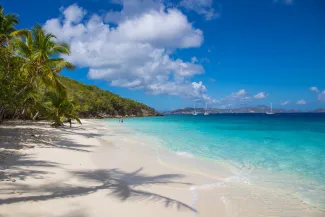
The U.S. Virgin Islands is preparing for its adult-use cannabis market rollout in 2026, and with it comes a critical warning from local authorities and federal agents: what's legal on a St. Croix beach is a federal crime the moment you walk into Cyril E. King Airport. This isn't theoretical. The jurisdiction gap between territorial law and federal enforcement has already led to a dozen tourist arrests in the final quarter of 2025, travelers caught attempting to board flights with dispensary-purchased cannabis products legally bought just hours earlier. The messaging from authorities is blunt: "Legal locally, illegal federally; don't risk your vacation." It's a confusing reality shaped by contradictory legal frameworks, and it's one that catches travelers off guard more often than it should. For anyone planning a trip to the USVI in 2026 or beyond, understanding where territorial law ends and federal jurisdiction begins isn't optional.The Line Between Legal and Felony
Under the Virgin Islands Cannabis Use Act, adults 21 and older can legally possess up to 2 ounces of cannabis flower for personal use, according to Travel. That's territorial law, and it applies on St. Thomas, St. Croix, and St. John wherever territorial jurisdiction holds. But step into the airport, the seaport, the ferry dock, or even the airspace between islands, and you're in federal territory. Cannabis remains a Schedule I controlled substance under federal law. Possession, no matter the amount, is a federal felony in those zones. That distinction creates a trap for travelers who assume that because they purchased cannabis legally on the island, they can carry it through security, onto a flight, or back home to the mainland. They can't. Federal agents are not interpreting local law. They are enforcing federal statutes, and those statutes supersede territorial legality at every port of entry, exit, and transit point. The boundary is sharp, and crossing it with cannabis in your bag is grounds for arrest, prosecution, and a federal criminal record.Who's Enforcing What
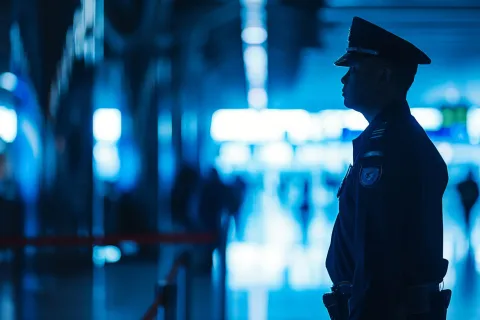
The jurisdictional confusion stems from the patchwork of law enforcement operating in the territory. Local police enforce territorial law. Federal agents, including Transportation Security Administration officers and Customs and Border Protection personnel, enforce federal law. TSA officers are federal employees, according to Travel. While they are primarily screening for security threats such as weapons and explosives, they are required to notify law enforcement if they discover cannabis during a routine bag check. CBP officers at customs checkpoints operate under the same mandate. That notification triggers federal charges, not a local citation. The result: travelers caught with legally purchased cannabis at airports face federal prosecution, not a territorial misdemeanor. It's not a fine or a warning. It's a felony charge with long-term consequences for employment, travel, and housing.What Travelers Are Getting Wrong
The most common mistake is assuming that because cannabis is legal in the territory, it's treated the same way as alcohol or tobacco. It's not. You can't pack it in checked luggage. You can't carry it through TSA. You can't bring it onto a flight, even if your destination is another U.S. state where cannabis is also legal. The second mistake is underestimating the reach of federal jurisdiction. Airports are obvious, but so are seaports, inter-island ferries, and national park land. Even travel between St. Thomas and St. Croix by air or sea crosses federal airspace and maritime zones where federal law applies. Possession during that transit is illegal, regardless of where you started or where you're going. Public consumption also remains illegal throughout the territory, including on beaches, streets, and in any public space. Fines for public use can reach $100, and while that's a territorial penalty, it adds to the broader legal complexity travelers face.Federal Seizures Are Rising
U.S. Customs and Border Protection reported 1,247 cannabis-related seizures at USVI ports in fiscal year 2024, a 15% increase from 2023. Sixty-five percent of those seizures occurred at airport outbound flights, travelers heading back to the mainland with products they assumed were fine to pack. That trend is accelerating as the territory's legal market expands. Cultivation licenses have already been issued, 13 across the three main islands, and the first legal retail sales are expected before the end of 2026. That means more product availability, more dispensaries opening, and more tourists purchasing cannabis legally without understanding the restrictions that come with it. The joint federal-local awareness campaign launched in January 2026 is an attempt to get ahead of that curve. Signage is going up at dispensaries, hotels, and airports. Tourism boards are updating visitor materials. But the reality is that enforcement will continue, and the consequences remain severe.What This Means for Travelers in 2026
If you're visiting the U.S. Virgin Islands and planning to purchase cannabis, do so with clear boundaries. Consume it where it's legal, on private property or in designated areas. Do not carry it into an airport, onto a ferry, or into a national park. Do not attempt to transport it off-island, even if you're flying to a state where it's legal. If you're flying between islands, leave cannabis behind. The airspace is federal jurisdiction, and possession during transit is a federal offense. The same applies to cruise passengers docking at Charlotte Amalie or Frederiksted; the moment you re-enter the port for departure, you're back under federal law. The legal framework isn't likely to change soon. Cannabis legalization at the federal level remains stalled in Congress, and the territorial government has no authority to alter federal enforcement at ports and airports. That leaves travelers navigating a system where the rules shift depending on which 100 feet of land you're standing on. It's clumsy, it's confusing, and it's enforceable. The arrests are real. The charges are federal. And the campaign slogan sums it up accurately: legal locally, illegal federally. Don't risk your vacation over a product you can't take home anyway.More travel news
Influencers Flock to Notorious Epstein Island
ST. THOMAS, U.S. Virgin Islands — Social media hype around visiting Jeffrey Epstein's former island ignores legal reality: trespassing is prohibited, but marine tours offer distant views.

Frontier revives $299 GoWild all-you-can-fly pass briefly
Denver-based Frontier Airlines revives its $299 GoWild! All-You-Can-Fly annual pass for bookings across 75 U.S. cities, Mexico, Central America and the Caribbean.
Southwest revives expansion with 2026 flights to St Thomas
St. Thomas, U.S. Virgin Islands — Southwest Airlines plans 2026 launch to the territory and schedules 113 special football flights for fans across the United States.
Chase the Sunsets: Marriott Bonvoy Unveils Top Caribbean Hotels for Epic Summer Skies
A curated list of Marriott's Caribbean gems, ideal for the magical 'Golden Hour.'Ever dreamt of soaking in the sun’s brilliant colors as it dips below the horiz...

About the Author

Bob Vidra
Bob Vidra, based in scenic Tahoe, is an esteemed tech editor known for his deep understanding of the dynamic intersection of technology, travel, and the outdoors.