
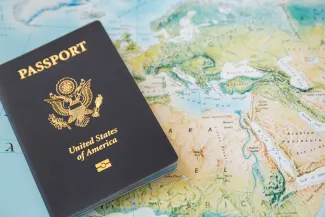
WASHINGTON — Passport Cancellations Trapping Americans Abroad
American travelers are walking into immigration nightmares overseas, detained and deported after their U.S. passports were flagged as invalid without their knowledge. The issue, surfacing in reports since early January 2026, stems from State Department actions that invalidate passports reported as lost or stolen, logging them into international databases that trigger automatic rejections at foreign borders. The pattern is clear: travelers board flights with what appear to be valid documents, only to face swift denial of entry at their destinations, often with little explanation. In some cases, detention follows. In others, immediate deportation back to the United States. One traveler documented his experience in a detailed Facebook post after flying 24 hours to Thailand, only to be denied entry and deported despite holding what he believed was a valid passport. His case isn't isolated. Similar incidents are emerging across multiple countries as immigration systems flag Americans based on data fed into Interpol's Stolen and Lost Travel Documents (SLTD) database.How Passports Get Flagged Without Warning
The mechanism is straightforward but devastating in execution. "Once reported as lost or stolen, the passport is rendered invalid for travel," according to published reports examining the disruptions. When a U.S. citizen reports a passport missing, the State Department logs that document number in domestic systems and feeds the information to Interpol's SLTD. From that moment forward, the passport becomes radioactive in global immigration networks. The problem: travelers don't always realize their old passport has been flagged. Someone reports a document lost years ago, receives a replacement, then accidentally travels on the canceled passport. Or a passport is reported stolen, but later recovered and used without understanding it's been permanently invalidated. The State Department doesn't send follow-up notifications when a document is flagged internationally. Border agents abroad see the flag instantly. "Flagged passports lead to swift denial of entry, often with little to no explanation," travel analysts noted in early January reports. No grace period. No appeal at the counter. Just a stamp denying entry and instructions to board the next flight home.Airline Failures Compound the Problem
Airlines bear responsibility here. Pre-boarding passport checks at U.S. departure gates routinely fail to catch flagged documents before travelers commit to long-haul international flights. The database queries airlines use to verify passport validity don't always sync with real-time Interpol feeds or State Department invalidation lists. Result: passengers clear check-in, pass through TSA, board the aircraft, fly across oceans or continents, and only discover the problem when they land. By then, they've lost time, money, and in some cases, their freedom while foreign authorities sort out detention logistics. The Thailand case illustrates the scale of the failure. Twenty-four hours in transit. Thousands of dollars in airfare. All wasted because no system caught the passport flag before departure from U.S. soil.Broader Context: U.S. Travel Disruptions in 2026
This passport flagging crisis arrives amid wider turbulence in American travel operations. Over recent weeks, multiple policy shifts and enforcement actions have converged to create an unusually chaotic environment for U.S. travelers. The TSA announced a new $45 fee launching in February, adding cost to domestic travel. A senator proposed legislation that could strip passports from certain Americans under new ban rules. Immigration and Customs Enforcement expanded document checks at Minneapolis-St. Paul International Airport, deploying agents for three-week patrols that have raised concerns about citizen encounters. "U.S. citizens aren't required to show identification to ICE agents, but of course we've seen U.S. citizens detained by ICE over time," travel advocates warned. New travel bans effective January 1, 2026, target nationals from 19 countries, introducing full or partial entry restrictions that complicate international itineraries. The State Department has focused publicly on visa suspensions for foreign nationals from high-risk countries, not on U.S. passport issues, leaving American travelers with little official guidance on avoiding flagging problems.What Travelers Must Do Now
The advice is simple: verify your passport's status before booking international travel. Contact the State Department directly to confirm your document isn't flagged in invalidation databases. Check that the passport you plan to use is the most recently issued and that no previous versions were reported lost or stolen. If you've ever reported a passport lost, confirm which document number was flagged and ensure you're not accidentally carrying that passport. If you recovered a reported-stolen passport, don't use it; the cancellation is permanent regardless of physical recovery. Travelers heading to developing regions or countries with strict entry enforcement face elevated risk. Immigration systems in Southeast Asia, the Caribbean, and Central America often enforce SLTD flags rigidly, with limited ability to override or investigate discrepancies on the spot. Detention facilities in these locations rarely offer rapid recourse for Americans caught in database errors. For expedition travelers and those heading to remote destinations, the stakes are higher. A passport denial in a hub airport is manageable. A denial after flying into a regional gateway with limited return flight options can strand you for days.The Larger Pattern
This isn't just bureaucratic inefficiency. It's a structural failure in how passport invalidation data flows between U.S. agencies, airlines, and foreign immigration systems. Travelers are paying the price in detention cells and deportation holds because no single entity owns the problem end to end. Until the State Department implements real-time traveler notifications when passports are flagged, and until airlines upgrade their verification systems to catch invalidated documents before boarding, Americans will continue landing abroad only to be turned around and sent home. The message for now: assume nothing. Verify everything. Your passport might be canceled, and you won't know until a foreign immigration officer tells you.About the Author

Jeff Colhoun
Jeff Colhoun is an acclaimed travel writer, photographer, and filmmaker, whose work is respected both in the United States and internationally.