The Winners and Losers in Airline Water Quality
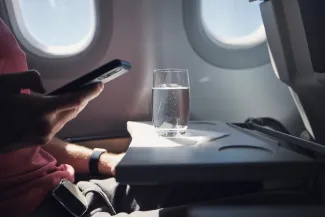
"Delta Air Lines and Frontier Airlines win the top spots with the safest water in the sky, and Alaska Airlines finishes No. 3," says Charles Platkin, PhD, JD, MPH, director of the Center for Food as Medicine and Longevity, according to Airlines. That's good news if you're flying these carriers and prefer your onboard beverages without a side of bacteria. But it's not all smooth sailing. American Airlines and JetBlue both earned D grades in the study, landing them at the bottom of the major airline rankings. That's a pretty significant gap when you consider that these scores are based on real health and safety metrics, not just customer satisfaction surveys. United Airlines scored a 2.70 out of 5.00, earning a C grade, with 105 violations of the Aircraft Drinking Water Rule and six E. coli violations across its 1,063-aircraft fleet, according to Airlines. Sun Country Airlines also received a C grade with a 3.00 score, logging 78 violations but no E. coli detections across its 46 planes.What the Study Actually Measures
The rankings use a Water Safety Score ranging from 0.00 to 5.00, with anything 3.5 or higher earning an A or B grade. The score takes into account five criteria: violations per aircraft, E. coli Maximum Contaminant Level violations, indicator-positive rates for coliform bacteria, public notices issued, and how frequently airlines disinfect and flush their water systems. Why does coliform matter? "Testing for coliform bacteria is important because their presence in drinking water indicates that disease-causing organisms (pathogens) could be in the water system," the Center for Food as Medicine and Longevity said in its report, according to Airlines. The data comes from compliance with the EPA's Aircraft Drinking Water Rule, established in 2011. This regulation requires airlines to test for coliform and E. coli, and to disinfect and flush their water tanks at least four times per year (or conduct monthly testing if they only disinfect annually).The Regional Airline Problem
If you think major carriers have water quality issues, regional airlines tell an even more concerning story. "Nearly all regional airlines need to improve their onboard water safety, with the exception of GoJet Airlines," Platkin says, according to Airlines. That's worth noting if you're on a connecting flight operated by a regional partner. The aircraft might have your preferred airline's branding, but the water system maintenance could be a different story altogether.The Numbers Behind the Concern
Out of 35,674 water samples tested during the study period, 2.7% came back positive for total coliform; that's 949 positive samples, according to Airlines. E. coli was detected 32 times across 21 different airlines. These aren't just abstract statistics. Coliform and E. coli in drinking water can cause gastrointestinal illness, particularly in vulnerable populations like young children, elderly passengers, or anyone with a compromised immune system. United Airlines, for example, had 0.0988 violations per aircraft and conducted 9.247 disinfecting or flushing events per aircraft during the study period, according to Airlines. That might sound like a lot of maintenance activity, but the violation rate still landed them in C territory.What This Means for Your Next Flight
So should you swear off airplane beverages entirely? That depends on your comfort level with risk and which airline you're flying. The study makes it pretty clear that not all carriers treat water safety with the same level of attention. Airlines like Southwest and American have stated they comply with federal standards and use municipal water sources, continuously working to improve their procedures, according to Airlines. But here's the thing: the EPA rarely issues civil penalties for violations, even when airlines don't meet the standards, according to Airlines. Without meaningful enforcement, there's less incentive for carriers to go above and beyond the minimum requirements. If you want to play it safe, stick with bottled water. Skip the coffee and tea, which are made with tap water from those onboard tanks. It's not the most glamorous travel hack, but it's probably the most effective one when it comes to avoiding potential waterborne illness. The good news? This study gives passengers real information to make informed choices. If water quality matters to you, you can now factor that into your airline selection alongside price, routes, and seat comfort. Delta and Frontier are clearly doing something right; American and JetBlue have some catching up to do.More travel news
Major US Airlines Ground Nearly 1500 Flights June 3
NEW YORK, N.Y. - Widespread disruptions across Texas, Illinois, California, Massachusetts, New Jersey, and New York grounded 142 flights and delayed 1,294 on June 3, 2026, stranding travelers on major carriers.

Massive Flight Chaos Hits USA With 4,508 Delays
NATIONWIDE - A single-day disruption on June 2, 2026, left thousands of passengers stranded as 4,508 flight delays and 85 cancellations swept across major U.S. carriers and states.
American Airlines Passenger Discovers Used Condom
PHOENIX, Ariz. - A 20-year Executive Platinum member found a used condom wedged in his seat on an American Airlines flight from Phoenix to El Paso, raising questions about cleaning standards and customer service response.
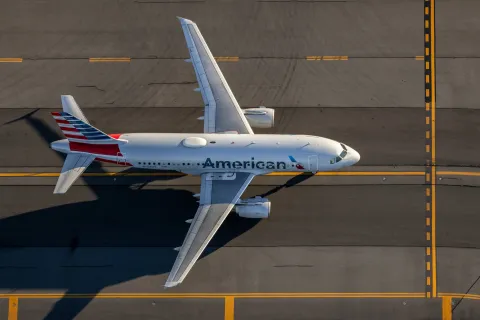
American Airlines Enforces Lifetime Bans Forever
FORT WORTH, Texas - American Airlines shuts down accounts created by members who were banned seven years ago for opening multiple Citibank credit cards, testing whether lifetime really means forever.
About the Author

Bob Vidra
Bob Vidra, based in scenic Tahoe, is an esteemed tech editor known for his deep understanding of the dynamic intersection of technology, travel, and the outdoors.