
The WiFi Divide at 35,000 Feet
There's a new kind of class system emerging in air travel, and it has nothing to do with the size of your seat or whether you get a hot meal. It's all about whether your airline has installed Starlink. New data from Ookla, the company behind Speedtest, shows airlines that have opted for SpaceX's low Earth orbit (LEO) satellite connectivity have opened up a measurable lead over carriers still relying on older geostationary (GEO) satellite systems. And the gap isn't small; we're talking about the difference between streaming a movie in HD and watching the buffering wheel spin. According to Ookla, airlines with more than 90% speed consistency include airBaltic at 98.3%, WestJet at 95.8% and Hawaiian Airlines at 95.3%. What do they have in common? They're "almost exclusively" served by Starlink. Meanwhile, carriers below the 50% consistency threshold now face what Ookla calls a "distinct competitive disadvantage."Numbers That Tell the Story
The performance gap shows up clearly when you look at median download speeds. Across more than 50 airlines evaluated by Ookla, the eight carriers with median download speeds above 100 Mbps were all served by Starlink. Put another way: no airline using Starlink fell below that 100 Mbps threshold, while half of airlines using traditional satellite systems couldn't crack it. This isn't just about bragging rights. It's the difference between WiFi that works like it does on the ground and WiFi that barely loads your email. Passengers are noticing, and airlines know it. The data reveals what Ookla describes as a widening "LEO divide" between airlines using low Earth orbit satellites and those stuck with geostationary systems. The difference comes down to physics; LEO satellites orbit at roughly 550 km altitude versus 35,000 km for traditional GEO satellites. That shorter distance means less signal delay, faster speeds, and the kind of performance that actually lets you join a video call or stream Netflix mid-flight.Who's Leading the Pack
The consistency numbers are particularly telling. When airBaltic hits 98.3% consistency, that means passengers are getting reliable, fast WiFi on nearly every flight. Same goes for WestJet at 95.8% and Hawaiian at 95.3%. These aren't occasional wins; they're the new baseline for airlines that have made the Starlink investment. Hawaiian Airlines deserves credit for being an early mover, launching Starlink commercially in February 2024. That first-mover advantage is paying off in customer satisfaction and competitive positioning. Other carriers have taken notice and are racing to catch up. For context, Starlink captured 47.8% of commercial airline Speedtest samples by the fourth quarter of 2025, according to Ookla. That's remarkable growth for a technology that's only been commercially deployed on airlines for roughly two years. It's also a sign that this isn't a niche product anymore; it's becoming standard equipment for carriers that want to compete on passenger experience.The Legacy System Problem
Airlines still using GEO satellite systems aren't just slower; they're inconsistent. And inconsistency might be worse than being universally mediocre. When passengers can't predict whether WiFi will actually work on their flight, they stop relying on it for anything important. That creates a trust problem that's hard to fix, even if speeds occasionally improve. The competitive pressure is mounting. Ookla's data shows that airlines below 50% consistency are now at a "distinct competitive disadvantage," which is industry-speak for: your passengers are choosing other airlines because your WiFi is terrible.Reading the Radar
Here's what this means if you're booking flights: in-flight WiFi quality is now a legitimate factor in choosing an airline, especially on longer routes where you're counting on staying connected. If you need to work, stay in touch with family, or just want entertainment options beyond the seatback screen, checking whether your airline uses Starlink is worth the 30 seconds of research. Hawaiian, WestJet, airBaltic, and a growing list of carriers are delivering WiFi that actually performs. United, Emirates, Alaska and Air France have deployed Starlink on portions of their fleets, with some aircraft hitting median speeds over 300 Mbps. That's faster than a lot of home internet connections. But here's the catch: not every plane in a carrier's fleet may have Starlink yet. Airlines are rolling out the technology gradually, which means your mileage may vary depending on which aircraft you're assigned. If WiFi matters to you, it's worth checking forums or asking when you book whether your specific route typically gets Starlink-equipped planes. The broader point is this: the days of accepting terrible in-flight WiFi as just part of flying are ending. Starlink has proven that reliable, fast connectivity at altitude isn't just possible; it's commercially viable and increasingly common. Airlines that haven't made the switch are betting passengers won't care, and Ookla's data suggests that's a losing bet.More travel news
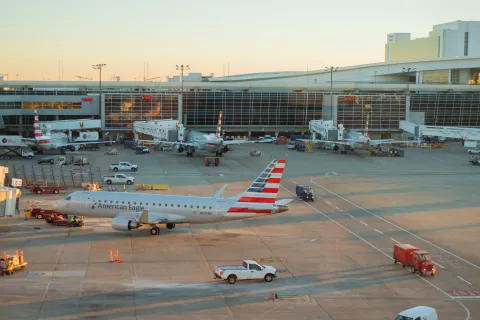
American Airlines Bringing Starlink to 500 Planes by 2027
Fort Worth, Texas - American Airlines commits to SpaceX's Starlink for more than 500 narrowbody jets, promising home-quality internet on domestic routes starting early 2027.
United Ditches Panasonic for Starlink WiFi
CHICAGO, United States - United Airlines faces mounting Wi-Fi failures on transpacific routes as Panasonic satellite capacity hits its ceiling, leaving long-haul passengers stranded offline during multi-hour flights while Starlink upgrades lag behind.

36 Major Airlines Sign On for Starlink In-Flight WiFi
Worldwide - Starlink's airline roster hits 36 carriers as Copa Airlines joins the satellite WiFi push, but regulatory headwinds force service suspension in Papua New Guinea.

British Airways Enables Inflight Calls via Starlink
LONDON, United Kingdom - British Airways joins a small club of carriers allowing voice and video calls onboard as it rolls out Starlink Wi-Fi, sparking swift backlash from passengers.
About the Author

Bob Vidra
Bob Vidra, based in scenic Tahoe, is an esteemed tech editor known for his deep understanding of the dynamic intersection of technology, travel, and the outdoors.