British Airways Breaks From the Pack
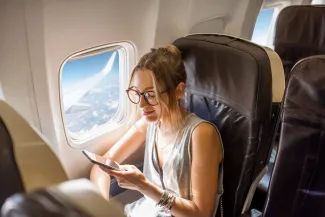
With its rollout of Starlink Wi-Fi, British Airways is joining an exceptionally small group of airlines willing to permit voice and video calls onboard, according to Live and Let's Fly. While most carriers have steadfastly banned such communication outright, the UK flag carrier is taking a different approach as it upgrades its inflight connectivity. The timing makes sense from a technical standpoint. Starlink's satellite technology offers the kind of bandwidth that makes crystal-clear voice and video calls actually feasible at 35,000 feet. But the decision to allow them? That's where British Airways parts ways with the majority of the industry. Most airlines have heard the howls of protest loud and clear over the years and decided the risk isn't worth it. The assumption has been universal: allowing calls would destroy the passenger experience. It's why you can text, email, and doomscroll through social media on most flights these days, but pull out your phone to make an actual call and you'll get shut down faster than someone trying to recline during meal service.Why the Backlash Is So Predictable
The reaction to British Airways' announcement didn't take long to materialize, and it wasn't pretty. Passengers immediately conjured visions of being trapped next to someone conducting a full business presentation over speakerphone or listening to both sides of a very personal breakup conversation somewhere over the Atlantic. And look, those concerns aren't entirely unfounded. We've all been on a train or in an airport lounge where that one person decides everyone within earshot needs to hear their entire work calendar discussed at full volume. The enclosed space of an aircraft cabin, where you literally cannot leave, seems like the worst possible venue for that behavior. But here's what's interesting: the current ban on voice calls hasn't made flying particularly peaceful. Crying babies, chatty seatmates, the person watching action movies without headphones on their iPad; flights are already noisy environments. The question isn't whether calls would add noise. It's whether they'd add meaningfully more disruption than what already exists.The Real Question Isn't About Noise
Here's where the conversation gets more nuanced. According to Live and Let's Fly, the issue isn't necessarily the act of making a call itself. And that tracks with something worth considering: we're not actually upset about the sound of a human voice on a plane. We tolerate hours of conversation between passengers without demanding silence. What bothers people is the specific nature of phone conversations, the one-sided eavesdropping, the performative loudness some people adopt when they're on a call, the sense that someone is prioritizing their need to talk over everyone else's desire for a reasonably quiet flight. It's a social compact issue more than a pure noise problem. Airlines could address this through policy rather than outright bans. Designate quiet zones where calls aren't permitted. Establish clear guidelines about volume and duration. Empower flight attendants to intervene when someone's call becomes disruptive, just as they already do when passengers get rowdy or blast music. The technology exists. British Airways is betting they can manage the human behavior part. Whether they're right remains to be seen.Where This Leaves Travelers
The reflexive disgust at inflight calls might be missing something important. Communication needs have evolved dramatically since airlines first implemented these bans. Video calls with family, quick check-ins with colleagues, the ability to actually participate in time-sensitive conversations; these aren't frivolous luxuries for everyone. For business travelers especially, the ability to make a quick call could be genuinely valuable. Instead of landing and immediately diving into voicemails and catch-up mode, you could handle critical items en route. For families separated by distance, a video call with kids at bedtime isn't an inconvenience to fellow passengers; it's a meaningful connection that wouldn't otherwise happen. The key will be enforcement. If British Airways is serious about this, they'll need clear rules and consistent application. No speakerphone. Reasonable volume expectations. Limited duration if the flight is full and space is tight. And actual consequences for passengers who abuse the privilege. Other airlines will be watching this closely. If it works, if passengers adapt and the apocalyptic cabin scenarios don't materialize, others might follow. If it turns into the nightmare critics predict, British Airways will have confirmed exactly why everyone else said no in the first place. For now, passengers who hate the idea have options: fly carriers that maintain the ban, invest in better noise-canceling headphones, or book seats in quieter cabin sections. And those who've been waiting years to make that call mid-Atlantic? British Airways just became a more attractive choice. It's an experiment worth trying, even if it makes some of us uncomfortable. Because sometimes the thing everyone assumes will be terrible turns out to be just fine once we actually try it.More travel news
Lufthansa Blocks First Class Awards for Millions
FRANKFURT, Germany - Lufthansa blocks first-class award redemptions for frequent flyers in three major markets, eliminating a prized benefit for millions of travelers who've been banking miles for premium cabin flights.
Iberia Pushes Israel Flights to October Amid Safety Fears
Madrid, Spain - Spanish carrier Iberia extends its Israel suspension through October 24, mirroring British Airways' timeline, while budget operators begin testing the water with gradual service resumptions.

Disruptive Flyers Face Industry-Wide Travel Ban
LONDON, United Kingdom - Ministers consider cross-airline ban system to curb persistent disruptive behavior, drawing on India's unified no-fly model.

Major Airlines Battle Airspace Bans and Travel Chaos
TORONTO, Canada - Air Canada joins Delta, British Airways, Lufthansa, and other major carriers navigating Middle East airspace restrictions that threaten international route networks.
About the Author

Bob Vidra
Bob Vidra, based in scenic Tahoe, is an esteemed tech editor known for his deep understanding of the dynamic intersection of technology, travel, and the outdoors.