Stay current with our airline news coverage.
SFO's European Network Has Never Been Bigger
SAN FRANCISCO — If you've been shopping around for flights to Europe from the Bay Area, you've probably noticed something: there's a lot more choice than there used to be. In 2026, San Francisco International Airport will play host to 16 different airlines operating nonstop service to Europe, a remarkable lineup that puts SFO among the busiest and most competitive transatlantic gateways in the country. According to Cirium data reported by Simple Flying, those 16 carriers have scheduled a combined 8,682 departures on SFO–Europe routes in 2026, offering more than 2.65 million seats across the year. That works out to roughly two dozen nonstop flights to Europe every single day, when you average it out; a steady stream of widebodies shuttling passengers from the Bay Area to destinations across the continent. It's a big deal, not just for volume, but for variety. Sixteen airlines is a lot of flags and frequent flyer programs competing for your business on a single route corridor. You've got U.S. majors, European flag carriers, and leisure operators all jostling for seats in the same cabin. And for travelers, that usually means more flight times, more alliance options, and sometimes better fares when airlines have to fight for share.United Leads, But the Field Is Crowded
United Airlines still owns the lion's share of this market. According to Simple Flying, the hometown carrier is scheduled to operate 3,106 flights on SFO–Europe routes in 2026, with 850,948 seats up for grabs. That's more than a third of the total capacity, which makes sense given United's fortress hub at SFO and its longtime focus on building transatlantic feed. But United isn't alone. The presence of 15 other airlines means there's plenty of competition. You'll see European legacy carriers connecting their home hubs, low-cost long-haul operators chasing leisure demand, and alliance partners filling niches that United can't or won't serve directly. The result is a route map that looks less like a spoke-and-hub diagram and more like a spider web; lots of city pairs, lots of metal, lots of daily departures to places well beyond London and Paris. For passengers, that diversity matters. If you're trying to get to a secondary European city, or you want to fly nonstop on a Star Alliance, SkyTeam, or oneworld carrier to maximize your elite status, the odds are better than ever that you'll find what you need leaving from SFO.Why SFO? Tech Money and Vacation Demand
San Francisco's transatlantic boom isn't random. The Bay Area has a unique combination of corporate travel driven by the tech sector and strong outbound leisure demand from affluent, well-traveled residents. That mix supports both high premium-cabin load factors and substantial economy volume, which is exactly what airlines need to make long, expensive widebody routes pencil out. European destinations have always been popular with Bay Area travelers, but the post-pandemic surge in international demand has turbocharged things. SFO airport executives have noted that international traffic is now outpacing domestic growth and that the airport's European routes are among the busiest in its global network. "When you look at the constellation of carriers in our network, we're running out of airlines and places to go," SFO Chief Financial Officer Miles Bumen said, according to Aviation Week. "There will always be new routes and new markets. But that list has gotten a lot shorter." In other words, SFO's European network is reaching maturity. The airport has successfully secured nonstop service to most of the major European cities with a viable business case, and the next phase of growth will be more about frequency, upgauging, and fine-tuning rather than adding entirely new dots on the map.Europe Accounts for a Big Slice of SFO's International Pie
While Asia still represents the largest share of SFO's international traffic, Europe is solidly in second place, accounting for around 27 percent of the airport's overseas passengers. That's a substantial chunk, and it's growing. Airlines are clearly betting that the demand will hold, given the sheer number of seats they're committing to the market in 2026. For travelers, this means SFO is increasingly a legitimate alternative to traditional East Coast gateways for Europe-bound flights. Yes, you'll have a longer flight time than you would from New York or Boston, but you'll also have more direct routing options, potentially better fares thanks to competition, and the convenience of departing from your home airport rather than connecting through a hub three time zones away.What This Means for Bay Area Travelers
More airlines and more flights generally translate into better options and more competitive pricing. When 16 carriers are all vying for your business on the same corridor, they have to work a little harder to win you over; whether that's through schedule convenience, better premium products, or promotional fares. That said, more competition also means a more crowded airport. SFO's international terminal is already one of the busiest in the country, and adding more widebody departures to Europe will put additional pressure on gates, check-in counters, and security queues. If you're flying to Europe from SFO in 2026, you'll want to build in a little extra time at the airport, especially during peak summer travel season when those two dozen daily Europe flights are all bunched into a few afternoon and evening departure banks. The flip side is that you'll have more flexibility. Miss your morning flight to London? There's probably another one leaving later in the day, potentially on a different airline with award space or a last-minute fare that fits your budget.The Bottom Line
Sixteen nonstop airlines to Europe is a remarkable milestone for any U.S. airport, and it underscores how far SFO has come as a global gateway. For Bay Area travelers, it's good news: more choice, more competition, and more reasons to skip the connection and fly nonstop. Just don't expect many more new routes to pop up overnight; as SFO's CFO noted, the list of viable unserved markets is getting shorter. The airport has built one of the densest and most diverse transatlantic networks in the country, and 2026 will be the year it really shows.More travel news
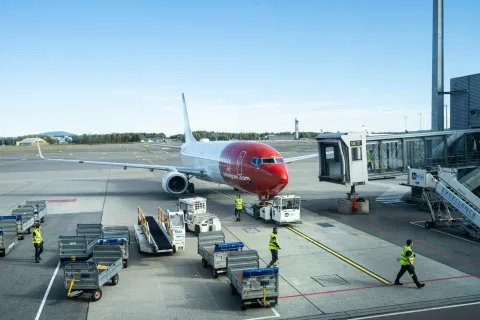
Oslo Airport Chaos: 94 Delays Strand Europe Travelers
OSLO, Norway - Major travel disruptions hit Oslo Gardermoen Airport with 94 flight delays and 10 cancellations, stranding passengers on routes across Sweden, Denmark, Germany, Spain, and the United Kingdom.
Man sneaks onto United flight with fake pass
TEXAS - A passenger allegedly used a counterfeit boarding pass to board a United Airlines flight, hiding in a bathroom before being discovered and removed from the aircraft.

Lufthansa Blocks First Class Awards for Millions
FRANKFURT, Germany - Lufthansa blocks first-class award redemptions for frequent flyers in three major markets, eliminating a prized benefit for millions of travelers who've been banking miles for premium cabin flights.

Iberia Pushes Israel Flights to October Amid Safety Fears
Madrid, Spain - Spanish carrier Iberia extends its Israel suspension through October 24, mirroring British Airways' timeline, while budget operators begin testing the water with gradual service resumptions.

About the Author

Bob Vidra
Bob Vidra, based in scenic Tahoe, is an esteemed tech editor known for his deep understanding of the dynamic intersection of technology, travel, and the outdoors.