ST. THOMAS, U.S. Virgin Islands — The messages started appearing in travel forums around January, posted by users who clearly hadn't bothered to read past the clickbait headlines. "Planning my Epstein Island trip for spring break!" one declared. "Who's down to explore Little St. James?" asked another, complete with flame emojis and a profoundly optimistic itinerary. The problem, of course, is that Little St. James Island isn't open. It has never been open. It remains emphatically, legally, and permanently closed to the public.
What we're witnessing is a collision between viral curiosity and actual Caribbean geography. YouTube creators with drone footage, TikTok personalities narrating boat approaches, Instagram accounts promising "forbidden island content." The algorithm rewards spectacle, and few things generate clicks quite like the promise of accessing somewhere explicitly off-limits. But beneath the sensationalism lies a genuine travel opportunity that doesn't require trespassing, legal trouble, or contributing to the ghoulish tourism economy that occasionally sprouts around tragedy.
The Legal Reality of Little St. James Access
Little St. James is a 72-acre private island approximately three miles south of St. Thomas. Jeffrey Epstein purchased it in 1998 for $7.95 million. Following his 2019 arrest and death, the property remained under estate control until May 2023, when billionaire Stephen Deckoff acquired it for $60 million, according to the Wall Street Journal. Deckoff, founder of Black Diamond Capital Management, has announced plans for luxury resort development, though no timeline has been made public.
The island's status is unambiguous: it is private property. No public docks exist. No tour operators hold landing permits. The structures, beaches, and interior remain inaccessible to anyone without explicit permission from current ownership. Approaching too closely constitutes trespassing under U.S. Virgin Islands law, which carries fines, potential arrest, and the possibility of having your boat impounded. The U.S. Coast Guard patrols these waters, and local law enforcement takes violations seriously.
This legal reality has prompted some responsible travel outlets to spell out exactly what is allowed. Jetsetter Guide, for example, has published a practical breakdown of how travelers can see Little St. James from legal vantage points without getting themselves in trouble, focusing on permitted distances, reputable charters, and what to expect from offshore viewing rather than fantasies of access. Their guide makes it clear that curiosity does not require crossing boundaries, and that observing the island from the water is very different from attempting to approach it.
Yet the influencer economy operates on different incentives. Views translate to revenue. Forbidden content performs exceptionally well. The result is a steady stream of boat charter requests from content creators who seem genuinely surprised when captains refuse to approach within prohibited distances, or when drone footage results in Coast Guard inquiries rather than sponsorship deals.
What Responsible Marine Tours Actually Offer
Legitimate charter operators in the U.S. Virgin Islands will position boats at legal distances from Little St. James, typically 500 to 1,000 feet offshore. From this vantage, you can observe the island's structures: the main villa complex, guest houses, the distinctive blue-striped temple building constructed around 2010, and the peculiar overwater bungalow. Binoculars help. Telephoto lenses work better. But this is observation, not exploration, and the distinction matters both legally and ethically.
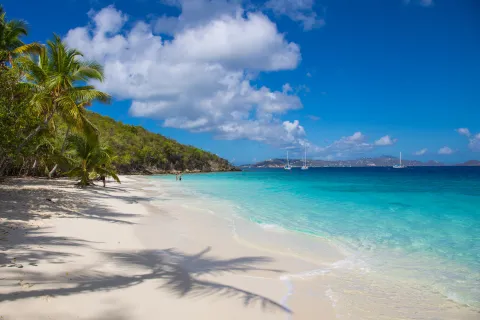
The genuine attraction in these waters has nothing to do with scandal and everything to do with marine ecosystems that predate human drama by millions of years. The Ledges, a coral reef system surrounding Little St. James, offers world-class snorkeling and diving. Hawksbill turtles cruise past brain coral formations. Southern stingrays glide over sandy patches. Schools of blue tang and parrotfish congregate around elkhorn coral stands that remain stubbornly indifferent to whatever happened on land.
Charter operators like Adventure Center out of Red Hook on St. Thomas offer half-day snorkel trips that incorporate distant views of Little St. James while spending most of their time at superior dive sites nearby. Rates run $95 to $150 per person depending on season and group size. The itinerary satisfies curiosity while actually delivering the underwater experience that justifies getting on a boat in the first place.
St. Thomas and St. John: Where to Base Your Exploration
Cyril E. King Airport on St. Thomas receives direct flights from Atlanta, Miami, New York, and Charlotte, with February through April representing the dry season sweet spot. Book accommodations eight to twelve weeks ahead for reasonable rates; St. Thomas offers everything from resort properties like The Ritz-Carlton to mid-range options in Red Hook, the jumping-off point for boat charters and ferries to St. John.
The U.S. Virgin Islands offer a practical advantage often overlooked in Caribbean travel planning: no passport requirement for American citizens. You clear no customs, face no immigration queues, use U.S. currency, and operate under familiar legal frameworks. This accessibility has contributed to the region's popularity among travelers whose documentation situation might charitably be described as aspirational.
St. John, accessible via 20-minute ferry from Red Hook, provides a different experience entirely. Two-thirds of the island comprises Virgin Islands National Park, with hiking trails threading through ruins of 18th-century sugar plantations and beaches like Trunk Bay offering some of the Caribbean's clearest snorkeling. Lodging on St. John skews toward vacation rentals and eco-resorts; the island maintains a decidedly quieter vibe than its larger neighbor.
The Broader Context: Dark Tourism and Ethical Boundaries
What's happening around Little St. James fits a broader pattern in contemporary travel culture. Sites associated with tragedy, crime, or historical atrocity attract visitors whose motivations range from legitimate educational interest to something considerably less defensible. Chernobyl tours, serial killer walking routes, Pablo Escobar-themed experiences in Medellín; the line between education and exploitation remains perpetually blurred.
The difference here is that Little St. James offers no educational infrastructure, no interpretive context, no museum or memorial. It's simply private property that once hosted criminal activity. Victims of that activity have repeatedly expressed discomfort with the island's transformation into a curiosity spectacle. Respecting those wishes costs nothing and requires only the minor inconvenience of not being a complete ghoul.
Legitimate interest in the island's role in a significant criminal case can be satisfied through distance viewing during marine excursions focused primarily on the region's actual attractions. Anything beyond that crosses from curiosity into something considerably less defensible, regardless of how many followers might click on the resulting content.
Practical Recommendations for Responsible USVI Travel
Focus itineraries around what makes the U.S. Virgin Islands genuinely exceptional. The three-island territory offers 130 named beaches, extensive reef systems, and a cultural blend of Danish colonial history, Caribbean traditions, and American infrastructure. St. Croix, the largest island, remains criminally undervisited despite superior diving and a more developed local food scene centered around Christiansted.
Book snorkel charters through established operators with Coast Guard certifications and proper insurance. Expect to pay $100 to $175 for half-day trips, more for full-day excursions or specialized diving. Equipment is typically included; underwater cameras rent for $25 to $40 additional. Tipping conventions follow standard American practice at 15 to 20 percent for satisfactory service.
The viral moment around Little St. James will eventually fade, replaced by whatever fresh spectacle captures algorithmic attention next. The reefs will remain. The turtles will continue their migrations. And the U.S. Virgin Islands will still offer one of the Caribbean's most accessible and genuinely rewarding tropical experiences, provided travelers can resist the urge to turn tragedy into entertainment.
Sometimes the best travel stories come from respecting boundaries rather than crossing them. Sometimes the photograph you don't take matters more than the one you do. And sometimes, the most interesting thing about an island isn't the island itself, but rather what its notoriety reveals about the travelers who can't seem to look away.
More travel news
USVI Cannabis Laws Clash With Federal Rules at Airports
ST. THOMAS, U.S. Virgin Islands — While cannabis possession is legal on territorial beaches and streets, federal agents are arresting travelers who forget that airports remain federal jurisdiction where the same product triggers felony charges.
Frontier revives $299 GoWild all-you-can-fly pass briefly
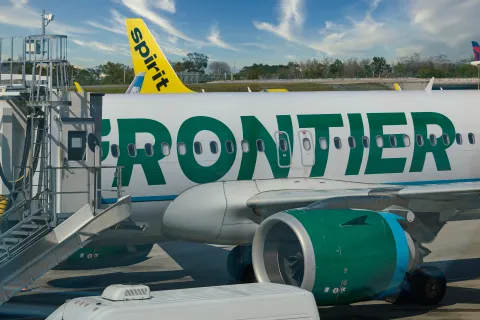
Denver-based Frontier Airlines revives its $299 GoWild! All-You-Can-Fly annual pass for bookings across 75 U.S. cities, Mexico, Central America and the Caribbean.
Southwest revives expansion with 2026 flights to St Thomas
St. Thomas, U.S. Virgin Islands — Southwest Airlines plans 2026 launch to the territory and schedules 113 special football flights for fans across the United States.
Chase the Sunsets: Marriott Bonvoy Unveils Top Caribbean Hotels for Epic Summer Skies
A curated list of Marriott's Caribbean gems, ideal for the magical 'Golden Hour.'Ever dreamt of soaking in the sun’s brilliant colors as it dips below the horiz...
About the Author

Andy Wang
As our Asia Editor and a first-generation American, Andy Wang brings a unique dual perspective to Jetsetter Guide.