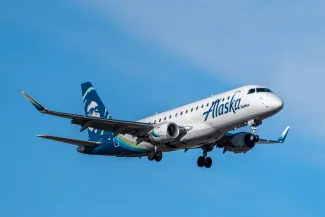
SAN DIEGO — Fresh momentum is building for flyers along the Southern California coast. Alaska Airlines will open a dedicated Boeing 737 pilot base at San Diego International Airport, a move scheduled to become operational on June 1, 2026, and designed to anchor the carrier’s fastest-growing hub in the United States.
Why the San Diego pilot base matters to everyday travelers
For leisure and business passengers who have grown accustomed to sometimes limited nonstop options in San Diego, the new pilot base signals more than an internal staffing shuffle. It positions the airport to see a larger schedule of point-to-point flights, better aircraft utilization, and, ideally, greater on-time reliability. Alaska Airlines plans to station 70 first officers and 80 captains during the initial rollout. According to industry notices circulated to flight crews, bidding for those positions will occur between Dec. 15 and Dec. 28, 2025, with final assignments posted on Jan. 6, 2026. A second tranche of around 100 pilots is slated to transfer later in 2026, boosting the headcount to roughly 250 by the end of next year.
How Alaska Airlines arrived at a San Diego strategy
The carrier’s network historically radiated from Seattle-Tacoma International Airport, with Portland, Anchorage, San Francisco, and Los Angeles serving as smaller spokes. Over the past few years, however, growth in Seattle has been choked by runway and gate congestion, and a shortage of premium slots has limited expansion in both Los Angeles and San Francisco. San Diego, by contrast, offers plentiful gate availability and faces only one dominant competitor, Southwest Airlines. While Southwest remains the market leader, its recent profitability challenges have opened the door for Alaska Airlines to lure loyalty program members and corporate contracts. Anchorage Daily News first reported the pilot-based decision, noting that it follows a period of rapid route launches that have given the airline a double-digit share of the city’s departing seats. By designating San Diego as a home domicile for flight crews, Alaska not only reduces hotel and deadheading costs but also cements the airport’s status as a true hub rather than a mere outstation.
Shifting pilots out of Los Angeles and San Francisco
Travelers in California’s two largest coastal cities may notice fewer Alaska-metal aircraft on the departure boards. The company plans to trim pilot staffing in both Los Angeles and San Francisco by roughly 25 percent, reallocating those cockpit crews to Southern California’s smaller seaside airport. The strategy mirrors the airline’s belief that San Diego’s lower competition and simplified operations can deliver more substantial returns than the bruising turf wars at LAX or SFO, where American, Delta, United, and Southwest all maintain major operations.
What the 2026 pilot base could mean for flight schedules
Although Alaska Airlines has not yet filed official timetable changes, historic patterns at its other crew domiciles hint at what passengers might expect:
- Earlier first departures and later final arrivals because pilots begin and end their workdays locally.
- Additional point-to-point routes, especially to Mountain West, Pacific Northwest, and Mexican leisure markets.
- Higher frequencies on core business routes such as Seattle, Portland, and Boise.
- Potential introduction of red-eye services, thanks to easier crew swaps.
Regional ripple effects beyond Southern California
United Airlines already stations pilots in Cleveland, Las Vegas, and Orlando primarily to curb hotel bills rather than to feed connecting flights. Alaska Airlines’ decision differs because the company has paired the pilot base with a multi-year pattern of up-gauging and route adds in San Diego. If the blueprint proves profitable, analysts say the carrier could replicate it in other midsize West Coast cities constrained by larger rivals.
If you routinely travel between Southern California and the West Coast, mark June 1, 2026, on your calendar. That is when Alaska Airlines flicks the switch on its San Diego pilot base, bringing 150 Boeing 737 aviators to town on day one and another 100 later in the year. More crews on the ground usually translate into denser schedules and improved reliability—welcome news for anyone who has sprinted through LAX or SFO only to face a delay. For San Diego itself, the development further cements the airport’s climb from sleepy seaside field to bona fide hub. And for travelers, the promise is simple: more nonstop choices, fewer connections, and a chance to rack up Mileage Plan points without driving north on Interstate 5.
More travel news
Massive Flight Chaos Hits USA With 4,508 Delays
NATIONWIDE - A single-day disruption on June 2, 2026, left thousands of passengers stranded as 4,508 flight delays and 85 cancellations swept across major U.S. carriers and states.

Alaska Airlines Hit With Fine for Boarding Drunk Flyers
SEATTLE — Alaska Airlines faces a proposed $165,000 FAA fine for allegedly allowing visibly intoxicated passengers to board 11 flights between February 2024 and February 2025.
Humanoid Robot Scores Its Own Airplane Seat
Oakland, California - A 75-pound humanoid robot named Bebop caused a delay on Southwest flight 1568 when flight attendants discovered its oversized lithium battery, exposing a regulatory gray zone.

Alaska Airlines Goes Global With Premium Upgrades
SEATTLE - Alaska Airlines debuts European service with luxury business suites but skips premium economy, the lucrative middle ground that's become standard on most long-haul routes.
About the Author

Bob Vidra
Bob Vidra, based in scenic Tahoe, is an esteemed tech editor known for his deep understanding of the dynamic intersection of technology, travel, and the outdoors.