Thousands of Flights Delayed Across U.S. as Major Disruption Hits Multiple Airlines
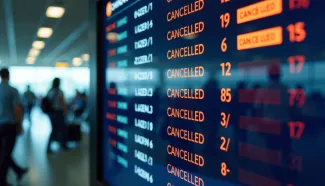
NATIONWIDE - There are bad travel days, and then there's June 2, 2026. On that Tuesday, flights across the United States ground to a crawl, with 4,508 delays and 85 cancellations affecting passengers from Hawaii to New York, according to TravelPulse. It wasn't just one airline having a rough day; Southwest, American, Hawaiian, Alaska, and Horizon all saw significant operational disruptions in what appears to have been a systemwide event rather than an isolated hiccup. When delays reach into the thousands in a single day, you're not looking at typical summer thunderstorms or one airport's staffing problem. This was something bigger, touching multiple carriers and spanning states and territories from coast to coast.Where the Disruptions Hit Hardest
The June 2 disruptions affected a particularly wide geographic spread, hitting Hawaii, Puerto Rico, Alaska, Nevada, New York, and Pennsylvania, according to TravelPulse. That's not a pattern that suggests a single weather system or one airport melting down; it points to something affecting the broader national air traffic system. For passengers trying to get to or from these states, the day likely meant long waits at gates, frantic rebooking attempts, and the familiar stress of watching connection times evaporate. Hawaii and Alaska are especially tricky when delays hit; there aren't a lot of alternative routing options when you're flying to or from an island or the far north, and missed connections can mean an overnight stay you didn't plan for. Puerto Rico adds another layer of complexity. San Juan's Luis Muñoz Marín International Airport serves as a critical hub for both U.S. mainland connections and Caribbean travel, so delays there ripple outward quickly. Nevada's Las Vegas hub and the busy New York area airports are already operating near capacity on good days; when something goes sideways, the cascading effects can be brutal.The Airlines in the Middle of It
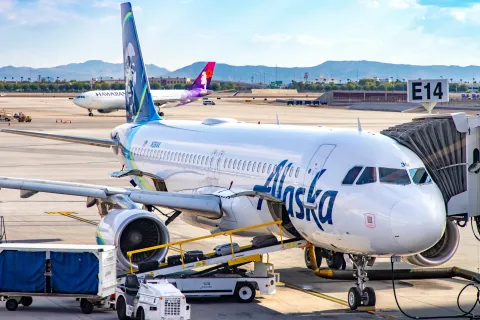
Southwest, American, Hawaiian, and Alaska all found themselves dealing with significant disruptions, along with regional carrier Horizon, according to TravelPulse. That's a mix of business models and network structures, which makes the breadth of the disruption even more notable. Southwest operates a point-to-point network, meaning a delay in one city doesn't necessarily ground operations elsewhere the way it might for a hub-and-spoke carrier. American, on the other hand, runs major hubs that can amplify problems quickly if things start going wrong. Hawaiian and Alaska specialize in markets where frequency is lower and backup options are limited; a single canceled flight can strand passengers for a day or more. The fact that all these carriers were hit simultaneously suggests the root cause wasn't something internal to any one airline's operations. Weather? Air traffic control flow restrictions? A technical issue affecting multiple systems? The specific trigger hasn't been confirmed publicly, but the scope points to something affecting the national airspace itself rather than individual airline operations.What Passengers Likely Faced
With 4,508 delays, tens of thousands of passengers likely spent June 2 waiting in terminals, refreshing apps, and trying to figure out their next move. An 85-cancellation figure might sound modest compared to the delay numbers, but cancellations often mean overnight stays, hotel scrambles, and rebooking headaches that stretch into the following days. Passengers flying through Hawaii, Alaska, or Puerto Rico faced particularly tough choices. Do you wait it out and hope your flight eventually leaves, even if it means arriving at 2 a.m.? Do you try to rebook on another carrier, knowing availability is limited and fares might be sky-high? Do you invoke your credit card's trip interruption coverage and hope you kept all the right receipts? The airlines have different policies when it comes to irregular operations. Some offer meal vouchers and hotel stays when delays stretch long enough; others point to "circumstances beyond our control" language in the contract of carriage and leave passengers to fend for themselves. Knowing your rights and your airline's specific policies before you fly can make a huge difference when a day like June 2 hits.Is the System Getting More Fragile?
June 2 wasn't an isolated incident; it's part of a pattern that frequent travelers have probably noticed. The U.S. air travel system has been operating under stress for a while now, with higher operating costs squeezing airlines and thinner margins leaving less room for recovery when something goes wrong. The spring 2026 closure of Spirit Airlines removed a significant low-cost option from the market, which likely contributed to tighter capacity and higher fares across the board. When there are fewer seats available and fewer backup options, a disruption that might once have been absorbed with some inconvenience now cascades into thousands of delays. Weather patterns have also become less predictable, and air traffic control staffing remains a challenge at key facilities. Put all that together, and you get a system that's more vulnerable to exactly the kind of multi-carrier, multi-state disruption we saw on June 2.Planning Around the Unpredictable
So what do you do with this information if you're booking travel in the coming months? First, book morning flights when you can. Early departures are less likely to be delayed because the plane and crew are usually already in position overnight, and if something does go wrong, you've got the rest of the day to sort it out rather than facing an overnight stay. Second, build in buffer time for connections, especially if you're flying through busy hubs or to places like Hawaii or Alaska where rebooking options are limited. That 45-minute connection might work on paper, but on a day like June 2, it's a recipe for a missed flight and a long wait for the next available seat. Third, know your rights and your credit card benefits before you fly. Many premium travel credit cards offer trip delay and interruption coverage that can reimburse meals, hotels, and other expenses when things go sideways. You'll need to document everything and file a claim, but it's better than eating the costs yourself. Finally, check current hotel rates for your destination and major connection cities before you travel. If you're flying through New York in early July, for example, current Google Flights data shows hotels running $227 to $350 per night, with properties like the Park Central Hotel New York at $249 and the InterContinental New York Barclay at $350. Knowing what a last-minute hotel will cost can help you decide whether to push for airline-provided accommodations or book something yourself and sort out reimbursement later. June 2 was a rough day for a lot of travelers, and without clear answers about what triggered such widespread disruptions, it's hard to say whether we're in for more of the same this summer. But being prepared, flexible, and informed about your options can make the difference between a stressful inconvenience and a full-blown travel disaster.About the Author

Bob Vidra
Bob Vidra, based in scenic Tahoe, is an esteemed tech editor known for his deep understanding of the dynamic intersection of technology, travel, and the outdoors.