
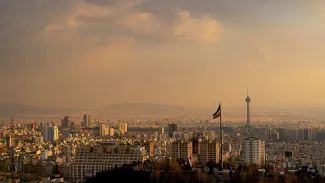
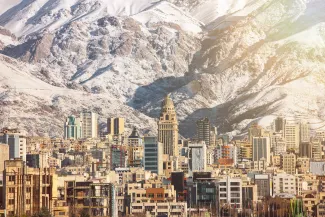
The smoky scent of charcoal-grilled kebabs mingles with cardamom from nearby tea vendors. Carpets in jewel tones spill from storefronts while overhead, the snow-capped Alborz Mountains frame Tehran's sprawling skyline. For years, this Persian capital has remained frustratingly out of reach for most travelers despite its extraordinary culinary heritage and 8,000-year-old story. That changed on April 25, 2026, when Tehran Imam Khomeini International Airport resumed full commercial operations after a two-month suspension tied to regional conflicts and a US-brokered ceasefire. The timing couldn't be better: spring in Tehran means mild 15-25°C temperatures, clear mountain views, and blooming Persian gardens before the brutal June heat pushes thermometers past 40°C.
As someone who has covered the Middle East extensively, I've witnessed firsthand how Iran occupies a unique position in the region's travel landscape. It's simultaneously one of the most culturally rich and least-visited destinations, held back by visa complexity and persistent geopolitical misperceptions. The airport reopening offers a fresh window into a sophisticated urban culture that most travelers have only glimpsed through history books or filtered media coverage. Tehran deserves reassessment, particularly now when accessibility is improving and spring weather makes exploration genuinely pleasant.
What awaits travelers willing to navigate the entry requirements? Expect exceptional hospitality that feels almost overwhelming in its warmth, outstanding Persian cuisine that goes far beyond kebabs, and layers of history visible in everything from UNESCO palaces to the labyrinthine Grand Bazaar. The city operates at a different rhythm than Dubai or Istanbul; it's less polished for tourists but more authentically lived-in, with complexities that reward curious engagement rather than casual visits.
Quick Facts
- Best Time to Visit: April-May and September-November (mild temperatures, clear skies, low rainfall)
- Currency: Iranian rial (IRR); approximately 50,000 rials per USD as of April 2026, though rates fluctuate. Cash EUR/USD essential; international credit cards don't work due to sanctions.
- Language: Farsi (Persian); limited English outside major hotels. Download translation apps and learn basic phrases.
- Getting There: Tehran Imam Khomeini International Airport (IKA), 30km southwest of city center; initial routes to Istanbul, Muscat, Medina with expansion expected to Dubai, Doha, Kuwait City.
Visa Requirements: All tourists need visas; Americans require guided tours and 4-8 week processing; Europeans typically qualify for e-visas in 2-7 days.
Understanding the New Flight Landscape and Getting There
According to Iran Daily, international commercial flights resumed from IKA on April 25-26, 2026, following a suspension linked to regional conflicts and enabled by a US ceasefire extension. Initial departures targeted Istanbul (IST), Muscat (MCT), and Medina (MED), with operations scaling rapidly. Kuwait Airways announced restarts from April 26, and regional carriers are adding capacity throughout late spring.
The route network centers on Middle East and Western Asia connections, as IKA operates 24-28 airlines serving 39-102 destinations worldwide. Mahan Air dominates with roughly 69 weekly departures focused on international routes. Istanbul remains the highest-volume destination with approximately 94 weekly flights operated by Iran Air, Iran Aseman, Mahan Air, Sepehran Airlines, and Turkish Airlines, representing about 22% of total departures. This makes Istanbul the primary European gateway for most travelers, with connections via Vienna also common for those booking through Austrian Airlines.
Traditional Middle East hubs are expanding: Dubai (DXB) sees year-round service from Mahan Air, Emirates, and Flydubai; Doha (DOH) connects via Qatar Airways; Kuwait City (KWI) operates through Jazeera Airways and Kuwait Airways. Muscat benefits from SalamAir's recent resumption and offers relatively straightforward connections for North American travelers routing through Europe or the Gulf. Iraqi cities like Al Najaf (NJF), Baghdad (BGW), and Sulaymaniyah (ISU) maintain year-round and seasonal routes through multiple carriers including Iraqi Airways and Caspian Airlines.
For those traveling from East Asia, Mahan Air operates seasonal routes to Beijing (PEK), Guangzhou (CAN), Shanghai (PVG and PVG, the latter being the longest at 8 hours 15 minutes via A340-300), and Shenzhen (SZX). China Southern adds Beijing Daxing (PKX) and Urumqi (URC) connections. Notably absent from the network: direct services to the US, Canada, Africa, Japan, or Oceania, reflecting both sanctions and limited demand.
IKA itself operates as a modern terminal with essential services: official exchange counters for converting EUR/USD to Iranian rials, SIM card vendors selling tourist data packages (expect to pay 500,000-1,000,000 rials for 7-14 days), and duty-free shops. Ground transportation runs through official taxi counters charging 800,000-1,200,000 rials ($16-24 USD based on current exchange rates) to central Tehran neighborhoods. A Metro Line 1 connection is planned but not yet operational as of April 2026, so avoid unlicensed taxi touts who approach outside official zones. The drive into the city takes 45-60 minutes depending on traffic, which peaks savagely during 7-9am and 5-8pm weekday rushes.
Flight booking requires attention to detail: book through established carriers rather than third-party aggregators that may face payment processing issues due to sanctions. Confirm visa approval before purchasing tickets, as refunds can be complicated. Expect pricing 15-25% higher than pre-suspension levels due to limited capacity and pent-up demand. For domestic connections within Iran, Mehrabad Airport handles the majority of routes plus some regional international flights, located closer to central Tehran but with older infrastructure.
Visa Requirements and Entry Protocols: What You Need to Know
Iran's visa system operates on a spectrum from manageable to genuinely complex depending on your passport. No nationality enters visa-free, and the requirements demand advance planning measured in weeks, not days.
For American Passport Holders
US citizens face the strictest protocols: independent travel is prohibited entirely. You must book through a Ministry of Foreign Affairs (MFA)-registered tour operator with a complete day-by-day itinerary including all accommodations, transportation, and a licensed guide. Processing takes 4-8 weeks for MFA authorization codes, sometimes extending to 45 working days during Iranian holidays or bureaucratic backlogs. Once the code arrives, submit your passport, code, recent passport photo, and $160 USD fee (or $120 money order for mail applications) to the Iranian Interests Section at the Pakistani Embassy in Washington DC. Visa stamping adds another 2-3 weeks, though expedited services exist at higher cost.
Start this process at least 8 weeks before intended travel. Tour operators like Surfiran handle the MFA submission but cannot accelerate government timelines. The good news: approval rates exceed 98% for compliant applications with legitimate tour bookings. Extensions are limited, and you cannot stay with local hosts; all accommodations must be registered hotels listed on your itinerary. Vehicle entry from neighboring countries is not allowed for Americans.
For European, Canadian, and Australian Passport Holders
Most EU/Schengen passport holders, plus Canadians and Australians, qualify for e-visa systems with significantly faster processing: 2-7 business days for authorization codes, sometimes as quick as 1-3 days. Apply through the official e-visa portal at evisa.mfa.ir or use registered agencies that handle the paperwork for modest fees ($100-300 depending on complexity). Requirements include passport scans valid for 6+ months, recent passport photos, completed application forms with travel dates and accommodation details, and proof of Iran-specific travel insurance ($30-50 for coverage).
Visa-on-arrival (VOA) remains available at Tehran airports for many European nationalities: arrive with your authorization code, pay the fee at the counter (approximately €25-27 for most Europeans based on reciprocity agreements), and receive a 30-day stamp. The 30-day period is often extendable up to 90 days total through the Police Department of Aliens Affairs in Tehran, though extensions require early-morning visits (arrive before opening on Saturday through Wednesday) and patience with bureaucratic procedures.
Post-October 2025 rule changes require more detailed itineraries than previously, including registered hotel bookings throughout your stay. "Registered" means hotels approved by the Ministry of Cultural Heritage, Tourism and Handicrafts; most established hotels qualify, but private homestays or Airbnb-style arrangements risk visa complications and can result in fines. This limits spontaneous travel but stops short of requiring guided tours for non-American visitors.
Critical Restrictions for All Nationalities
Female travelers must observe hijab (headscarf covering hair) in all public spaces; enforcement varies by neighborhood but non-compliance can result in warnings or fines. Pack loose clothing covering arms to wrists and legs to ankles, though styles range from conservative to relatively fashion-forward in northern Tehran neighborhoods. Men should avoid shorts in traditional areas and government districts.
Alcohol is prohibited nationwide; expect non-alcoholic beer (widely available at about $1-2 per pint), doogh (savory yogurt drink), and excellent fresh juices instead. All visitors cannot stay with unregistered local hosts; this rule is enforced through spot checks and hotel registration systems that report guest details to authorities. Budget €50-75 for visa processing fees, $30-50 for mandatory travel insurance, and $100-300 for agency facilitation if using intermediaries for complex cases.
When to Visit: Spring's Sweet Spot
Tehran's climate operates in extremes, making timing critical for comfortable exploration. April through May represents the prime window, when daily temperatures settle into the 15-25°C range, evenings cool enough for sweaters, and the Alborz Mountains emerge from winter haze with snow-capped clarity. Persian gardens burst with roses and jasmine; the city's notorious air pollution eases with spring winds; and outdoor activities in foothill neighborhoods like Darband become genuinely pleasant rather than endurance tests.
September through November offers similar conditions: mild days, crisp nights, and golden light that photographers favor for capturing the city's architectural layers. These shoulder seasons avoid the twin challenges of Tehran's calendar: scorching summer heat and winter's damp chill. June through August sees thermometers regularly hitting 38-42°C, with air quality deteriorating as pollution compounds heat stress. December through February brings cold (occasionally below freezing), possible snow that paralyzes the city's hilly northern districts, and shorter daylight hours that compress sightseeing.
Cultural calendar considerations add complexity. Nowruz (Persian New Year) falls in late March and creates beautiful street celebrations and family gatherings, but many restaurants and some tourist sites close for 1-2 weeks as locals travel or host relatives. Hotel prices spike and availability plummets. If visiting during Nowruz appeals for cultural immersion, book accommodations 6-8 weeks ahead and accept that some culinary and shopping experiences will be limited.
Ramadan timing shifts annually by about 11 days on the Gregorian calendar; in 2026, it falls roughly late February through late March. Restaurants remain open but practice discreet daytime service; tourist sites maintain shortened hours; and the overall pace slows. It's not prohibitive for travel, but requires adjusting expectations around meal timing and activity schedules. The post-Ramadan Eid celebrations bring festive energy but also temporary closures.
Spring mornings deliver Tehran's clearest air quality; download apps like IQAir or local equivalents to monitor PM2.5 levels and plan outdoor activities (Grand Bazaar visits, Darband hikes) for mornings when possible. Afternoons see pollution build as traffic increases, though conditions in 2026 have improved somewhat from historical peaks due to increased natural gas vehicle adoption and occasional traffic restrictions.
Essential Tehran Experiences: Beyond the Headlines
Tehran reveals itself in layers, requiring days rather than a quick stopover to appreciate its depth. The following sites form a strong foundation for understanding the city's evolution from ancient Persian outpost to modern Middle Eastern capital.
Grand Bazaar
The Bazar-e Bozorg sprawls across more than 10 kilometers of covered corridors, representing one of the world's largest traditional markets and Tehran's historic commercial heart. Navigate sections devoted to carpets (where merchants unfurl antique tribal rugs and silk Isfahans), spice stalls piled with saffron threads and dried limes, copperware workshops where artisans hammer serving trays, and fabric vendors selling everything from everyday cotton to formal celebration wear. Traditional tea houses tucked into bazaar corners offer respite; order a samovar tea with dates and observe the social rhythms that have played out in these spaces for centuries.
Visit mornings between 9am-12pm when natural light filters through the bazaar's vaulted ceilings and crowds remain manageable. Afternoons grow hot and congested; Fridays see partial or complete closures depending on the section. Bargaining is expected for carpets and major purchases (start at 40-50% of the quoted price and negotiate upward), but less so for everyday items like spices or tea. The bazaar anchors Tehran's traditional south; combine visits with nearby Golestan Palace for a full day in the historical core.
Golestan Palace
This UNESCO World Heritage Site preserves the Qajar dynasty's royal complex, with highlights including the Talar-e Aineh (Mirror Hall) where thousands of tiny mirrors create dazzling reflective surfaces, the Marble Throne that seated Persian kings during coronations, and galleries displaying Persian miniature paintings that chronicle centuries of artistic evolution. The palace gardens offer peaceful contrast to Tehran's urban intensity, with traditional Persian water channels and ancient plane trees.
Entry costs approximately 500,000 rials (~$10 USD at current exchange rates). Allocate 2-3 hours for a thorough visit; English signage is limited, so consider hiring a guide at the entrance (negotiate for 1,500,000-2,000,000 rials/$30-40 for 2-hour tours). Photography is permitted in most areas; the Mirror Hall particularly rewards patients who wait for crowd gaps to capture the architectural details without tourist obstruction.
National Museum of Iran
Essential for contextualizing Persian history before visiting other sites, this museum houses pre-Islamic artifacts spanning millennia: Achaemenid sculptures that demonstrate the empire's artistic sophistication, Sassanian silver work showing influence from east-west trade routes, and ancient pottery that reveals daily life across Iranian civilizations. The collection connects dots from Mesopotamian influences through Islamic periods, providing narrative framework for understanding modern Iran's relationship with its layered past.
Entry runs about 300,000 rials (~$6 USD). Budget 2 hours minimum; serious history enthusiasts could spend half a day. The museum locates near Golestan Palace, making combined visits logistically efficient.
Sa'dabad Complex
This former Pahlavi royal estate spreads across 300 hectares in Tehran's northern foothills, encompassing 18 palaces in forested grounds. The Green Palace stands out with its distinctive emerald-glazed exterior tiles and opulent interior showcasing the last shah's lifestyle; other palaces house museums devoted to fine arts, military history, and royal costumes. The elevation delivers noticeably cleaner air than central Tehran, and the tree-shaded paths offer welcome relief during warmer months.
Combined entry tickets cost 1,000,000-1,500,000 rials ($20-30 USD) depending on how many buildings you visit. Allocate a half-day for meaningful exploration; weekends see heavy local traffic as Tehran families picnic in the grounds. Taxis from central Tehran run 600,000-800,000 rials each way.
Tajrish Bazaar and Neighborhood
North Tehran's Tajrish offers a more local bazaar experience than the Grand Bazaar, with exceptional produce sections, saffron vendors selling by the gram at prices better than tourist shops, and dried fruit stalls displaying jewel-like displays of pistachios, dates, and mulberries. The neighborhood surrounds the bazaar with juice bars, traditional restaurants, and proximity to Darband hiking trails.
The Tajrish metro stop (Line 1, red line terminus) makes access straightforward. Visit late afternoon into evening when locals shop for dinner ingredients and the neighborhood fully animates. Combine with a sunset walk up Darband's lower trails for views over Tehran's sprawl.
Tehran Museum of Contemporary Art
Housing one of the world's most valuable Western art collections outside Europe and North America, this museum displays works by Warhol, Pollock, Rothko, and other modern masters alongside significant Iranian modernist pieces. The collection emerged from the last shah's cultural ambitions; its survival through the 1979 revolution and subsequent decades represents its own fascinating story. Not all pieces are always on display due to conservation and political sensitivities, but what's visible provides unexpected context for Iran's engagement with global art movements.
Entry costs approximately 200,000 rials (~$4 USD). The museum operates with less consistency than major Western institutions; check current hours and exhibition schedules through your hotel. Located in northern Tehran near parkland, combining visits with Sa'dabad or Tajrish makes logistical sense.
Darband
This foothill village marks the trailhead for hikes up toward Tochal peak, offering a gradient of experiences from easy riverside walks to serious mountain ascents. Even if hiking doesn't appeal, the lower village delivers atmosphere: traditional teahouses serve samovar tea with sugar crystals and dizi (lamb stew slow-cooked in stone pots), while the gurgling Darband River provides surprisingly rural ambiance just kilometers from Tehran's urban core. A cable car offers less strenuous access to mid-mountain views; serious hikers can reach Tochal ski resort (winter) or summer hiking trails extending for hours into the Alborz range.
The area swarms with Tehran locals on Friday mornings and weekends; visit weekday afternoons for relative quiet. Lower teahouses charge 300,000-500,000 rials ($6-10 USD) per person for tea and snacks. Wear sturdy shoes even for lower walks; trails can be steep and uneven.
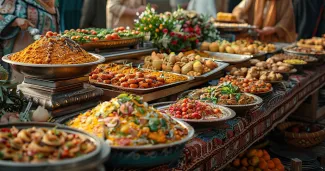
Where to Eat: A Persian Food Primer
Tehran's culinary landscape deserves as much attention as its museums. Persian cuisine operates with different logic than Arab Middle Eastern food or Turkish traditions; expect complex stews (khoresh) built on unusual ingredient combinations, rice preparations elevated to art form, and subtle spicing that emphasizes aroma over heat.
Essential Dishes
Master these core items to navigate menus effectively: Chelo kabab represents the national dish pairing saffron-infused basmati rice with grilled meats (koobideh ground meat kabob, joojeh chicken kabab, barg filet kabab). Ghormeh sabzi combines herbs, kidney beans, dried limes, and lamb in a stew that tastes simultaneously bright and earthy. Fesenjan builds on ground walnuts and pomegranate molasses for a sweet-savory sauce typically served with chicken. Tahdig refers to the prized crispy rice layer from the pot bottom, sometimes studded with potatoes or bread; restaurants charge premiums for good tahdig. Kashk-e bademjan offers eggplant mashed with fermented whey (kashk), fried onions, and mint as an appetizer spread.
Moslem Restaurant
Located near the Grand Bazaar, this Tehran institution has built its reputation over decades on exceptional tahchin (saffron rice cake layered with chicken or lamb) and solid chelo kabab execution. The dining room occupies a traditional setting with minimal decor; focus stays squarely on food rather than atmosphere. Cash only, and expect queues during peak lunch and dinner hours; arriving at off-peak times (2:30-4pm or after 10pm) improves your chances. Budget 400,000-600,000 rials per person ($8-12 USD based on current exchange rates) for a full meal with rice, kabab, and sides.
Nayeb Restaurant
Upscale traditional dining with cloth napkins and attentive service, Nayeb excels at stews: the fesenjan achieves proper balance between pomegranate tartness and walnut richness, while the ghormeh sabzi demonstrates why this herb stew captivates Iranians despite its unusual flavor profile for newcomers. The elegant setting suits business dinners or celebrations; English-language menus simplify ordering. Expect 1,200,000-1,800,000 rials per person ($24-36 USD) for multi-course meals with appetizers and drinks.
Shandiz Mashhad
This northern Tehran chain location delivers reliable kababs in a family-friendly environment that welcomes foreign visitors. The menu emphasizes grilled meats with quality rice execution; nothing revolutionary, but consistency makes it a safe bet for first-time Persian food experiences. Portions are generous; two people can share platters comfortably. Budget 800,000-1,200,000 rials ($16-24 USD) per person for full meals.
Café Culture
Tehran's coffee scene has evolved significantly in recent years. Lamiz Café in northern neighborhoods delivers specialty coffee approaching international standards, with single-origin beans and baristas who understand extraction. Sam Café operates as a north Tehran institution across multiple locations, offering reliable espresso drinks, pastries, and people-watching opportunities. Alborz Café on Ghaem Magham Farahani Street attracts writers and artists; order traditional tea with chickpea cookies (nan-e nokhodchi) and observe local intellectual culture.
Street Food
Don't overlook simpler options: Ash-e reshteh (thick noodle soup with herbs, beans, and kashk) appears at bazaar stalls and neighborhood shops for 200,000-300,000 rials (~$4-6 USD) per bowl. Fresh sangak bread emerges from bakeries multiple times daily; dawn produces the best batches, still hot and perfect for wrapping around feta and herbs. Faloodeh (rosewater sorbet with thin noodles) from Akbar Mashti ice cream shops offers essential summer refreshment, though spring visitors can enjoy it year-round.
Practical Dining Considerations
Iranian meal timing runs late compared to Northern Europe or North America: lunch service peaks 1-3pm, dinner 8-10pm or later. Friday brunches have become popular in upscale establishments. No alcohol means exploring alternatives: doogh (savory yogurt drink) pairs excellently with grilled meats, fresh pomegranate juice appears seasonally, and non-alcoholic beer is ubiquitous. Tipping follows a 10% standard for sit-down restaurants; round up for casual spots. Most establishments are cash-only; the few that accept cards work only with Iranian bank cards, not international credit cards.
Where to Stay: Accommodation Options
Tehran's lodging landscape divides geographically between northern neighborhoods with cleaner air and mountain proximity versus central and southern districts offering historical access and lower prices. All accommodations hosting foreign tourists must maintain Ministry registration; verify this during booking to avoid visa complications.
Northern Tehran
Neighborhoods like Elahieh and Zafaraniyeh deliver cleaner air due to elevation and proximity to the Alborz foothills, plus upscale shopping and dining. International-standard hotels cluster here, appealing to business travelers and tourists prioritizing comfort. The Espinas Palace Hotel operates as five-star property with rooftop views, comprehensive business facilities, and breakfast buffets featuring both Persian and international options. Expect rates from $120 per night. The Parsian Azadi Hotel anchors the category as Tehran's grand dame property: 475 rooms across sprawling grounds, multiple restaurants, gardens that offer remarkable quiet given the urban location, and consistent service. Rates start around $95 per night.
Mid-Range Central Options
The Ferdowsi Grand Hotel occupies a sweet spot for budget-conscious travelers wanting decent comfort and central location near museums and the metro system. Rooms are clean if dated; breakfast included; English-speaking staff accustomed to foreign guests. Rates run $60-80 per night. The Marlik Hotel similarly targets mid-range travelers, with museum district proximity and straightforward amenities at $50-70 per night.
Budget Accommodations
The Mashad Hotel near the Grand Bazaar offers basic clean rooms without frills at $30-40 per night, ideal for travelers prioritizing location over luxury. Hostels remain limited in Tehran compared to Istanbul or Dubai, though a small backpacker scene is emerging with dorm beds at $15-25 per night in registered establishments.
Booking Considerations
International booking platforms face sanctions-related payment processing issues; many Tehran hotels don't appear on Booking.com or Expedia or show as "unavailable" even when they have rooms. Work with Iran-focused travel agencies that handle hotel reservations as part of tour packages, or email hotels directly to confirm availability and registration status. Confirm that your chosen property maintains proper MFA registration; unregistered guesthouses risk visa complications. Northern hotels command premiums of $20-50 per night over comparable central properties due to air quality and neighborhood prestige.
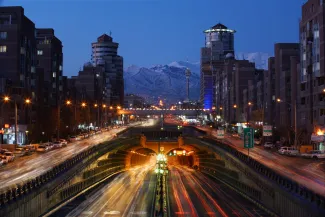
Getting Around Tehran
Tehran sprawls across approximately 730 square kilometers with 9+ million residents; navigating efficiently requires understanding the transportation hierarchy.
Metro System
Tehran's metro represents the Middle East's largest rapid transit network, operating seven main lines with 133 active stations as of 2026. The system runs 5:30am to 11:05pm with maps available at stations and online. Cars practice gender segregation: first and last cars designated for women and families, middle cars for men. This segregation is enforced during peak hours; off-peak sees more flexibility.
Line 1 (red) connects north-south from Tajrish to Kahrizak, covering key tourist zones. Line 2 (blue) runs east-west, serving Imam Hossein Square and Sadeghiyeh. Lines 3, 4, 5, 6, and 7 extend the network to outlying districts; tourists primarily use Lines 1 and 2. Fares operate on zone-based pricing at approximately 30,000 rials (~$0.60 USD) per ride; purchase rechargeable cards at station counters for 50,000-100,000 rials and add credit as needed. The metro delivers clean, modern, remarkably efficient service that outperforms surface transportation during peak traffic hours.
Taxis and Ride-Hailing
Orange agency taxis offer the safest option: hail from designated stands or hotel concierges, with meters that should run during trips. Negotiate before entering if the meter "doesn't work," which often signals a tourist surcharge attempt. Expect 200,000-500,000 rials for cross-city trips depending on distance and traffic.
Snapp and Tap30 function as Iran's Uber equivalents, offering app-based ride-hailing with upfront pricing. Both apps require Farsi language settings and Iranian phone numbers for registration; enlist hotel staff help for initial setup. Payment is cash-only due to sanctions preventing international card processing. Rides cost similarly to agency taxis but with more transparency and driver tracking.
Avoid unlicensed taxis that approach tourists outside airports or major sites; these vehicles lack insurance and oversight, with significant price gouging common.
Bus Rapid Transit
BRT operates 10 dedicated corridors totaling 179 kilometers, with Line 1 running 30 kilometers from Tajrish to Azadi Square serving 150,000 daily passengers. Buses use dedicated lanes avoiding regular traffic, making them competitive with metro for certain routes. Payment follows the same rechargeable card system as the metro; expect crowding during rush hours 7-9am and 5-8pm.
Traffic Realities
Tehran's traffic congestion ranks among the world's worst during peak hours. The notorious 7-9am and 5-8pm weekday crushes can triple travel times; a trip that takes 25 minutes at 11am might require 75 minutes at 7:30am. Build cushions into schedules for airport departures and appointments. Fridays see dramatically lighter traffic as Tehran's religious day of rest; take advantage for cross-city exploration that would be miserable on weekdays.
Private Drivers
Hiring a driver with a car costs $50-80 per day for 8-hour service, providing flexibility for visiting multiple sites without public transportation connections. Tour operators and hotels arrange English-speaking drivers; agree on daily rates and expected routes in advance. This option particularly suits travelers with limited time or mobility concerns.
Practical Tips: Money, Connectivity, and Cultural Navigation
Currency and Cash Management
The Iranian rial (IRR) operates alongside the toman in daily conversation: one toman equals 10 rials, creating confusion when vendors quote prices. If someone says "5 toman," they mean 50,000 rials. Current exchange rates hover around 50,000 rials per USD, though rates fluctuate with sanctions pressure and oil revenue. Bring cash in EUR or USD; exchange at official hotel counters or licensed exchanges rather than black market money changers who may pass counterfeit notes.
International credit cards don't function in Iran due to sanctions; Visa, Mastercard, and American Express are completely unusable. This creates a pure cash economy for tourists. Budget daily cash needs carefully: $50-80 per person covers meals, metro, and entrance fees assuming mid-range restaurant choices. Withdraw larger amounts at hotel exchanges to minimize transaction frequency; hotels provide safes for excess cash storage.
ATMs serve only Iranian bank cards; don't expect to access foreign accounts. Bring sufficient EUR/USD cash for your entire trip plus 20-30% buffer for unexpected expenses or extended stays. Large denomination bills ($50, $100 EUR/USD) exchange at better rates than smaller notes.
Connectivity and Internet
Tourist SIM cards are available at IKA airport from vendors selling IranCell and Irancell packages: 500,000-1,000,000 rials ($10-20 USD) buys 7-14 days of data. Bring an unlocked phone; installation takes 10-15 minutes including passport registration (mandatory for SIM activation).
VPN services are essential: Iran blocks access to Facebook, Twitter, Instagram, YouTube, and many Western news sites. Download and configure VPN apps before arriving; popular options like NordVPN, ExpressVPN, and Surfshark function, though speeds vary. Connecting through VPN adds latency; accept slower browsing as standard. Hotels typically provide WiFi, but it's similarly restricted without VPN.
Dress Code Compliance
Women must wear hijab (headscarf) covering hair in all public spaces, streets, restaurants, shops, and transportation; exceptions exist only inside private homes or hotel rooms. Loose clothing covering arms to wrists and legs to ankles is mandatory; jeans and long-sleeve tunics work well. Northern Tehran neighborhoods like Elahieh see more relaxed interpretations with loosely draped scarves and form-fitting clothing, while traditional southern areas expect conservative coverage. Enforcement varies: some women receive verbal warnings, while persistent violations can result in fines or police interaction. Pack multiple lightweight scarves; spring temperatures make layering manageable.
Men should avoid shorts in traditional neighborhoods and government districts; long pants
About the Author

Andy Wang
As our Asia Editor and a first-generation American, Andy Wang brings a unique dual perspective to Jetsetter Guide.