

The marble halls of Clinique La Prairie in Switzerland were a fitting entry point into the new world of wellness travel, where biohacking had moved from fringe culture to a global market projected to reach $335 billion by 2034. I wasn’t there chasing immortality. I was there to examine a real shift in how affluent, health-conscious travelers approached optimization, crossing borders for access to therapies like BPC-157, tirzepatide, NAD+, and other compounds that sat somewhere between cutting-edge medicine and regulatory gray area.
After years covering food culture and expat life across Southeast Asia and the Middle East, I had watched wellness tourism evolve from spa detoxes and juice cleanses into something far more medicalized. The new traveler carried lab reports instead of yoga mats. They booked around peptide conferences, longevity clinics, and physician consultations. This wasn’t old-school medical tourism built around cheap dental work or cosmetic surgery. It was precision medicine combined with international arbitrage, and it was reshaping the wellness map.
The United States: Innovation, Regulation, and Cost
Boston and Phoenix had become key stops on the peptide circuit, hosting conferences like the Peptide-Based Therapeutics Summit and the Peptide World Congress, where pharmaceutical researchers, longevity physicians, and wellness entrepreneurs all crowded into the same rooms. What became clear in those spaces was that the American peptide market was no longer defined solely by underground demand. It was increasingly shaped by formal compounding, tighter regulation, and a growing divide between legitimate medical channels and research-chemical sellers.
At the clinical level, physicians like Dr. William Seeds described a maturing system in which the FDA was drawing a sharper distinction between licensed compounding pharmacies and gray-market vendors. Under 503A and 503B rules, pharmacies could compound certain peptides for patients with valid prescriptions, but access depended heavily on how the substance was categorized. Some peptides were eligible for routine compounding. Others, including BPC-157, TB-500, CJC-1295, and Ipamorelin, remained under scrutiny or restriction.
That regulatory structure had real consequences for travelers seeking treatment in the U.S. FDA-approved drugs like semaglutide, sold as Ozempic or Wegovy, moved through normal prescription channels. Compounded alternatives existed, but only made sense when sourced through legitimate providers with proper pharmacy credentials, physician oversight, and compliance with USP 797 standards. The gray-market side of the industry still existed, but serious patients increasingly avoided it.
Clinics in places like Orange County reflected that shift. Bioidentical peptide programs were framed less as experimental wellness and more as medically supervised treatment for recovery, metabolic health, and energy support. Patients I encountered were not reckless optimizers. They were firefighters recovering from injuries, professionals trying to manage obesity or insulin resistance, and people pursuing NAD+ infusions with bloodwork and physician monitoring. The common thread was structure. The best outcomes seemed to come from people who followed supervised protocols rather than improvising based on internet advice.
Cost remained one of the biggest barriers. Brand-name tirzepatide could run from $850 to $1,200 per month without insurance, though LillyDirect had begun offering lower-cost vial options. Compounded versions through telehealth and specialty providers often ranged from $200 to $450 monthly. The U.S. remained one of the most advanced markets for access and oversight, but also one of the most expensive.

Switzerland and Austria: Luxury Medical Wellness
If the American model prioritized access and innovation, Switzerland and Austria elevated peptide therapy into a fully immersive medical-wellness experience. At places like Chenot Palace Weggis and Lanserhof Lans, peptide treatment did not exist as a standalone intervention. It was embedded within multi-day or multi-week programs that combined diagnostics, hydrotherapy, structured nutrition, infusions, movement, and recovery.
The atmosphere mattered, but more importantly, so did the system. These clinics treated optimization as a comprehensive process rather than a prescription. Patients followed highly scheduled programs designed around metabolic repair, cellular energy, and overall physiological recalibration. The logic was simple: compounds might matter, but outcomes improved when they were paired with sleep, nutrition, stress reduction, and continuous supervision.
European clinics also benefited from a more established medical-wellness culture. While the European Medicines Agency had not approved compounds like BPC-157 or TB-500 for therapeutic use, approved peptides and adjacent interventions flowed through medical channels with more coherence than many patients experienced in the U.S. Costs across Europe for peptide protocols generally ranged from €200 to €500 per course, though flagship Swiss programs operated at luxury-resort pricing that could exceed £10,000 per week.
The real difference was not just cost or setting. It was philosophy. These clinics approached peptide therapy as part of a broader medical framework, not a single product or hack.

London: Urban Biohacking for Professionals
London offered a different version of the same trend. Rather than destination clinics, it had built an urban biohacking model around facilities like HUM2N, BelleCell, and similar high-end wellness centers catering to professionals who wanted interventions that fit around work. Hyperbaric oxygen, cryotherapy, NAD+ infusions, and targeted peptide protocols were offered less as retreat experiences and more as lifestyle maintenance for people in competitive industries.
That model made London distinct from Swiss or Austrian wellness resorts. Patients were not disappearing into week-long alpine programs. They were booking treatments between meetings, before dinner, or during work trips. The clientele skewed younger, often finance, media, or creative professionals treating wellness as performance maintenance rather than recovery from burnout or illness.
The pricing reflected that market. Peptide-related protocols typically ran from £250 to £600 per course, often supported by membership models. London’s strength was convenience. It brought clinical-style optimization into everyday city life.

Spain: Peptides in a Lifestyle Framework
Spain’s leading wellness destinations, especially SHA Wellness Clinic and Six Senses Ibiza, framed peptide therapy less as a technical intervention and more as one component of a broader lifestyle system. The compounds were still there, but they were delivered alongside nutrition planning, movement, stress regulation, diagnostics, and environmental design.
That mattered because Spain’s approach highlighted something many clinics elsewhere only implied: optimization worked best when supported by the rest of life. Meals, movement, rest, light exposure, and setting all became part of the treatment framework. Whether or not that made the peptides themselves more effective, it clearly made the overall experience more coherent.
Spanish programs generally remained competitive with wider European pricing, though luxury properties like Six Senses charged a premium for the full package. What travelers were buying was not only access to treatment, but a model of how that treatment could be integrated into daily life.
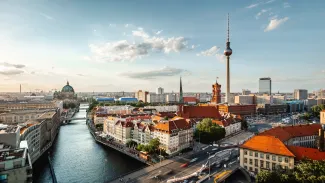
Germany: Clinical Rigor and Manufacturing Strength
Germany stood apart for its clinical conservatism and pharmaceutical infrastructure. Specialty hospitals and metabolic clinics in cities like Munich and Berlin treated peptides not as a luxury wellness product, but as an evidence-based medical tool. Programs began with lab work, hormone panels, inflammatory markers, and metabolic testing before physicians built protocols around pharmaceutical-grade substances sourced through regulated European supply chains.
This was not the place for speculative or trend-driven experimentation. German facilities focused on compounds with stronger evidence and used them within structured clinical frameworks. That restraint was part of the country’s appeal. Patients looking for flashy protocols might have found Germany too conservative. Patients looking for rigor found exactly that.
It also helped that Europe’s peptide manufacturing ecosystem had become increasingly robust, allowing German clinics to offer strong quality control at prices that often fell between €200 and €500 per course. Compared with luxury resort programs elsewhere, Germany’s value lay in precision and credibility.

Asia: Cost Advantage and Medical Expansion
Japan and China represented two of the most important emerging centers in peptide medicine, but for different reasons. Japan’s market was shaped by its aging population, strong medical infrastructure, and a culture that viewed preventative care and longevity as practical priorities. Clinics in Tokyo and Osaka offered peptide programs for metabolic health, age-related decline, and cellular support at prices that often ranged from roughly $130 to $400 per course.
Japan’s approach tended to be conservative, prevention-oriented, and clinically integrated. Patients were not waiting for severe decline before intervening. They were using therapies to preserve function earlier, within a culture that saw maintenance as normal rather than extreme.
China’s market was larger, faster-moving, and more uneven. Major hospitals in cities like Shanghai and Beijing offered peptide protocols at costs that were often dramatically lower than comparable U.S. care, sometimes around $200 to $550 per course. At the high end, the system included advanced hospitals tied to serious research institutions. At the low end, it included questionable clinics with weak oversight.
That made verification critical. For international travelers, China offered significant value, but only with serious due diligence. Japan offered more consistency. Both pointed to the same broader reality: Asia was becoming central to the future of peptide tourism because it combined growing infrastructure with lower costs.
Regulation Remained the Core Issue
Across every market, regulation defined what peptide tourism actually looked like. Access varied not just by country, but by compound. A substance that could be prescribed in one jurisdiction might be restricted, unapproved, or functionally unavailable in another.
In the U.S., the dividing line centered on FDA approval, compounding rules, and enforcement priorities. In Europe, many of the better-known biohacking peptides remained outside legitimate therapeutic use, even while approved drugs moved through more stable medical channels. In Asia, the differences were even wider, ranging from highly regulated systems to looser markets with inconsistent oversight.
For travelers, the implication was straightforward. Clinic quality mattered, but legal context mattered just as much. Anyone pursuing peptide treatment abroad needed to verify physician credentials, pharmacy standards, and the legal status of the compounds involved. They also needed to think through customs risk, documentation, follow-up care, and what would happen once they returned home.
The Economics of Peptide Tourism
The economics of peptide tourism only made sense when calculated as full-trip costs, not just treatment pricing. In the U.S., a year of compounded tirzepatide could easily cost several thousand dollars. Brand-name access without insurance cost even more. For some patients, especially those near the Mexican border, cross-border care in places like Tijuana could lower costs meaningfully even after consultations and travel.
In Europe, pricing sat in the middle ground. Standard peptide protocols were often cheaper than the U.S., but luxury wellness programs in Switzerland or Austria pushed total spend into five figures once accommodation and flights were included.
Asia offered the strongest headline value. A patient spending $4,000 to $5,000 on a treatment trip to Shanghai could sometimes access care that might cost several times more in the U.S. But those savings had to be weighed against logistics, language barriers, and the difficulty of continuity once back home.
The larger point was that peptide tourism was not automatically cheaper. It only worked economically when domestic access was limited, local pricing was extreme, or the traveler was specifically seeking a level of integration or medical supervision unavailable at home.
Where Wellness Travel Was Going
After traveling through these markets, the biggest takeaway was that peptide therapy had become a real part of global wellness travel, but not in a uniform way. North America led in innovation and scale. Europe offered quality, structure, and medical-wellness integration. Asia was rapidly gaining ground through a mix of infrastructure growth and cost advantage.
The industry was also broadening. Peptide therapy was no longer confined to luxury longevity resorts or underground bodybuilding circles. It now stretched from elite Swiss clinics to accessible hospital-based programs in Asia. That expansion made the field more relevant, but it also made discernment more important.
The best clinics treated peptides as one tool within a broader system. They paired them with diagnostics, medical supervision, nutrition, follow-up, and lifestyle support. The weaker operators sold them as shortcuts.
For travelers considering this world, the first step was not booking a flight. It was education: understanding which compounds were approved, which remained experimental, what each jurisdiction allowed, and which providers were operating within legitimate medical frameworks. Used carefully, peptide tourism could offer real access to therapies, oversight, and treatment models that patients could not easily find at home. Used carelessly, it could become an expensive detour through hype and weak regulation.
That was the real state of the market. Peptide travel was no longer a fringe curiosity. It was a growing sector of global wellness, built at the intersection of medicine, money, regulation, and consumer demand.
About the Author

Andy Wang
Andy Wang is Asia Editor at Jetsetter Guide, covering Southeast Asian travel and food from his base in Singapore. A first-generation American, he brings a dual perspective to the region.