
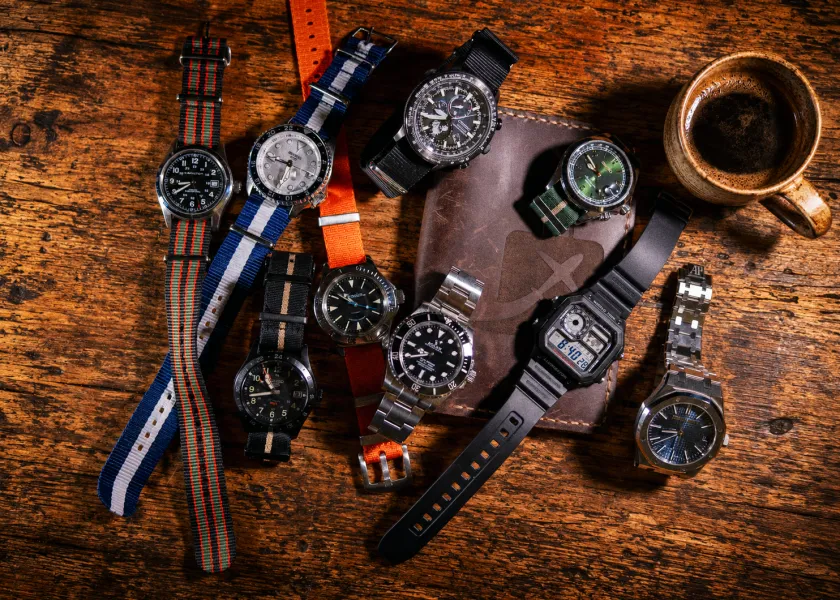
I love watches. I love nice watches. I also love not turning myself into a walking insurance claim the second I step out of an airport.
A good travel watch has a very specific job. It needs to tell the time, survive sweat, saltwater, rain, sketchy taxis, hard landings, long-haul flights, strange hotel nightstands, and the occasional border crossing where everyone suddenly has questions. It should also not scream, “I am wearing a down payment on a car.”
This is not a list of the most expensive watches I like. It is a list of the watches I actually travel with — the ones that are useful, stylish in the right way, and low-drama enough that I do not spend the whole trip thinking about what is on my wrist.
Some of these are cheap. Some are proper mechanical watches. One is a full expedition tool. All of them make more sense to me on the road than wearing a Rolex Submariner or an AP Royal Oak through the wrong city at the wrong time.

The No-Brainer Travel Watch: Casio AE1200WH
The Casio AE1200WH is the watch I grab when I want the least amount of drama possible.
This is my no-brainer for remote overland travel, rougher cities, parts of Africa where I do not want to draw attention, and any place where the phrase “conflict zone” is part of the itinerary. It is cheap, useful, light, and basically invisible from a street-crime perspective.
It tracks multiple time zones, has world time, alarms, a backlight, 100-meter water resistance, and an approximate 10-year battery life. Casio’s own specs list the AE1200 series as having 10-year battery life and 100-meter water resistance, and the manual supports multi-time and world-time functions across 48 cities and 31 time zones.
That is everything I actually need when I am moving through airports, border crossings, bad roads, ferry terminals, or places where I want my phone to stay in my pocket.
Is it luxurious? No. Is it stylish? In a strange way, yes. It has that little “I know exactly what I’m doing” energy. It is the watch equivalent of packing a headlamp, Imodium, and cash in small bills.
Where I would take it: conflict zones, remote Africa travel, crowded markets, bus stations, overnight trains, border runs, and any place where wearing a shiny watch feels like a self-own.
A Quick Note on NATO Straps
Most of my travel watches end up on NATO straps because they’re practical, cheap, comfortable, and easy to swap. They also make a watch feel less precious, which is exactly what I want on the road. Steel bracelets can look expensive, leather gets beat up by sweat and saltwater, but a NATO just works. And let’s be honest — James Bond made them cool.
My Favorite Dive-Trip Beater: Vostok Amphibia
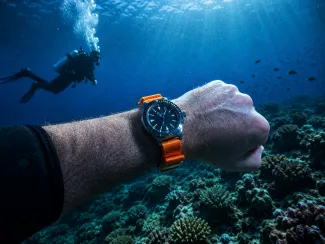
The Vostok Amphibia is ridiculous in the best possible way.
It is a Russian-made, no-nonsense automatic dive watch that does not care about your spreadsheet of perfect accuracy. It is not the most precise watch I own. It is not the most refined. It is definitely not the flashiest. But it tells the time, it has real mechanical charm, and it feels like it was built by someone who assumed the world might end on Tuesday.
Modern Amphibia models are commonly sold as Russian automatic divers with in-house automatic movements and 200 meters of water resistance. That is the appeal. It is not pretending to be delicate. It is a weird little tank.
For dive trips, beach towns, island travel, and boat-heavy itineraries, this is usually the one I reach for. It gives me the romance of a mechanical dive watch without the risk profile of wearing a luxury Swiss diver that every half-competent thief can identify from across the street.
The Amphibia is also fun because it has character. The bezel action may feel agricultural. The bracelet may not be great. The accuracy may be “vibes-based.” But put it on rubber or a NATO strap and suddenly it becomes one of the best low-drama travel divers out there.
Where I would take it: dive trips, liveaboards, island hopping, fishing boats, beach towns, and anywhere I want a mechanical watch that can get knocked around without ruining my week.
The Rugged GMT for Ships and Time-Zone Math: Seiko 5 Sports Field GMT
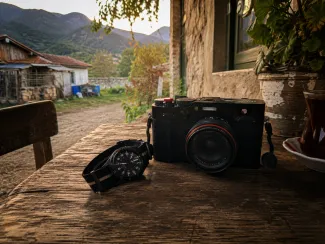
The Seiko 5 Sports Field GMT is one of the most practical travel watches in this lineup.
I like it because it has the useful stuff — automatic movement, GMT function, rugged field-watch styling, 24-hour hand, and a 24-hour bezel — without looking expensive. It is the kind of watch that watch people recognize, but normal people mostly ignore. That is exactly the lane I want a travel watch to live in.
The Seiko SSK023 uses Seiko’s 4R34 automatic GMT movement, has a 24-hour hand for dual-time display, approximately 41 hours of power reserve, stainless steel construction, curved Hardlex crystal, and 10 bar water resistance.
The field-watch look matters. A GMT is incredibly useful when you are crossing time zones, working with people back home, or trying to remember what time it is for family, office, ship operations, or the next flight. But unlike a shiny luxury GMT, this one does not look like a target.
The 24-hour bezel is also handy if you are dealing with ship time or military-style time. I still find 24-hour time on ships weirdly confusing when I am tired, jet-lagged, and someone says “meet at 1700.” Having the bezel right there helps.
Where I would take it: expedition ships, work trips, overland travel, long-haul flights, travel photography assignments, and any itinerary where I need a real GMT but do not want to wear something flashy.
The Dressed-Up Travel GMT: Seiko 5 Sports SKX Sports Style GMT
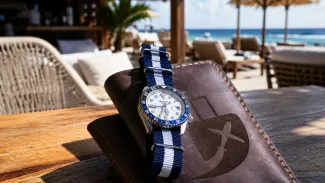
The Seiko 5 Sports SKX Sports Style GMT does a lot of what the Field GMT does, but with a more dressed-up look.
This one feels like the practical, affordable cousin of a Rolex GMT. It has that travel-watch personality — rotating bezel, GMT hand, stainless bracelet, sporty case — but without the price tag or the “please follow me out of this restaurant” energy.
Seiko describes the SSK001 as part of the Seiko 5 Sports SKX Sports Style GMT series, with the SKX-inspired design, automatic GMT movement, 24-jewel caliber, approximately 41-hour power reserve, and 100 meters of water resistance.
That makes it a great one-watch travel option when the trip is not purely rugged. It looks good with a T-shirt, but it can also handle a collared shirt, dinner, a cruise, a nicer hotel, or a city itinerary where the Casio feels too casual.
The only caution: on the bracelet, it has more wrist presence than the Field GMT. It still is not a luxury watch, but it catches more light. If I were going into a higher-risk area, I would either put it on a less flashy strap or just wear the Casio.
Where I would take it: city trips, cruises, Europe, Japan, hotel-heavy travel, dinners, and trips where I want a proper GMT that still dresses up.
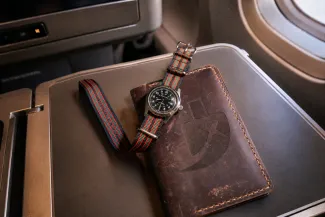
The Collector-Approved Field Watch: Hamilton Khaki Field Auto
The Hamilton Khaki Field Auto is the grown-up field watch.
Hamilton is one of those brands that has real history without screaming luxury. It was founded in Lancaster, Pennsylvania in 1892, built a reputation around accuracy, and has deep railroad and military associations. Today, Hamilton describes itself as combining “Swiss precision and American spirit,” which is exactly how I think about the Khaki Field line.
This is the one that watch collectors will notice, but most people will not. That is a sweet spot for travel.
Practically, the Khaki Field Auto is light, versatile, and easy to wear. It works on leather, canvas, rubber, or a NATO strap. The dial gives you 12-hour and 24-hour time, which is useful when you are dealing with military time, ship schedules, or travel plans written by someone who thinks “1930” is a normal dinner reservation time.
It is water-resistant enough for normal travel abuse, rain, sweat, and outdoor use, but I would still treat it like a field watch rather than a dedicated dive watch. Hamilton’s Khaki Field collection is positioned around rugged military-inspired outdoor watches with stainless steel cases, sapphire crystals, water resistance, and Swiss automatic movements.
This is one of my favorite “I want to wear a real watch, but I do not want to look like I am flexing” options.
Where I would take it: Europe, safari lodges, airports, road trips, museums, casual business travel, documentary-style trips, and anywhere I want a respected mechanical watch that still flies under the radar.
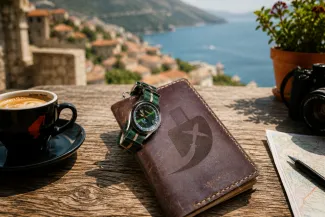
The Mountain-to-Dinner Watch: Seiko Alpinist
The Seiko Alpinist sits in a similar price neighborhood to the Hamilton Khaki Field Auto, but it has a totally different personality.
The Alpinist is a little more romantic. It has a compass bezel, a screw-down crown, strong water resistance, and enough polish to look good at dinner. The SPB121J1, for example, is listed by Seiko with a rotating compass inner ring, screw-down crown, and 20 bar water resistance.
That combination is why I like it so much as a travel watch. It feels just as comfortable near an alpine trailhead as it does in a hotel bar. It has more elegance than a pure field watch, but it still has the bones of an adventure watch.
I have dived with mine many times, but I still think of it as an adventure watch rather than a true dedicated dive watch. If the entire trip is saltwater, boats, and tanks, I am probably wearing the Vostok. If the trip is mountains, lodges, cold mornings, good dinners, and a little bit of everything, the Alpinist makes a lot of sense.
Where I would take it: alpine trips, ski towns, mountain lodges, hiking-heavy itineraries, safari camps, national parks, and trips where I need one watch that can go from trail to dinner.
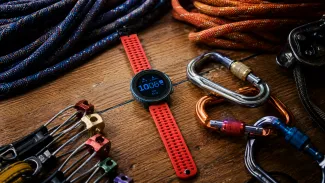
The Smartwatch for Real Trekking: Suunto Vertical
The Suunto Vertical is the watch I would take when the watch stops being jewelry and starts being equipment.
I like mechanical watches, but if I am trekking through unknown terrain, navigating in bad weather, or moving somewhere remote, a real GPS adventure watch becomes a tool. The Suunto Vertical gives you offline maps, GPS/GNSS navigation, altimeter, barometer, compass, weather functions, sport modes, and serious battery life.
The topo maps are the killer feature. Being able to download maps, see terrain, follow a route, and keep my phone secured in a pocket is a real advantage. I do not love having my phone out in the rain, in the cold, on a trail, or in places where I do not want to advertise an expensive device.
The notification feature is also useful. I can glance at messages or emails on my wrist without pulling my phone out every five minutes. Suunto’s specs include phone notifications and Bluetooth connectivity with compatible smartphones.
Battery life depends on how you use it, but in real-world travel I can usually get a solid week before it asks to be charged. That is good enough for me, especially considering how much it does.
Where I would take it: trekking trips, remote hiking, Patagonia, polar approaches, Greenland, Nepal, backcountry travel, long trail days, and any trip where navigation matters more than watch romance.
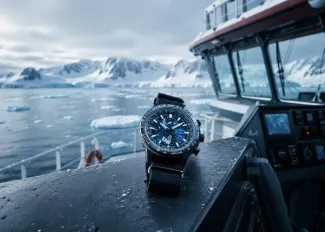
The Full Expedition Watch: Citizen Promaster Geo Trekker
The Citizen Promaster Geo Trekker is the expedition watch.
I have had mine since release, and it has been to Antarctica twice and the North Pole once. That is exactly the kind of trip where this watch makes sense. It is not subtle in the way the Casio is subtle, but it is not luxury-flashy either. It looks like a tool. A very busy, very capable, slightly insane tool.
The Geo Trekker uses Citizen’s Eco-Drive technology, so it is powered by light and does not need routine battery replacement. The Promaster Geo Trekker features 200-meter water resistance, sapphire crystal, atomic timekeeping with synchronized adjustment in 26 time zones, world time, perpetual calendar, and 12/24-hour time functions.
That is the kind of feature set I want on a real expedition. It is accurate, durable, and low-maintenance. The lower dial gives you GMT/secondary time functionality, and the whole thing feels built for the kind of travel where “we will just charge it later” is not always a plan.
It is not the watch I would wear to a wedding. It is not the watch I would wear for a minimalist carry-on weekend. But if the trip involves ice, ships, helicopters, field camps, polar weather, or a lot of moving parts, this is the one.
Where I would take it: Antarctica, the Arctic, the North Pole, expedition ships, aviation-heavy trips, remote field work, polar travel, and any itinerary where accuracy and reliability matter more than elegance.
Watches I Love But Hesitate to Travel With
This is not anti-Rolex. This is not anti-AP. This is anti-making-yourself-the-most-obvious target on the sidewalk.
Watch crime is real in certain cities and neighborhoods. London’s Metropolitan Police have specifically run covert operations around luxury watch robberies, including scenarios involving officers posing with high-value watches near upscale nightlife areas. Reports on those operations noted thieves targeting recognizable luxury brands such as Rolex and Patek Philippe, and the operation was associated with arrests and convictions.
The point is not that you can never travel with a nice watch. The point is that you should know what your watch communicates before you wear it somewhere unfamiliar.

Rolex Submariner No Date
The Rolex Submariner No Date is one of the greatest watches ever made.
It is clean, iconic, tough, and historically important. Rolex says the Submariner launched in 1953 as its first divers’ wristwatch waterproof to 100 meters, with modern Submariner models rated to 300 meters. (Rolex) The No Date version is the purest expression of that design: no cyclops, no extra complication, just the classic dive-watch silhouette.
I love it.
I just do not always want to travel with it.
The problem is that the Submariner is too recognizable. Even people who know almost nothing about watches know what a Rolex looks like. That makes it one of the worst possible choices for certain nightlife districts, crowded tourist areas, or cities where organized watch theft is a known issue.
If I am at a controlled resort, a private event, or traveling somewhere low-risk with proper insurance, fine. But for active travel, rougher cities, expedition work, border-heavy itineraries, or any trip where I need to blend in, I would rather wear one of the watches above.

Audemars Piguet Royal Oak
The Audemars Piguet Royal Oak is another watch I deeply respect and often would rather leave at home.
The Royal Oak is watch-design royalty. The first model was presented in 1972, designed by Gérald Genta, and helped elevate stainless steel into the world of high-end watchmaking. Audemars Piguet’s own history describes the original Royal Oak as a 1972 Gérald Genta design that introduced a new “casual chic” chapter for the brand and haute horology. (AP Chronicles)
The issue is that the Royal Oak is not stealthy. The integrated bracelet, octagonal bezel, exposed screws, and overall shape are instantly recognizable to anyone who knows watches. And the people you worry about do not need to know the reference number. They just need to know it is an AP.
That makes it a watch I admire more than I travel with. If the point of the trip is to enjoy the watch at a safe event, great. If the point of the trip is work, movement, field conditions, or unfamiliar streets, I am reaching for the Casio, Seiko, Hamilton, Suunto, Citizen, or Vostok instead.
The Customs Problem Nobody Talks About
Expensive watches can create problems even when nobody tries to steal them.
Customs rules vary by country, but luxury watches can raise questions at borders — especially if they look new, were bought abroad, are being transported for sale, or are being brought in for an auction or event. For U.S. travelers, CBP Form 4457 exists specifically as a certificate of registration for personal effects taken abroad, and CBP describes it as a way to document personal items before leaving the country. (U.S. Customs and Border Protection)
Europe can be strict too. The European Commission notes that travelers entering by air or sea may bring in other goods up to €430 in value without paying duties or taxes; above that, rules may apply. (European Commission) Arnold Schwarzenegger famously ran into this issue in Munich when traveling with an Audemars Piguet watch that might be auctioned, with AP reporting that goods over €430 staying in the EU have to be declared and duties paid where appropriate. (AP News)
That is another reason I like lower-drama travel watches. A $30 Casio is not just safer on the street. It is simpler at customs, simpler in a hotel room, and simpler in your own head.
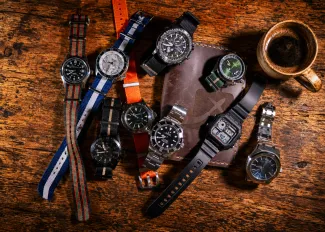
The Takeaway
There is no perfect travel watch. There is only the right watch for the trip.
The watch I want on the road is not always the most expensive watch I own. It is the one that fits the place, does the job, and lets me stop thinking about my wrist.
Because the best travel watch is not the one that impresses a watch forum. It is the one that gets through the trip with you.