
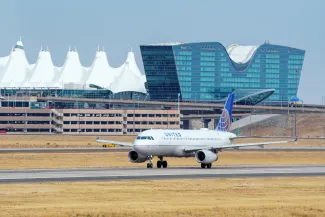
I'm sitting in the United Club at O'Hare on a Tuesday afternoon, watching a parade of planes taxi past the floor-to-ceiling windows. A United 787 pulls up to gate C17, its polished blue livery catching the spring sunlight. Across the tarmac at C23, an American 777 follows the same path toward departure. For years, these carriers have operated side by side as fierce competitors, fighting for the same passengers, the same slots, the same routes across this massive hub airport. But if United CEO Scott Kirby gets his way, those two planes might soon wear the same paint job.
In what could become the most consequential airline merger in modern aviation history, Kirby has reportedly floated a proposal to combine United Airlines with its longtime rival American Airlines. The potential deal would create an airline of unprecedented scale, controlling more than half the capacity at 159 U.S. airports and reshaping the competitive landscape travelers have navigated for the past decade.
And the timing? It couldn't be more critical for anyone booking travel right now. We're in the thick of summer 2026 booking season, when families are locking in July beach vacations, business travelers are planning fall conference trips, and points enthusiasts are burning miles on those aspirational business class redemptions to Europe. The routes you're booking today, the loyalty programs you're betting on, the elite status you're chasing; all of it could look dramatically different if this merger becomes reality.
Here's what history teaches us about airline mega-mergers, what's actually at stake for your miles and routes, and what you should do right now to protect your travel plans and points balances while this plays out.
When Airlines Marry: A Brief History of Mega-Mergers
The U.S. airline industry has spent the past four decades on a relentless march toward consolidation. In 1980, shortly after deregulation unleashed market forces on the aviation sector, travelers could choose from more than 24 major carriers. Today, just four airlines; Delta, United, American, and Southwest; control roughly 76% of all domestic passengers. That transformation didn't happen gradually. It happened in waves, each merger promising efficiency gains and network benefits while shrinking the number of meaningful choices travelers actually have.
The modern consolidation era kicked off during the 2008 financial crisis, when Delta and Northwest combined to weather the economic storm. United followed two years later by absorbing Continental, creating a carrier with hubs stretching from Newark to Guam. Southwest picked up AirTran in 2011, expanding into Atlanta and gaining access to mid-size markets. Then came the big one: American's 2013 merger with US Airways, which created what was then the world's largest airline and cemented the Big Four structure we know today.
For a while, that seemed to be the end of it. The industry achieved what economists call an "equilibrium"; four massive network carriers, a handful of low-cost competitors like JetBlue and Spirit, and ultra-low-cost upstarts fighting for whatever scraps remained. But the Biden administration's 2024 blocking of the JetBlue-Spirit merger, followed by Spirit's subsequent bankruptcy, shifted the landscape yet again. Regulatory opposition to consolidation suddenly looked less certain under a new political climate, and industry executives began whispering about possibilities that seemed off the table just months earlier.
I still have a drawer full of orphaned airline loyalty cards from carriers that no longer exist. Continental OnePass. US Airways Dividend Miles. Northwest WorldPerks. AirTran A+ Rewards. Each one represents a merger that promised seamless integration and better service, and each one left behind thousands of travelers scrambling to understand new award charts, requalify for elite status under different rules, and navigate hub cities that suddenly lost half their service.
The Numbers That Matter: Route Overlaps and Hub Cities
If United and American actually combine, the resulting carrier would control more than 50% of capacity at 159 U.S. airports. Let that sink in for a moment. At more than one-third of commercial airports in this country, a single airline would operate more than half of all available seats. That's not market dominance; that's near-monopoly in many mid-size cities.
The most critical overlap occurs at Chicago O'Hare, where both carriers operate major hubs. United currently runs the larger operation there, but American maintains a substantial presence with connections radiating across the eastern United States. Under normal merger logic, the combined carrier would consolidate operations, eliminate duplicate routes, and reduce total capacity. That's exactly what happened when United absorbed Continental's Cleveland hub, which went from a thriving connection point to a dramatically downsized focus city within a few years.
Other overlap markets tell similar stories. In New York, United's Newark fortress hub sits just miles from American's operations at JFK and LaGuardia. Los Angeles, San Francisco, and Washington D.C. all feature substantial operations from both carriers. On specific routes where both airlines currently compete head-to-head; ORD to LAX, ORD to SFO, EWR to ORD; competition would essentially vanish overnight.
The hub city question looms especially large for Phoenix and Charlotte, both of which American inherited from the US Airways merger. According to The Arizona Republic, Phoenix Sky Harbor faces particular vulnerability in any new consolidation scenario due to its overlap with United's Denver hub, which serves many of the same western markets. Memphis learned this lesson the hard way after the Delta-Northwest merger; what was once Northwest's primary domestic hub saw service cut by more than 50% within three years of the combination.
If you're booking summer travel through Chicago, planning West Coast connections, or relying on specific routes that both carriers currently serve, pay close attention. The route you're counting on for your August family reunion or September business conference could be on the chopping block if this merger moves forward.
What Happens to Airfares When Competition Disappears
Here's the part airlines don't like to talk about in their merger presentations: prices go up when competitors disappear. It's not speculation or theory; it's documented historical pattern across every major airline consolidation of the past two decades.
On routes where merged carriers previously competed, fares typically rise in the 12 to 24 months following integration. The effect is most pronounced on routes where the combined airline achieves market dominance, controlling 60% or more of available seats. Research consistently shows that when new entrants launch service on monopoly routes, fares drop 10 to 20 percent almost immediately. The problem is that barriers to entry; expensive gate leases, limited slot availability, massive capital requirements for aircraft; make new competition increasingly rare.
The baggage fee phenomenon offers another cautionary tale. When American became the first major carrier to charge for checked bags in 2008, competitors initially resisted. But as consolidation eliminated alternatives, the practice became universal. Today, ancillary charges like baggage fees, seat selection fees, and change fees generate tens of billions in annual revenue across the industry. Every merger reduces the competitive pressure that might otherwise restrain these charges.
Capacity cuts represent another consequence travelers feel directly. The Department of Transportation has documented a four-fold increase in three-hour flight delays since 2000, a trend that correlates closely with industry consolidation. When carriers merge, they eliminate redundant flights and reduce overall seat availability. Basic economics tells us what happens next: higher prices and fuller planes, with fewer alternatives when your preferred flight sells out or gets cancelled.
The counterargument, which airlines make forcefully to regulators, centers on operational efficiencies and international competitiveness. United and American would likely claim that combining operations could save more than $1 billion annually through reduced overhead, joint purchasing power for fuel-efficient aircraft, and improved operational reliability through a larger network. In an era of elevated fuel costs and pressure from massive foreign competitors, they'd argue consolidation isn't just beneficial; it's necessary for survival.
But here's my practical advice for travelers booking right now: if you have specific route needs for summer or fall 2026, book them immediately. History shows that prices jump in the weeks following a merger announcement, as carriers realize diminished competitive pressure. Even if this merger ultimately fails regulatory approval, the market reaction to the possibility alone can affect pricing.
Your Miles Are Currency, and Currency Can Devalue Overnight
Between United's MileagePlus program and American's AAdvantage, we're talking about more than 200 million combined loyalty program members. That's not just frequent flyers; that's virtually every business traveler in America plus millions of casual vacationers who've accumulated miles through credit card spending, shopping portals, and the occasional flight. If this merger happens, all of those members face the same question: what happens to the value of my miles?
The Delta-Northwest merger offers our closest historical comparison. Initially, Delta converted Northwest WorldPerks miles at a 1:1 ratio, which seemed fair and straightforward. But within 24 months of the merger, Delta began systematically devaluing SkyMiles through the introduction of dynamic pricing, elimination of award charts, and reduction in partner availability. Members who'd saved miles for years suddenly found their balances buying substantially less than they had pre-merger.
The American-US Airways integration followed a similar pattern. US Airways Dividend Miles members received 1:1 conversion to AAdvantage, but complaints flooded online forums about uneven status matching and disappearing benefits. Members who'd earned top-tier status in the US Airways program found themselves slotted into mid-tier American status, with reduced upgrade priority and fewer complimentary perks.
What makes 2026 different is that both MileagePlus and AAdvantage already operate on dynamic pricing models. United's current MileagePlus program prices international business class awards anywhere from 75,000 to 90,000 miles one-way for saver awards on major long-haul routes, with rates fluctuating based on demand and availability. American's AAdvantage program similarly prices awards dynamically. The question isn't whether a merged program would adopt dynamic pricing; it's how the book value of existing miles might shift in the consolidation.
And here's where it gets complicated: United currently offers MileagePlus cardholders a 10 to 15 percent discount on award flights, including business class redemptions. American doesn't have an equivalent benefit. If the programs merge, does that cardholder discount survive? Does it expand to former American cardholders, or does it disappear for everyone? These details matter enormously for the value proposition of holding millions of miles in either program.
Status matching represents another potential minefield. United's elite tiers don't perfectly align with American's structure. United Premier 1K members and American Executive Platinum members both represent top-tier status, but the benefits packages differ. Someone who's worked all year to hit American's 200,000 Loyalty Points threshold for Executive Platinum could find themselves reclassified into a lower tier if United's program takes precedence, losing lounge access, upgrade priority, and waived fees in the process.
Loyalty program analysts I've spoken with point to a consistent pattern: merger announcements trigger a 12 to 18 month window where existing program rules remain largely intact, followed by "harmonization" that almost universally results in reduced value for members. The time to act is before that window opens, not after.
The DOJ Wild Card: Why This Merger Faces Steeper Odds
Antitrust experts are calling a potential United-American combination "unfixable" from a regulatory perspective, and they have good reason. Unlike previous airline mergers where overlapping routes could be addressed through divestitures, giving up a handful of slots at LaGuardia or gates at Reagan National, the United-American overlap is so extensive that no reasonable divestiture package could preserve meaningful competition.
You can't just "divest" Chicago O'Hare operations when both airlines run major hubs there. The infrastructure, the employee base, the route networks; they're too intertwined to cleanly separate. The Department of Justice would face a choice between approving a merger that creates unprecedented market concentration or blocking it entirely. And recent regulatory history suggests blocking is the more likely outcome.
The DOJ's successful challenge of the JetBlue-Spirit merger established a clear precedent that the current regulatory climate prioritizes consumer affordability and competition preservation over industry efficiency arguments. State attorneys general, particularly from Illinois given O'Hare's centrality to this merger, are expected to join any federal challenge. The political optics of approving a deal that would eliminate competition for tens of millions of travelers don't favor the airlines.
That said, the political angle matters. According to reporting, the merger concept has been pitched to the current administration with arguments centered on job preservation and international competitiveness against massive foreign carriers. The unpredictability of political decision-making means that even unlikely regulatory approvals remain possible. Stranger things have happened in Washington.
The timeline for any regulatory review would extend at least 12 to 18 months from a formal merger announcement. The Hart-Scott-Rodino Act requires a 30-day initial waiting period after premerger filings, during which the DOJ determines whether to issue a "Second Request" for additional data. That second request phase typically adds another four to six months. If the DOJ decides to challenge the merger, litigation could stretch years beyond that.
Market reaction to the merger rumors tells an interesting story. American's stock jumped 7 percent on the news, while United's rose a more modest 2 percent. Investors are clearly betting that efficiency gains and reduced competition would benefit shareholders, even if regulatory approval remains uncertain. The consensus among experts I've consulted is that approval is unlikely, but not impossible; and that's enough uncertainty to warrant preparation.
Here's why travelers should prepare even if this merger ultimately fails: the competitive dynamics have already shifted. American and United will watch each other's pricing and capacity decisions more carefully. Other carriers will position themselves for potential consolidation opportunities. Even a failed merger attempt triggers strategic responses across the industry that affect route availability, pricing, and program benefits.
Five Things Savvy Travelers Should Do Right Now
Uncertainty about this merger's future doesn't mean paralysis. There are specific, actionable steps you can take right now to protect your miles, status, and travel plans regardless of how regulatory proceedings unfold.
First, burn or transfer your highest-value miles immediately. If you've been saving MileagePlus or AAdvantage miles for that aspirational business class redemption to Europe or Asia, book it now. Current United saver awards to Europe run 75,000 to 85,000 miles one-way in Polaris business class, with routes to Africa and Oceania offering even better value at around 1.3 to 1.7 cents per mile. Those rates could shift dramatically in a merger scenario. Book up to 330 days in advance to secure the best availability for summer or fall travel.
Second, lock in elite status for 2027 if you're close to a threshold. American's AAdvantage program requires 40,000 Loyalty Points for Gold, 75,000 for Platinum, 125,000 for Platinum Pro, and 200,000 for Executive Platinum, with the program year running March 1, 2026 through February 28, 2027. If you're within striking distance of the next tier, accelerate your earning now while the benefits package is clearly defined. Once merger discussions advance, status matching becomes unpredictable.
Third, book key routes for summer and fall 2026, especially on overlap markets. If your travel plans depend on specific routes where both United and American currently compete; think Chicago to the West Coast, New York area to major hubs, transcontinental routes; lock in those reservations soon. Service cuts typically begin within 12 months of merger approval, and routes with the most overlap face the highest risk.
Fourth, diversify your loyalty strategy across programs and transferable currencies. Don't keep all your points in United or American programs if you can avoid it. Chase Ultimate Rewards, American Express Membership Rewards, and Citi ThankYou points all transfer to multiple airline partners at 1:1 ratios. Maintaining flexibility means you can shift to Delta, international carriers, or other options if MileagePlus or AAdvantage devalue.
Fifth, screenshot your current benefits and program terms. Elite perks, upgrade certificates, lounge access rules, change and cancellation policies; document everything you currently receive from your status level and credit cards. When program harmonization begins, having clear records of what you were promised helps in disputes and provides leverage for status challenges or benefit matches.
For April 2026 specifically, we're in the prime booking window for summer Europe travel, domestic peak season around July 4th and August, and advance positioning for fall trips. Shoulder season fares to the Mediterranean remain attractive through early June, national parks are opening for the season, and Golden Week Japan planning for 2027 is already underway for points users. If any of these trips matter to you, book them under current program rules rather than gambling on post-merger terms.
What Other Airlines Are Watching and Planning
Delta Air Lines isn't sitting idle while its two largest competitors contemplate combination. As already the largest U.S. carrier by revenue, Delta would face an even more formidable competitor if United and American merge, or could seize market share if the merger attempt creates operational disruption at the rivals. Either way, Delta's strategic planning has surely accelerated in recent weeks.
Southwest Airlines occupies an interesting position as the only major U.S. carrier without a significant international network. Its point-to-point domestic business model differs fundamentally from the hub-and-spoke systems United and American operate. A merger of its network competitors might actually benefit Southwest by creating customer dissatisfaction that drives travelers toward Southwest's famously customer-friendly policies, assuming Southwest can access the gates and slots to serve markets the merged carrier abandons.
Mid-size carriers like Alaska Airlines and JetBlue face perhaps the most uncertain future. Alaska has built a strong West Coast presence and recently absorbed Virgin America, but a United-American combination could squeeze Alaska's expansion opportunities. JetBlue, still reeling from the blocked Spirit merger, might become an acquisition target itself if further industry consolidation becomes politically acceptable.
Expect aggressive loyalty program competition regardless of merger outcomes. If United and American move toward combination, Delta and other carriers will launch status match challenges and promotional campaigns to poach high-value frequent flyers during the uncertainty. These competitive responses often provide the best redemption opportunities and status deals for travelers willing to switch allegiances.
International carriers face the prospect of an even more dominant U.S. competitor on transatlantic and transpacific routes. Lufthansa Group, IAG (British Airways and Iberia), Air France-KLM, and Asian mega-carriers would all confront reduced negotiating leverage with airports and increased competitive pressure on joint ventures and codeshare agreements.
The low-cost carrier segment, already weakened by Spirit's bankruptcy, could face accelerated consolidation pressure. Ultra-low-cost carriers depend on competing against legacy airline mainline service in markets where network carriers maintain high fares due to limited competition. If United and American merge and reduce capacity in secondary markets, ULCC opportunities could expand; but if the merger fails and both carriers compete more aggressively on price, ULCCs get squeezed from above.
Lessons From the Last Mega-Merger: American and US Airways 2013
The most recent comparable combination, American's $11 billion acquisition of US Airways in 2013, offers valuable lessons about what travelers should expect if this United-American deal advances. That merger created what was then the world's largest airline, combining American's strength in transcontinental and Latin American markets with US Airways' East Coast hub system.
The Department of Justice initially sued to block the merger, arguing it would reduce competition and raise fares. But after several months of negotiation, the government settled with a consent decree requiring divestitures. American gave up slot pairs at Reagan National Airport and LaGuardia, plus gates at several key airports including Los Angeles, Boston, Dallas, and Miami. These concessions aimed to enable low-cost carrier expansion, though the actual competitive impact remained modest.
Hub city outcomes varied dramatically. Charlotte Douglas International Airport thrived post-merger, maintaining its position as American's second-largest hub with more than 700 daily departures. Charlotte's low operating costs and central East Coast location made it economically attractive to preserve. Phoenix Sky Harbor saw a different fate; American maintained hub operations there but relocated headquarters functions to Dallas and reduced some service as route overlaps with the combined network were eliminated.
The loyalty program integration proved relatively smooth on paper. US Airways Dividend Miles converted to AAdvantage at a 1:1 ratio, avoiding the dramatic devaluations some members feared. But within two years, American accelerated its shift toward dynamic award pricing and reduced partner award availability, effectively devaluing the entire combined program regardless of which legacy system members came from.
Employee integration challenges took years to resolve, and service quality metrics dipped noticeably during the integration period. Computer system migrations, crew base consolidations, and union negotiations created operational disruptions that frustrated passengers throughout 2014 and 2015. American's on-time performance and customer satisfaction scores both declined during integration before eventually recovering.
For individual travelers, experiences varied widely. Passengers who primarily flew through Charlotte or Philadelphia generally benefited from an expanded network and more connection options. Those dependent on routes with significant overlap between the two pre-merger carriers often faced reduced frequency and higher fares. Business travelers with top-tier status in US Airways' program reported mixed results from status matching, with some receiving equivalent American benefits and others feeling downgraded despite technical tier equivalence.
The concession precedent from that merger matters for evaluating this potential United-American combination. Antitrust experts argue that the route overlaps here are far more extensive than American-US Airways faced, making similar divestiture remedies inadequate. You can't fix a Chicago O'Hare monopoly by giving up 20 slot pairs at Reagan National; the scale is simply too different.
The International Competitiveness Argument
Airline executives pushing for consolidation lean heavily on international competitiveness as their primary justification. The argument goes like this: U.S. carriers face massive foreign competitors that benefit from government support, operate within permissive joint ventures, and achieve economies of scale that American carriers can't match without further consolidation.
There's some truth to the competitive landscape they describe. Lufthansa Group controls multiple European carriers including Lufthansa, Swiss, Austrian, and Brussels Airlines. International Airlines Group operates British Airways, Iberia, Aer Lingus, and Vueling. Air France-KLM commands enormous market share in Western Europe. Middle Eastern carriers like Emirates, Qatar Airways, and Etihad receive government backing that enables aircraft orders and route launches impossible for purely commercial U.S. carriers. Chinese airlines benefit from protected domestic markets that generate cash for international expansion.
On long-haul international routes, particularly transatlantic and transpacific markets, scale advantages matter for aircraft purchasing, crew scheduling, airport negotiations, and marketing reach. A combined United-American would operate one of the world's largest wide-body fleets, with better purchasing power for fuel-efficient aircraft like the 787 and A350 that make marginal routes economically viable.
The joint venture and alliance argument adds another dimension. United participates in Star Alliance, while American anchors Oneworld. These alliances already enable cooperation on schedules, pricing, and frequent flyer benefits. Merger proponents argue that formal combination simply ratifies de facto coordination that global competition has made necessary.
But here's the counterpoint: American Airlines and United Airlines already rank among the world's largest carriers by virtually any metric; fleet size, passenger count, revenue, international destinations. American operates more than 6,700 daily flights to 350 destinations across 50 countries. United serves more than 360 destinations worldwide. Exactly how much larger do they need to be to compete effectively?
The operational reliability argument carriers make; that combining networks improves weather and mechanical recovery options; has some merit but also creates fragility. Larger networks can reroute passengers more flexibly when disruptions occur. But they also create single points of failure, where a computer outage or operations center problem can ground thousands of flights systemwide rather than affecting just one carrier's operations.
For travelers, the international competitiveness debate mostly matters as political cover for decisions that affect domestic competition. Your flight from Chicago to Denver doesn't benefit from improved transatlantic purchasing power. Your family trip from New York to Florida doesn't require competing with Lufthansa. The network efficiencies that might help a business traveler flying Newark to Frankfurt do nothing for the vast majority of domestic passengers who'd simply face higher fares and fewer choices.
Reading the Tea Leaves: Will This Actually Happen?
Let's be clear about where things actually stand. United CEO Scott Kirby has reportedly floated the merger concept in private discussions, but there's been no formal announcement, no regulatory filing, no public commitment from either carrier. This remains firmly in the "trial balloon" phase, where executives test political and regulatory receptivity before committing to a formal proposal that could damage both carriers if rejected.
The political and regulatory headwinds are substantial. Career DOJ antitrust staff have become increasingly skeptical of consolidation arguments across all industries, not just airlines. The successful challenge of JetBlue-Spirit demonstrated their willingness to litigate merger cases rather than settle for minor concessions. State attorneys general have become more active in challenging deals that affect their constituents, and Illinois has every reason to oppose a merger that would reduce O'Hare competition.
Wall Street's perspective is cautiously optimistic about the deal's strategic rationale but skeptical about approval odds. The stock price movements following merger rumors, American up 7 percent and United up 2 percent, suggest investors see potential value but aren't betting the farm on completion. Analyst reports I've reviewed generally assign less than 50 percent probability to regulatory approval.
If the carriers do decide to pursue this formally, expect an announcement sometime in the second or third quarter of 2026, with regulatory review extending well into 2027 and possibly into 2028. The Hart-Scott-Rodino review process takes months even in straightforward cases, and this would be anything but straightforward. Discovery in any DOJ litigation could stretch a year or more beyond the initial filing.
Alternative outcomes seem more likely than approval. This merger talk could trigger other consolidation discussions; Alaska and JetBlue have been mentioned as potential partners, though their networks overlap less than United-American. The conversation alone might push carriers toward deeper alliance cooperation short of merger, expanding joint ventures and codeshare agreements to achieve some efficiency gains without regulatory approval hurdles. Or we could simply return to status quo, with four major carriers competing in an uneasy oligopoly.
The Spirit Airlines bankruptcy continues to loom over these discussions. Spirit's failure eliminated a major source of low-fare competition and created an argument that industry economics demand further consolidation for survival. But it also demonstrated that regulators won't rubber-stamp deals simply because carriers claim financial necessity.
One analyst I spoke with put it bluntly: "Even if this merger never happens, the conversation alone will reshape competitive dynamics. United and American are signaling to each other, to regulators, and to investors that they're thinking about the industry's end game. That changes behavior regardless of whether a deal closes."
Flying Into Uncertainty With Your Eyes Open
I've been covering airline mergers for more than a decade now, and the playbook feels familiar. Executives promise seamless integration and passenger benefits. Regulators demand concessions. Employees worry about job security. And travelers are left wondering whether their miles will retain value, their favorite routes will survive, and their hard-earned elite status will mean anything when the dust settles.
What makes this potential United-American combination unprecedented is sheer scale. We've never seen a merger that would give a single carrier majority control at more than 150 airports. We've never contemplated the competitive implications of eliminating rivalry between carriers that each already rank among the world's largest. The scope pushes us into territory without clear historical precedent or regulatory roadmap.
There's a fundamental paradox at the heart of airline economics that this merger would test. Travelers want low fares, excellent service, extensive route networks, and frequent flight options. Delivering all of those simultaneously requires competition that drives efficiency while maintaining scale economies. Consolidation promises the scale but reduces the competitive pressure that keeps prices down and service quality up. Finding the balance point has eluded regulators and airlines for decades.
In the meantime, you have specific, actionable decisions to make. Protect your miles by burning high-value redemptions now, before potential devaluation. Book key routes for the next six to twelve months while current schedules remain intact. Diversify your loyalty across programs and transferable currencies to maintain flexibility. Lock in elite status if you're close to thresholds. Document your current benefits so you have leverage in future disputes.
The regulatory process will unfold over many months, probably years. The DOJ and state attorneys general will demand extensive data, analyze competitive impacts, and ultimately make a judgment call that balances industry efficiency against consumer protection. Market forces will respond to every announcement and leak. And travelers will continue booking trips, earning miles, and navigating an industry that seems perpetually one merger away from fundamental transformation.
Stay flexible in your planning. Monitor your key routes for schedule changes, using airline apps and third-party tools to track frequency reductions or cancellations. Follow regulatory proceedings through DOJ announcements and aviation news sources; these aren't just abstract policy debates, but decisions that will directly affect your travel options and costs. Keep your options open by maintaining cards and status across multiple programs rather than betting everything on a single loyalty ecosystem.
That traveler I watched at O'Hare, standing at the window between United and American gates, was probably just killing time before boarding. But the metaphor fits. We're all standing at a crossroads between competing visions of the industry's future, watching giants circle each other while wondering what the airport, what the routes, what the entire experience of air travel will look like in two years.
The only constant in the airline industry is change. This merger might happen, probably won't, but will definitely reshape competitive thinking regardless. Your best defense is knowledge, flexibility, and willingness to act decisively when opportunities arise. Book that business class redemption. Lock in that status. Protect your points. And pay close attention, because the industry you've learned to navigate might look very different before long.
About the Author

Jeff Colhoun
Jeff Colhoun is an acclaimed travel writer, photographer, and filmmaker, whose work is respected both in the United States and internationally.