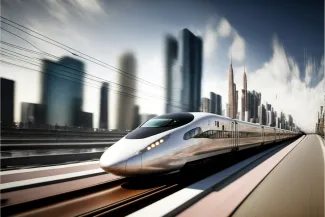
Stay current with our travel tips coverage.
South Korea's EMU-370 High-Speed Train Takes Aim at 370 km/h Commercial Speeds
SEOUL, South Korea — South Korea is positioning itself among the world's high-speed rail elite with the development of the EMU-370, a next-generation electric multiple unit designed to slash intercity travel times and fundamentally alter how business travelers and tourists navigate the peninsula. Targeting commercial operation at speeds of up to 370 km/h, the train represents a calculated bet on speed as infrastructure, a move that could challenge domestic aviation routes and push cultural travelers beyond Seoul's gravitational pull. The project isn't vaporware. While the train isn't yet carrying passengers, its development signals South Korea's intent to join the rarefied group of nations capable of sustaining ultra-high-speed rail networks, according to eTurboNews. For travelers accustomed to squeezing weekend city breaks into narrow time windows, the EMU-370 promises a recalibration of what's reachable within a half-day journey from the capital.Built for Speed, Designed for Distributed Power
The EMU-370 is a distributed-power high-speed train, meaning traction motors are spread throughout the train set rather than concentrated in dedicated locomotives. This configuration, common among Japan's Shinkansen and France's TGV models, distributes weight more evenly and allows for faster acceleration and deceleration, critical advantages when threading through densely scheduled urban terminals and mountainous terrain. At 370 km/h, the train would outpace South Korea's existing KTX fleet, which tops out around 305 km/h on most routes. For context, that's roughly 230 miles per hour in sustained commercial operation, a speed tier occupied by only a handful of rail systems globally. The EMU-370 project positions South Korea among a small group of nations capable of deploying trains at this velocity, a technical and logistical achievement that extends beyond engineering into national mobility strategy.What This Means for Business Travel and City Breaks
The practical implications for travelers are straightforward but transformative. Faster trains compress geography. Routes that currently require a flight or a multi-hour rail journey suddenly become viable day trips or tight overnight escapes. Business travelers juggling meetings in Seoul and Busan could realistically book same-day returns without sacrificing half the workday to transit. Cultural tourists eyeing UNESCO sites, regional museums, or Korea's underappreciated secondary cities gain flexibility previously locked behind flight schedules or lengthy KTX rides. Domestic aviation routes, particularly those linking Seoul with Busan, Gwangju, and Daegu, could face serious headwinds. High-speed rail already competes effectively on routes under three hours; faster trains tighten that competitive window further. Airlines may respond with pricing pressure or route consolidation, potentially benefiting travelers willing to play the modal arbitrage game. The calculus shifts when rail becomes not just competitive, but demonstrably faster door-to-door once airport security, boarding, and baggage retrieval are factored in.Tourism Beyond the Capital
For tourism sectors outside Seoul, the EMU-370 represents an infrastructure unlock. South Korea's regional cities, mountain temples, coastal towns, and cultural festivals often struggle to capture international attention when positioned as multi-day commitments. Faster rail connectivity reframes these destinations as accessible extensions of Seoul itineraries, lowering the friction for travelers operating on limited vacation days. Imagine a scenario where Gyeongju's Bulguksa Temple or Jeonju's hanok village becomes a legitimate half-day excursion from Seoul rather than an overnight commitment. The EMU-370 doesn't just move people faster; it redistributes where travelers choose to spend time and money. Regional hotels, restaurants, and cultural sites stand to benefit if the infrastructure delivers on its promise.Still in Development, Commercial Service in the Early 2030s
The EMU-370 remains under development, with commercial passenger service projected for the early 2030s. That timeline places it firmly in the aspirational column for now, but South Korea's track record with large-scale rail projects suggests the schedule is plausible if not conservative. The country has consistently delivered on high-speed rail expansion over the past two decades, threading tracks through challenging topography and integrating seamlessly with urban transit networks. For travelers planning trips in the near term, the EMU-370 won't factor into itineraries. But for those tracking long-term shifts in how cities connect, the project merits attention. High-speed rail at this velocity doesn't just improve existing routes; it redefines which trips are worth taking in the first place.A Calculated Bet on Speed as Strategy
South Korea's investment in the EMU-370 reflects a broader philosophy: speed isn't a luxury feature; it's foundational infrastructure. In a country where geography is compact but mountainous, and where urban density makes road expansion politically and physically fraught, rail speed translates directly into economic mobility and quality of life. For the urban traveler, the takeaway is simple. By the early 2030s, South Korea's intercity geography will likely feel smaller, more interconnected, and more accessible. Whether that translates into spontaneous weekend trips to coastal cities or streamlined business itineraries depends on execution, but the intent is clear. The EMU-370 is designed to make Korea feel less like a country you tour and more like a city you navigate, one 370 km/h segment at a time.More travel news
Budget Airlines Slash 900 Flights Amid Fuel Crisis
Seoul, South Korea - Surging jet fuel costs from the Middle East conflict force Korea's low-cost airlines to cancel hundreds of international routes and implement crew furloughs through June.
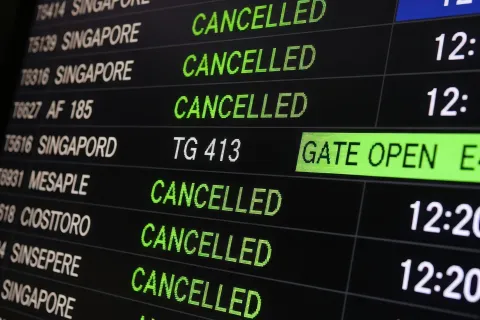
Global Airlines Enter Crisis Mode as Jet Fuel Soars
LONDON, England - Airlines across three continents face severe jet fuel shortages with European prices doubling in weeks, forcing carriers into emergency protocols and raising questions about flight cancellations.

BTS Tour Announcement Triggers 968% Travel Surge
GOYANG, South Korea — Within hours of BTS announcing its world tour comeback, travel searches for this Seoul suburb exploded by 968%, signaling massive fan-driven tourism.

K-pop singer denies drunkenness, alleges Delta racism
Seoul, South Korea — K-pop singer Soyou accuses Delta Air Lines of racist treatment on an Atlanta–Seoul flight; travelers take note of language-barrier pitfalls.
About the Author

James Anthony
James Anthony is a Travel Writer at Jetsetter Guide covering European city breaks and luxury travel on a budget.