Stay current with our travel advisories coverage.
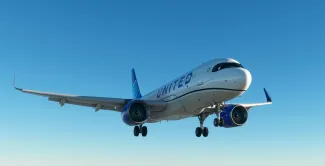
A United Airlines flight from Orlando to Chicago O'Hare was forced to divert to Atlanta after one of its engines failed mid-flight on January 3, 2025. The Boeing 777-200ER, operating flight UA1828, departed Orlando at 9:35 PM UTC and encountered the issue roughly an hour later. The flight crew notified passengers about the engine loss, prompting an emergency diversion.
A passenger shared their experience on Reddit, noting, “Your mind sure does wander.” The aircraft, registered as N221UA and powered by Pratt and Whitney PW4000 engines, safely landed at Hartsfield-Jackson Atlanta International Airport at 11:33 PM UTC.
All passengers disembarked without incident at Gate 17 in Concourse E. After a seven-hour delay, a replacement aircraft resumed the journey, departing at 6:54 AM UTC and landing in Chicago at 8:30 AM UTC.
Aircraft and Safety Protocols
The 23.6-year-old Boeing 777-200ER seats 362 passengers, including 32 First Class and 330 Economy seats. The exact number of passengers onboard during the incident was not disclosed.
Airlines follow strict diversion protocols for twin-engine aircraft experiencing engine failure. In such scenarios, aviation safety regulations require landings at the "nearest suitable airport" based on factors such as runway length, weather, and emergency support facilities. Operational conveniences, such as maintenance services, do not influence diversion decisions during critical incidents.
Similar Incidents in January
This incident comes amid other high-profile aviation events. On January 1, Delta Air Lines diverted an Airbus A330 after flames were seen emitting from an engine during takeoff in Atlanta. Meanwhile, Air India Flight AI2820 faced an engine stall on January 5, and an American Airlines flight executed an emergency landing after a bird strike damaged an engine in late 2024.
Despite the recent surge in diversions, aviation experts reiterate that engine failures on twin-engine aircraft like the Boeing 777 are rare and manageable, thanks to stringent safety protocols designed to handle such emergencies efficiently.
More travel news
FAA Pushes Airlines to Preserve Cockpit Audio After Incident
WASHINGTON - The FAA calls on airlines to preserve cockpit audio after incidents, responding to NTSB concerns that critical recordings are lost to 2-hour loops before investigators arrive.
FAA Probes Two Close Calls at Boston Logan Airport
BOSTON, Mass. - Two go-arounds in 48 hours at Logan have federal investigators probing intersecting runway operations, communication breakdowns, and what's becoming a troubling pattern.
Flight Crew Radiation Risk Demands Stronger Safety Rules
WASHINGTON - The National Academies of Sciences, Engineering, and Medicine urges the FAA to upgrade cosmic radiation from a job "consideration" to an official hazard, with improved protections for pilots and cabin crew.
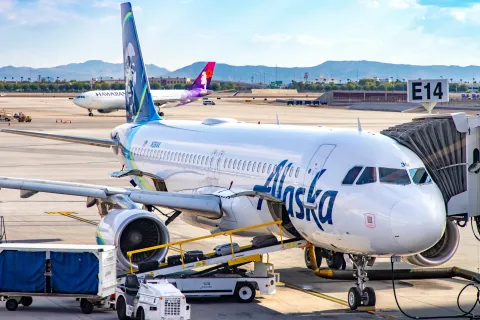
Alaska Airlines Hit With Fine for Boarding Drunk Flyers
SEATTLE — Alaska Airlines faces a proposed $165,000 FAA fine for allegedly allowing visibly intoxicated passengers to board 11 flights between February 2024 and February 2025.
About the Author

Jeff Colhoun
Jeff Colhoun is an acclaimed travel writer, photographer, and filmmaker, whose work is respected both in the United States and internationally.