Stay current with our travel industry news coverage.
GLOBAL — The 2026 Female Travellers Risk Map, published today by Safeture and Riskline, has flagged the Middle East and North Africa as high-risk regions for female travellers due to concerns over harassment, assault, and restrictive laws in 29 countries. The analysis draws on three core factors: laws and customs, safety, and health and wellness, according to Travel. It represents one of the most comprehensive efforts to date to quantify gender-specific risk in global travel planning.
The Gender Gap in Corporate Travel Policy
The timing of the map's release aligns with growing recognition that business travel policies have not kept pace with the demographics of those actually traveling. Data from the Travel Association shows that while women make up 74% of travel buyers, only 27% said their company policies specifically address female traveller safety, according to Travel. That disconnect becomes more striking when set against perceived risk. According to the same data, 62% said they believe female employees face greater risks than male colleagues. The gap suggests an industry still operating on outdated assumptions about who travels, where they go, and what they face when they get there. Women dominate travel procurement but remain underserved by the policies they help implement.
What the Risk Map Measures
The 2026 map uses a three-pronged assessment framework. Laws and customs evaluate the legal environment women face, including restrictions on movement, dress codes, or access to public space. Safety measures real-world exposure to harassment, assault, and gender-based violence. Health and wellness assesses access to reproductive healthcare, sanitation infrastructure, and emergency medical services specific to women's needs. The methodology acknowledges that risk is not monolithic. A country may score well on healthcare access but poorly on legal protections. Another may have progressive laws but weak enforcement. The map attempts to capture that nuance without oversimplifying regional complexity. The Middle East and North Africa consistently rank as high-risk zones due to the intersection of restrictive legal frameworks, cultural norms around women's mobility, and documented patterns of harassment in public spaces. In 29 countries across these regions, women face barriers that range from legal dependency on male guardians to limited recourse in cases of assault.
Practical Implications for Travelers
For women traveling into flagged regions, the map serves as a starting point, not a red light. Risk is context-dependent. A female journalist on assignment in Cairo faces different challenges than a corporate executive visiting Dubai for a three-day conference. A solo backpacker moving through rural Morocco operates in a different threat environment than a photographer embedded with an expedition group in Jordan. That said, certain constants apply. Women traveling to high-risk zones should anticipate restrictions on dress, movement, and interaction with men. In some countries, public displays of affection, alcohol consumption, or even riding in a taxi alone can trigger legal consequences or unwanted attention. Knowing what is permissible under local law is foundational, not optional. The map also underscores gaps in healthcare infrastructure that disproportionately affect women. Access to contraception, menstrual products, and gynecological care varies widely. In some high-risk countries, emergency medical services for sexual assault are either unavailable or legally complicated.
The Corporate Duty of Care Problem
For employers sending women into high-risk regions, the map creates a liability question. If 74% of travel buyers are women and only 27% of corporate policies address their safety, companies are operating with incomplete risk management frameworks. That gap exposes both the traveler and the organization. Duty of care has evolved beyond blanket travel insurance and emergency hotlines. It now includes pre-deployment briefings tailored to gender-specific threats, access to female security officers or local contacts, and protocols for harassment or assault that do not further endanger the traveler. Few companies have built those systems. The data showing 62% of respondents believe female employees face greater risks than male colleagues reveals an awareness problem. Companies recognize the disparity but have not translated that recognition into policy. The result is a mismatch between perception and protection.
Using the Map Without Overreacting
Risk maps are tools, not verdicts. The 2026 Female Travellers Risk Map does not suggest women avoid 29 countries outright. It suggests they prepare differently, travel smarter, and demand institutional support that reflects the realities on the ground. High-risk does not mean inaccessible. It means informed. Women have been traveling to, working in, and reporting from every corner of the Middle East and North Africa for decades. The best among them do so with eyes open, networks in place, and contingency plans that account for gender as a variable in security planning. The map's value lies in its ability to shift corporate and institutional behavior. If organizations know their policies are out of step with both the workforce and the threat environment, they can adjust. If they choose not to, they assume liability. For individual travelers, the map is a reminder that gender shapes how you move through the world. In some places more than others. Acknowledging that is not alarmism. It is fieldcraft.
More travel news
US Warns Citizens to Reconsider Travel to 14 Mideast Nations
Washington, D.C. - The U.S. State Department has reissued security alerts for 14 Middle Eastern countries, warning Americans of rapidly shifting threats and urging caution across the region.
Budget Airlines Slash 900 Flights Amid Fuel Crisis
Seoul, South Korea - Surging jet fuel costs from the Middle East conflict force Korea's low-cost airlines to cancel hundreds of international routes and implement crew furloughs through June.
Iran War Chills Japan Tourism as Europe Cancels
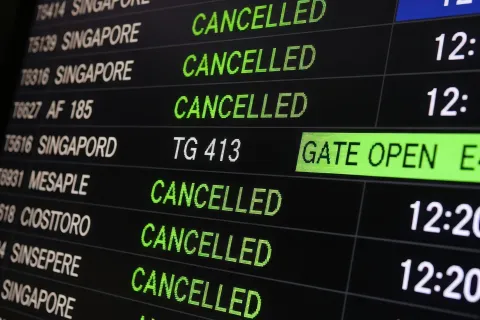
TOKYO, Japan - Japan's tourism industry faces mounting European cancellations and economic losses as the U.S.-Israeli war with Iran drives up travel costs and creates uncertainty for long-haul bookings.

Mideast Conflict Threatens Airlines With Soaring Fuel Costs
Global — Aviation intelligence firm alerts industry that the monthlong Mideast war could drive sustained fuel costs and operational risks even after the conflict ends.

About the Author

Dana Lockwood
Dana Lockwood is a rising journalist who specializes in budget-friendly solo travel.