Stay current with our travel industry news coverage.
Italy extended its suspension of border-free Schengen arrangements with Spain for another 15 days on Sept. 15, the day the previous measure was due to expire. Interior Minister Matteo Piantedosi notified the European Commission and his European Union counterparts, according to ANSA.
The extension keeps controls in place at Italy’s air and maritime borders with Spain. Madrid is maintaining its own reciprocal restrictions: Spain’s Interior Ministry confirmed that its border checks with Italy would continue until Oct. 8, according to Reuters.
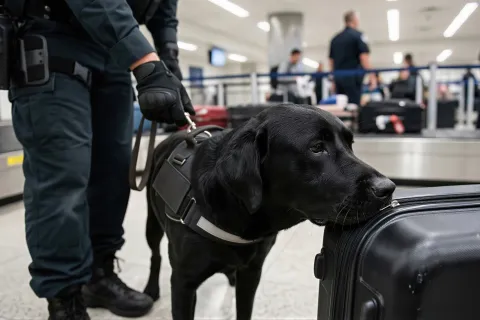
For travelers, the distinction matters. This is a continuation of border checks, not a reported shutdown of flights or sea services. The Associated Press described Italy’s controls as random police checks at airports and seaports for passengers arriving from Spain. The political language is about suspending Schengen; the reported mechanism is passenger screening.
Italy’s Schengen extension follows a security review
According to ANSA, Italy’s Interior Ministry deemed the extension necessary after a morning review by the Immigration Analysis and Border Security Committee. The ministry cited continuing elevated risks to internal security and the possibility of terrorist infiltration.
Those are the Italian government’s stated grounds for continuing the controls, not independently established findings in the supplied reporting. ANSA does not provide the underlying security data. That distinction is important when assessing the announcement: officials are invoking a potential threat to justify a border measure, rather than reporting a specific terrorist incident.
Piantedosi communicated the decision through a formal notice to European institutions and other EU governments, ANSA reported. The extension was adopted as the existing measure reached its deadline, keeping the restrictions in place rather than allowing a return to border-free travel on the affected routes.
Italy’s announcement specifies another 15 days but does not give a calendar end date in the ANSA report. Spain’s confirmed Oct. 8 deadline should therefore not be treated as the expiration date for both countries’ measures.
How the Italy-Spain border dispute developed
Reuters reported that Italy first suspended its Schengen arrangements with Spain on July 31, following a mass arrival of migrants in Ceuta, the Spanish enclave bordering Morocco. ANSA likewise identifies the late-July migration wave as the event that triggered the confrontation between Rome and Madrid.
Spain introduced its first retaliatory checks on Italian travelers on Aug. 8, according to ANSA. The restrictions have since become a reciprocal policy dispute: Italy cites security concerns, while Spain says the circumstances that prompted its response remain in place.
The reporting captures different stages of Spain’s latest decision. ANSA, citing the Spanish news agency Efe, reported that Madrid was preparing to extend its controls until Oct. 8 and could revise that deadline if circumstances changed. Reuters separately reported confirmation from Spain’s Interior Ministry that the controls would remain until that date.
The Associated Press reported that most of the migrants who entered Ceuta returned to Morocco, but more than 5,000 remained there, prolonging a humanitarian crisis. It also reported that travelers leaving Ceuta and Melilla, Spain’s other North African territory, were already subject to EU border checks at ports and airports before Italy imposed its restrictions. Those existing checks are distinct from Italy’s subsequent controls on passengers arriving from Spain.
Madrid challenges Rome’s justification
Spanish Foreign Minister José Manuel Albares sharply criticized the extension, arguing that it undermined European partnership and was driven by domestic politics, according to ANSA. He also criticized Italian Prime Minister Giorgia Meloni and Foreign Minister Antonio Tajani over their handling of the dispute.
Tajani defended Italy’s decision as an application of European rules and treaties intended to protect borders and citizens, ANSA reported. He rejected Madrid’s response as inappropriate and unnecessarily aggressive. The disagreement is therefore not simply over how long checks should last; the two governments are contesting the justification for keeping them at all.
The dispute also sits alongside broader European migration discussions. ANSA reported that Meloni spoke with European Council President Antonio Costa and welcomed a planned strategic debate on immigration. According to the Italian prime minister’s office, priorities included stronger external-border controls and partnerships with countries of origin and transit.
Border checks are not a blanket travel ban
Schengen normally allows citizens of most EU countries to move easily across internal borders for work and leisure, the Associated Press explained. Its report also noted that EU rules permit temporary internal-border controls in response to a serious threat, including one involving internal security. Such controls are supposed to be exceptional, time-limited and a last resort.
For an Italy-Spain itinerary, the supported change is continued exposure to border checks in both directions. The Associated Press’s description of random checks does not establish that every passenger will be stopped. Nor should a suspension of border-free arrangements be read as evidence that transport services themselves have been suspended.
The useful distinction for existing bookings is between access and processing. The reporting establishes additional border scrutiny, not a blanket prohibition on travel. Italy has renewed that scrutiny for another 15 days, while Spain has confirmed its controls through Oct. 8. Neither side is restoring the normal border-free arrangement under this announcement.
More travel news
Ryanair begins winter rollout with 45-plus new routes
The airline has announced at least 140 new winter 2026/27 routes, with launches staggered from Oct. 25 into December across the UK, Italy, Poland and Morocco.

Finland seeks EU ban on Russian tourist visas
The Oct. 12 proposal would halt Schengen visas for Russian nationals making nonessential trips and add targeted restrictions; it has not been adopted.

Italy rain forecast: Yellow alerts cover parts of six regions
Two fronts are forecast to bring repeated rain across Italy, while Oct. 7 yellow alerts apply to designated areas in Abruzzo, Campania, Lazio, Liguria, Molise and Tuscany.
Italy Travel Advisory Update Keeps Level 2 Rating
The State Department revised its Sept. 10 summary without raising Italy’s Level 2 rating, advising Americans visiting the country to stay alert to terrorism and opportunistic theft.

About the Author

Jeff Colhoun
Jeff Colhoun is a photographer and filmmaker whose work has appeared in The Wall Street Journal, the Los Angeles Times, Matador Network and Barron’s.