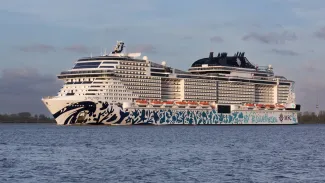
GALVESTON, United States - A Caribbean vacation became a federal investigation for passengers aboard MSC Seascape when the ship returned to Galveston on Monday, a day after departing for a planned seven-day voyage to Mexico and Honduras. The FBI is investigating a suspected homicide, and a suspect is in custody, according to The Associated Press.
The ship subsequently resumed its itinerary after cooperating with investigators, the AP reported. That distinction matters for travelers: The return to port interrupted this sailing, but it did not become a cancellation of the entire voyage.
Passengers on the affected cruise should check MSC’s itinerary updates before rearranging shore excursions or onward travel. Anyone considering a future sailing should separate two questions: What happened aboard this ship, and what does it establish about cruising generally? The investigation is serious; it is not, by itself, evidence that cruises are becoming less safe.
What Happened Aboard MSC Seascape?
MSC Seascape departed Galveston on Sunday before returning Monday following what the cruise line described as a “guest incident,” according to the New York Post. MSC said authorities instructed the ship to return after the incident was reported.
“We are cooperating fully with the investigation and providing support to those impacted,” an MSC spokesperson said in a statement quoted by the Post.
The FBI’s Houston field office initially announced an investigation into a “suspected homicide.” A subsequent Monday evening statement announced an arrest in connection with the alleged homicide, the Post reported.
The AP reported that no charges had been announced and the victim’s identity had not been released. An arrest does not establish guilt, and the circumstances of the death remain unresolved publicly. Travelers should resist treating social media speculation as an explanation of what occurred.
The scale of the ship helps explain why the incident has drawn attention. According to the AP, MSC Seascape has 2,270 cabins, more than 1,600 crew members and capacity for nearly 5,900 guests. Those figures describe a substantial onboard community, not the number of people confirmed aboard this particular sailing.
Who Investigates a Crime on a Cruise Ship?
A ship’s return to port puts the investigation within reach of shore-based authorities, but a crime at sea can involve several agencies. The AP identifies the FBI as the primary federal agency authorized to investigate potential crimes on the high seas.
In this case, the FBI described a coordinated response involving federal and local authorities, alongside MSC.
“As is customary with crimes aboard a cruise ship, an FBI Maritime Liaison Agent based out of Texas City Resident Agency is coordinating with the US Coast Guard, the Port of Galveston Police Department, Customs and Border Protection (CBP) and the cruise line,” the bureau said in a statement quoted by the Post.
For passengers, the important distinction is between the cruise line’s operational response and the criminal investigation. MSC can communicate itinerary changes and provide passenger support; investigators establish what happened and whether criminal charges are warranted. The ship’s departure after cooperating with investigators does not mean the case has been resolved.
Are Cruises Becoming Less Safe?
A suspected homicide deserves scrutiny without turning one investigation into an industrywide verdict. Neither the FBI statements quoted by the Post nor the AP’s account supplies a comparable, multiyear crime rate demonstrating that cruises are becoming more dangerous.
Raw incident counts would not settle that question anyway. A meaningful comparison needs to account for passenger volume, time spent aboard, the offenses being counted and consistency in reporting. Allegations, arrests and convictions also represent different stages of a case and should not be treated as interchangeable.
That leaves a less dramatic but more useful conclusion: This incident demonstrates that serious crime can occur aboard a cruise ship. It does not establish an individual passenger’s likelihood of becoming a victim or prove that cruising is now riskier than another kind of vacation.
Transparency matters here. Passengers need clear information about reporting procedures and the handling of serious incidents, not simply reassurance. A ship’s amenities and its safety accountability belong on separate pages of the booking checklist.
How Travelers Should Weigh This Investigation
The practical response is scrutiny, not an automatic cancellation. The return to Galveston and cooperation among agencies show that this incident triggered an official response. They do not answer every question about prevention or onboard security. Before booking, ask the cruise line how passengers contact security, report an urgent concern and obtain assistance after a serious incident.
For travelers already booked, changing plans is a separate financial decision. Check the cancellation terms attached to your fare and ask your insurer whether your specific circumstances qualify for coverage. Do not assume that concern prompted by a news story creates a refund entitlement. MSC’s support statement quoted by the Post did not specify compensation for the disrupted sailing.
For the value-conscious traveler, the lesson is to evaluate more than the headline fare. Review booking flexibility, insurance exclusions and the consequences of an itinerary change. A low price tells you what boarding costs; the terms tell you what happens when the trip stops following the brochure.
A Practical Cruise Safety Checklist
- Locate help early. Find out how to reach onboard security and medical staff before you need them. Follow the ship’s safety instructions and attend required briefings.
- Report urgent concerns promptly. Contact ship security if you feel threatened or witness a serious incident. Ask how to reach the appropriate law enforcement authority when necessary.
- Make a communication plan. Agree on check-in arrangements with traveling companions, especially when splitting up onboard or ashore.
- Keep disruption records. Save itinerary notices, relevant messages and receipts if a change affects prepaid plans. Those records can support discussions with the cruise line, excursion operator or insurer.
- Use official updates. Rely on MSC for sailing instructions and authorities for developments in the criminal case, rather than passenger rumor.
The question is not whether a cruise can promise a risk-free escape. It cannot. The more useful test is whether passengers know how to seek help, understand their booking protections and receive clear answers when something goes wrong. This investigation warrants attention, but broad conclusions about cruise safety require more than one alarming headline.
Explore more North America travel →
More travel news
Disney Wish Charts a Course Back to New York
NEW YORK, United States - Disney Wish will sail seven New York voyages in fall 2027 as Disney Cruise Line expands across the Caribbean, Panama and Southeast Asia.

PONANT Charts Fresh Northern Caribbean Route for 2028
La Romana, Dominican Republic - The small-ship cruise line announces a January-February 2028 itinerary focused on nature and culture across three Caribbean nations, featuring exclusive port calls.
Carnival Predicts Milder Hurricane Season Ahead
Miami, Fla. - Carnival Cruise Line predicts fewer and weaker hurricanes this year as a powerful El Niño reshapes Atlantic weather patterns, offering relief to Caribbean cruisers.
MSC Euribia Launches Norwegian Fjord Cruises from Kiel
KIEL, Germany - MSC Euribia has launched its Northern Europe season with weekly fjords itineraries after completing a Red Sea and Suez Canal transit that kept deployment plans on track.
About the Author

James Anthony
James Anthony is a Travel Writer at Jetsetter Guide covering European city breaks and luxury travel on a budget.