Stay current with our airline news coverage.
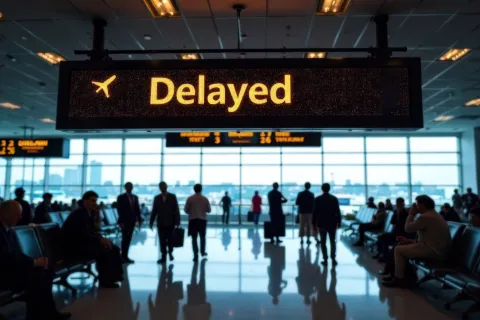
Connecting between North and South America may soon involve longer flight times and unexpected layovers. On Nov. 29, 2025, President Donald Trump announced that “Venezuela’s airspace is closed in its entirety,” according to NBC News, and urged all commercial airlines to steer clear of the South American nation while he weighs possible military action.
What the U.S. directive means for international travelers
For anyone booked on flights that normally pass over Venezuela, the order raises immediate questions: Will my itinerary change? Could flight times increase? Will tickets cost more? Although the White House has not yet published the fine print, historical precedents offer clues. When conflict threatens a specific region, U.S. carriers typically receive a Notice to Air Missions (NOTAM) from the Federal Aviation Administration spelling out precise latitude-and-longitude coordinates that crews must avoid. In the case of Venezuela, the entire sovereign airspace—stretching from the Caribbean coast down to the Brazilian border—appears to be off-limits under Trump’s edict.
Potential detours around Venezuelan airspace
Commercial corridors linking Miami, Houston and Atlanta with major hubs such as Bogotá, Lima, Santiago and São Paulo often rely on Venezuelan skies for the most efficient great-circle route. By shutting that door, airlines will need to chart detours west over Colombia or east over Guyana and Suriname. A detour around Venezuela adds roughly 150 to 250 nautical miles, depending on the city pair. For a Boeing 767 or Airbus A330 cruising at 525 mph, that translates into an extra 20 to 30 minutes aloft—enough to knock airport curfews off schedule, burn additional fuel and, in some cases, push crews toward federal duty-time limits. The knock-on effect can ripple across an airline’s entire network, delaying subsequent departures and raising the risk of missed connections for passengers.
What airlines have said so far
As of Saturday afternoon no major U.S. carrier had issued a formal timetable revision. In a statement, American Airlines told travelers it is “monitoring the situation and will make any route adjustments necessary to ensure the safety of our customers and crews.” Delta Air Lines and United Airlines offered nearly identical language, underscoring that safety remains the top priority but leaving schedules unchanged until the FAA publishes detailed guidance. Foreign airlines, including LATAM, Avianca and Copa, also use Venezuelan airspace for north-south trunk routes. International aviation agreements do not compel non-U.S. airlines to honor Washington’s directive, yet many carriers voluntarily follow U.S. security advisories to avoid higher insurance premiums or to keep code-share partners content. Statements released in Santiago, Bogotá and Panama City hinted that route planners were already running simulations to identify the least disruptive bypass options.
Why Venezuela matters in the sky
With its northern coastline less than five hundred miles from Miami and a broad landmass bridging Colombia and Guyana, Venezuela forms a wedge right in the middle of the busiest long-haul corridor between North and South America. Unlike the Andes to the west, the terrain over central Venezuela tops out at 3,000 feet, allowing jets to fly lower and save fuel during climb and descent phases. Caracas’ Maiquetía International Airport has long served as a convenient emergency diversion point for carriers crisscrossing the Caribbean. Closing the airspace removes that safety net, meaning captains will have to plan alternates in Manaus, Port of Spain or Piarco, all at greater distances.
Security backdrop: Politics on the ground
The decision follows weeks of escalating rhetoric between Washington and Caracas. During the televised announcement, the president warned that land strikes “could start very soon” if Venezuela continues to resist U.S. demands for political reforms. Although no timeline was provided, the statement nudged the Department of Defense to heighten its readiness posture in the region. Airlines, always quick to anticipate geopolitical risk, treated the comment as a de facto red flag. Aviation insurers factor armed conflict heavily into premiums, and underwriters sometimes void coverage when a route enters designated high-risk zones. By proactively blocking the airspace, the administration provides a clear legal baseline that enables carriers to claim force majeure instead of wrangling over contract clauses with passengers later.
Tips for Travelers
- Check your booking daily. If a detour lengthens travel time by more than two hours, most U.S. airlines allow free rebooking under their irregular-operations policy.
- Build a longer buffer for connections. Add at least 90 minutes between flights in hub airports such as Miami, Panama City or Bogotá.
- Consider red-eye alternatives. Overnight flights often have more schedule padding, allowing them to absorb detour-related delays without missing onward connections.
- Monitor travel-insurance clauses. Some policies cover “government-mandated route changes,” while others do not. Verify coverage before departure.
- Stay flexible with seating. Aircraft substitutions may occur as airlines juggle fleet assignments to cope with longer stage lengths.
FAQ: Avoiding Venezuelan airspace
Will my flight definitely change?
Not necessarily. Short-haul Caribbean hops rarely enter Venezuelan jurisdiction, and long-haul carriers may still find routes that remain within existing flight-time limits. Does this affect cruises or ferries?
The order addresses aviation only; maritime operations were not mentioned on Nov. 29. Can airlines overfly with special permission?
Technically possible, but politically improbable while the White House signals potential military action. How long will the restriction last?
No expiration date was specified. Historically, similar airspace closures tied to geopolitical tensions have ranged from a few days to multiple years.
Looking ahead
Airlines and passengers alike will now watch for an FAA NOTAM that codifies coordinates, altitude floors and start times. Once published, crew schedulers will recalculate block times, and revenue departments will adjust fares to reflect higher operating costs. “Venezuela’s airspace is closed in its entirety,” Trump said Saturday morning, underscoring the administration’s uncompromising stance even before any missiles or troops move. For travelers, the immediate course of action is simple: stay informed, stay flexible and be prepared for itinerary adjustments as carriers realign their maps—literally overnight—to keep flights safely above the fray. — as O’Donnell told NBC News.
More travel news
Lufthansa Blocks First Class Awards for Millions
FRANKFURT, Germany - Lufthansa blocks first-class award redemptions for frequent flyers in three major markets, eliminating a prized benefit for millions of travelers who've been banking miles for premium cabin flights.

Trump Ends 50-Year National Park Vehicle Ban
WASHINGTON - President Trump reversed Executive Orders 11644 and 11989, lifting decades-old off-road vehicle restrictions on federal lands including areas in and around national parks.

Budget Carrier Collapses as Oil Crisis Grounds Fleets
MIAMI, USA - Viral reports of Spirit Airlines shutting down and Magnicharters filing for bankruptcy due to a U.S.–Iran oil crisis do not align with verifiable airline industry timelines or real-world events.

Memorial Day Travel Surges Despite Higher Gas Prices
UNITED STATES - Record 45 million Americans to travel Memorial Day weekend despite gas averaging $4.52, with nearly 87% choosing road trips over air.

About the Author

Bob Vidra
Bob Vidra, based in scenic Tahoe, is an esteemed tech editor known for his deep understanding of the dynamic intersection of technology, travel, and the outdoors.