Stay current with our airline news coverage.
What Actually Happened at O'Hare Last November
CHICAGO - If you were trying to fly through O'Hare in early November 2025, you probably remember the chaos. I certainly heard about it from enough frustrated travelers. But here's what's worth clearing up now: the story that the FAA closed an investigation into airline compliance with shutdown-related flight cuts at O'Hare on November 10, 2025? That doesn't match the public record. What we can verify is this: the FAA issued an emergency order on November 6, 2025, which took effect the next day, November 7. That order forced airlines to slash domestic operations at 40 major U.S. airports, including both O'Hare and Midway here in Chicago. The reason? Air traffic controller staffing shortages tied to a government shutdown. The order wasn't subtle. Airlines had to cut domestic flights by 10 percent at high-impact airports. The FAA's own summary in the emergency order stated: "This Order reduces or temporarily prohibits certain operations in the navigable airspace to ensure the safety of aircraft and the efficiency of the NAS." Translation: we don't have enough controllers to safely manage the usual volume of flights, so we're forcing you to fly less.How the Cuts Played Out
The restrictions didn't stay static. According to CBS News, "The flight cuts started at 4% and later grew to 6% before the FAA on Friday rolled the restrictions back to 3%." During one particularly rough day in that period, nearly 3,000 flights were cut nationwide. For perspective, that's roughly the entire daily schedule at a major hub like Atlanta or Dallas. O'Hare, which serves as a major hub for both United Airlines and American Airlines, absorbed a significant share of those cancellations. The image that circulated from November 10 showed a pilot walking past the Chicago Blackhawks logo at O'Hare, coffee cup in hand, while travelers navigated persistent delays more than a month into the shutdown. The FAA eventually lifted the restrictions on a Monday morning after "continued staffing improvements," allowing airlines to resume regular schedules at 5 a.m. CST. But the whiplash for travelers and airlines alike was real.The Investigation That Wasn't
Here's where things get murky. The claim that the FAA closed a compliance investigation on November 10 doesn't appear in any official FAA documentation, aviation trade publications, or mainstream news archives from that period. What's documented is the emergency order itself, the flight cuts it triggered, and the eventual rollback as staffing recovered. The FAA did cite "safety risks and delays presented by air traffic controller staffing constraints caused by the continued lapse in appropriations" as justification for the cuts. But an investigation into whether airlines complied with those cuts? There's no public record of it. It's possible something got conflated or misreported. Or maybe there was a quiet internal review that never made it into the official record. But based on what's verifiable, the story as presented doesn't hold up.Why This Matters for Future Disruptions
Setting aside the investigation question, the November 2025 shutdown flight cuts revealed something travelers should remember: when the federal government runs out of money, air traffic controllers still show up to work; they just don't get paid. And when that drags on long enough, staffing gets tight. Controllers call in sick or leave for better-paying jobs. The system starts to buckle. The FAA's response was to force airlines to cut flights rather than risk operating an unsafe airspace. That's the right call from a safety perspective, but it leaves travelers stuck. If you're booked on a flight during a shutdown or similar staffing crisis, your best bet is to obsessively check your airline's app for real-time updates and have a backup plan ready. Chicago travelers should know that O'Hare's status as a mega-hub means it's disproportionately affected by national system disruptions like this. When the FAA issues broad-based cuts, O'Hare doesn't escape them. Neither does Midway, though the impact is smaller given its more limited schedule. Current hotel rates in Chicago range from $73 to $215 per night, with a median around $103 per night, according to current Google Hotels data. If you're stuck overnight due to a cancellation, you've got options like the Rodeway Inn Chicago North Shore in Lincolnwood at $73 per night or the WoodSpring Suites Chicago Midway at $106 per night. Not glamorous, but functional. The broader lesson? Government shutdowns aren't abstract political theater. They have real consequences for the systems we rely on to move around the country. And when the FAA starts cutting flights to keep the airspace safe, the disruption ripples through millions of travel plans. Keep that in mind the next time Congress is flirting with a funding lapse.More travel news
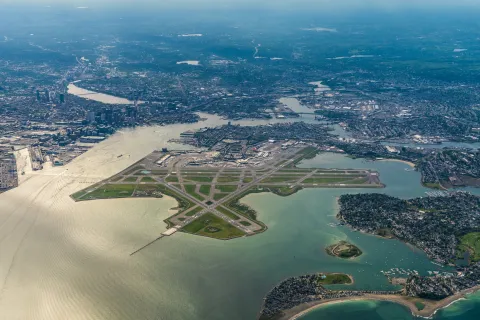
FAA Probes Two Close Calls at Boston Logan Airport
BOSTON, Mass. - Two go-arounds in 48 hours at Logan have federal investigators probing intersecting runway operations, communication breakdowns, and what's becoming a troubling pattern.
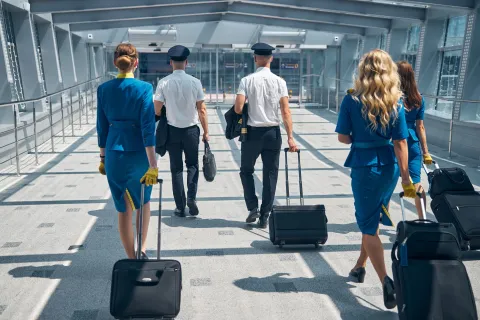
Flight Crew Radiation Risk Demands Stronger Safety Rules
WASHINGTON - The National Academies of Sciences, Engineering, and Medicine urges the FAA to upgrade cosmic radiation from a job "consideration" to an official hazard, with improved protections for pilots and cabin crew.
Flight Costs Stay High Despite New US-Iran Agreement
WASHINGTON - The preliminary U.S.-Iranian framework deal could ease fuel prices, but airlines warn fare relief may take months or never materialize.

Southwest Airlines Grinds to Halt With 1000 Plus Delays
DALLAS, United States - Southwest Airlines disrupted thousands of travelers with 1,083 delays and 5 cancellations across major domestic routes, affecting cities from Chicago to Phoenix.
About the Author

Bob Vidra
Bob Vidra, based in scenic Tahoe, is an esteemed tech editor known for his deep understanding of the dynamic intersection of technology, travel, and the outdoors.