Stay current with our airline news coverage.
When Your Flight Leaves Without You
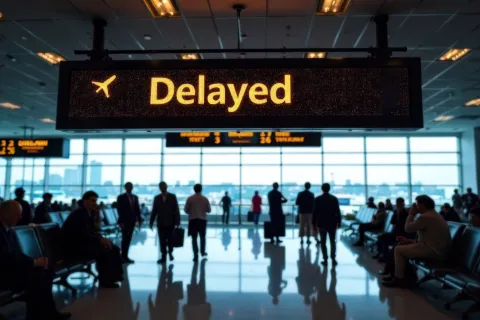
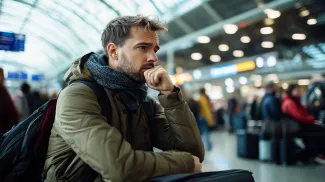
The chaos became impossible to ignore when an EasyJet flight from Milan Linate to Manchester took off with just 34 passengers out of 156 booked seats on April 12. That's a 21.8% load factor; for context, EasyJet typically runs around 92.4% full. The missing 122 passengers? Still in line at passport control, according to Simple Flying. "There were two officers and one biometric machine... everything was going at a snail's pace," said Max Hume, a stranded UK traveler, according to Simple Flying. He noted that 16 automated machines sat unused while the queue crawled forward. Around 100 EasyJet customers were abandoned at Linate airport while waiting to board, with some waiting up to three hours just to clear passport control, according to TravelPulse. The airline eventually took off without them.What's Actually Happening at EU Borders
The Entry/Exit System requires travelers from non-EU countries, including the UK post-Brexit, to have their fingerprints and photos taken when entering the Schengen area. According to TravelPulse, further checks take place when they leave. First-time registrants must provide 10 fingerprints and a facial scan; the biometric data remains valid for three to five years or until passport expiry, according to Simple Flying. In theory, this digital system should eventually streamline borders by replacing manual passport stamping. In practice? It's a mess. Portuguese airports in Lisbon, Porto, and Faro paused EES biometric collection on the morning of April 11 due to excessive waits, according to Simple Flying. The Croatia-Serbia border at Bajakovo saw over three-hour waits on launch day, complicated by Orthodox Easter traffic. The system's first week refused entry to 24,000 people for issues ranging from expired documents to other technicalities, according to Simple Flying.The Blame Game Begins
Airlines aren't mincing words. "The EES rollout has been in shambles," said Michael O'Leary, Ryanair CEO, according to Simple Flying. EasyJet issued a more diplomatic response but made clear where they think responsibility lies. "While this is outside of our control, we are sorry for any inconvenience caused," an EasyJet spokesperson said, according to Simple Flying. Border authorities and airports, meanwhile, point to technical glitches and staffing shortages. The scene at Milan Linate, with two officers, one functioning machine, and 16 automated kiosks sitting idle, pretty much sums up the infrastructure gap. It's hard to run a smooth biometric operation when your equipment isn't even turned on. Portuguese authorities took the pragmatic route and just stopped collecting biometrics temporarily when things got overwhelming. It's a Band-Aid, sure, but at least people could catch their flights.Summer Travel Just Got More Complicated
Here's the thing: we're not even in peak season yet. The EES launched during the relatively quiet shoulder period between winter and summer holidays, and it's already causing families to miss flights and pay hundreds of pounds for last-minute hotels and rebooking. British holidaymakers have been warned to expect potential delays of up to four hours at EU borders, according to Simple Flying. That's not a slight inconvenience you can shave off by arriving 15 minutes earlier; that's a complete recalculation of your travel day. If you're flying through a major gateway like Milan, Lisbon, or any Croatian border crossing, you'll want to build in a buffer that would've seemed absurd a month ago. Three hours before an international flight used to feel excessive. Now it might not be enough if you're departing the Schengen area.Is There Any Relief in Sight?
The optimistic take is that this is growing pains. Once more travelers get registered, once border staff get trained, once the technical kinks get worked out, the system should theoretically speed things up. EU officials and travel advisors view the EES as a long-term improvement despite the rocky start, according to Simple Flying. The pessimistic take? We've just added a permanent layer of friction to European travel for British tourists, and there's no guarantee the infrastructure will ever catch up to the demand, especially at smaller regional airports that can't afford robust biometric setups. For now, British travelers are caught in the crossfire while airlines and airports point fingers at each other. Neither the blame nor the apologies help much when you're watching your plane push back from the gate while you're still three dozen people back in a queue that hasn't moved in 20 minutes. If you've got European travel booked this summer, consider this your warning. Build in extra time, carry snacks, and maybe download a few extra podcasts. You're going to need them.More travel news
Lufthansa Blocks First Class Awards for Millions
FRANKFURT, Germany - Lufthansa blocks first-class award redemptions for frequent flyers in three major markets, eliminating a prized benefit for millions of travelers who've been banking miles for premium cabin flights.
Disruptive Flyers Face Industry-Wide Travel Ban
LONDON, United Kingdom - Ministers consider cross-airline ban system to curb persistent disruptive behavior, drawing on India's unified no-fly model.

Armenia Unlocks EU Visa-Free Travel in 2026
YEREVAN, Armenia - Armenia moves toward visa-free travel with the European Union, a shift that could reshape backpacker routes through the Caucasus if the reforms actually stick.

Luxury Watches Make Travelers Targets for Knife Attacks
LONDON, England — Wearing a high-end timepiece in major tourist destinations now carries significant risk of violent robbery, as organized crime groups treat luxury watches as portable cash.

About the Author

Bob Vidra
Bob Vidra, based in scenic Tahoe, is an esteemed tech editor known for his deep understanding of the dynamic intersection of technology, travel, and the outdoors.