Stay current with our airline news coverage.
When Everything Goes Wrong at Once
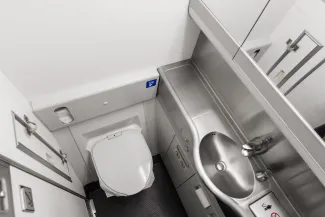
About 15 hours into the transpacific journey, the aircraft's entire lavatory flushing system quit. Not one toilet, not a few; all of them. The toilets clogged and wouldn't flush, and with passengers still needing to use the facilities, the situation was deteriorating quickly. Guam, the nearest diversion airport, was still roughly six hours away, approximately 1,600 miles from Manila. Philippine Airlines confirmed that "an inflight lavatory malfunction occurred on PR113 that departed Los Angeles January 11, 2026," and noted that "the flight was prepared" to divert if necessary. But here's where it gets complicated: instead of turning around, the captain and operations team decided to press on. Their solution? Crew members would manually scoop waste from the toilets and dispose of it in adjacent sinks to prevent overflow and keep the lavatories at least partially functional. All of this, reportedly, managed out of passenger view.A Choice Between Bad Options
Before we rush to judgment, let's consider what the crew was actually facing. You're over the middle of the Pacific. Guam is hours away. Manila is closer, but still not close. A diversion means burning extra fuel, coordinating with a different airport, potentially stranding hundreds of passengers overnight in Guam with limited hotel capacity, rebooking connections, and eating thousands of dollars in operational costs. On the other hand, you've got a deeply unpleasant but potentially manageable situation if your crew can improvise. The lavatories reportedly began functioning normally again on final approach, suggesting the issue might have been pressure-related or temporarily resolvable. Was this the right call? That depends on who you ask.Crew Pushback and Safety Concerns
The cabin crew didn't see it as a reasonable compromise. According to reports, "the crew was angry that the flight wasn't diverted, as seemingly profits and punctuality were valued over the wellbeing of passengers and crew." They took their grievance to their union, pointing fingers at the captain, purser, and supervisors for prioritizing the schedule over basic health and safety. And honestly? It's hard not to see their point. Handling human waste without proper containment or protective protocols isn't just gross; it's a genuine biosecurity risk. One crew member reportedly stated, "No airline protocols support this kind of a process, rather than diverting the aircraft." That's the crux of it. There may not be a playbook for this exact scenario, but asking crew to jury-rig a waste disposal system mid-flight seems like a stretch of improvisation that crosses into questionable territory.What Philippine Airlines Says
For its part, Philippine Airlines acknowledged the incident and initiated an internal review. The airline's official statement praised the team's handling of a tough situation: "Philippine Airlines acknowledges the professionalism and dedication of the flight and cabin crew in managing the situation in accordance with established procedures." That phrasing is doing a lot of work. "Established procedures" for manually scooping waste? It's hard to imagine that's in the manual, unless PAL's training is far more comprehensive than most. The flight ultimately landed safely in Manila without delay, and passengers likely had no idea what was happening behind the scenes. From a passenger perspective, the airline pulled off a minor miracle. From the crew's perspective, they were handed an impossible task and told to make it work.The Bigger Questions
This incident raises uncomfortable questions about how airlines handle in-flight emergencies that don't fall neatly into existing categories. A medical emergency? Clear protocols. Engine failure? Checklist ready. But what happens when a non-critical but deeply unpleasant system fails, and you're hours from anywhere? Aviation is built on redundancy, but even the best-designed systems can fail. The fact that all 11 lavatories went down simultaneously suggests a systemic issue, likely with the flushing system's central pump or pressurization. That's the kind of failure that should prompt not just an internal review, but a thorough investigation to prevent recurrence. And what about the crew? They signed up to serve drinks and manage emergencies, not to become improvised sanitation workers. If this is what "professionalism and dedication" looks like, maybe it's time to revisit what we're asking people to do at 35,000 feet.The Uncomfortable Calculus
Here's the thing: I don't envy the captain who had to make this call. Diverting to Guam might have been the safer, cleaner choice, but it also would have cascaded into a logistical nightmare for everyone on board. Continuing to Manila kept the schedule intact and got passengers where they needed to go. But at what cost? If you're a crew member who spent hours managing human waste because the airline didn't want to eat the expense of a diversion, that's going to leave a mark. Trust erodes quickly when people feel their wellbeing is secondary to the bottom line. The flight landed. Everyone got home. And somewhere in Manila, a group of very dedicated flight attendants probably went straight home, took the longest shower of their lives, and reconsidered their career choices. Let's hope PAL's internal review leads to something more than a pat on the back and a promise to do better next time.More travel news
Flying With Power Banks: New Rules for LA Travelers
LOS ANGELES, Calif. - New regulations clarify which portable battery chargers you can bring on flights, with most travelers able to carry two 100-watt-hour power banks without airline approval.

America's Top 7 Global Gateways for International Travel
NEW YORK, United States - Seven major US airports now dominate international traffic as air travel rebounds, concentrating global connectivity through hubs serving Europe, Latin America, and Asia.

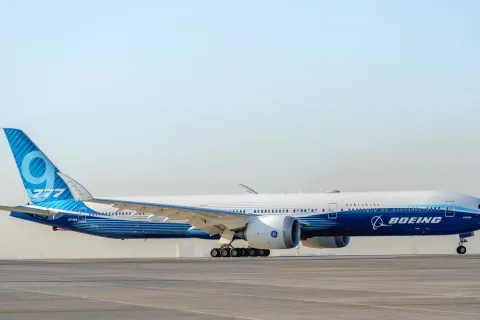
Boeing's 30 Grounded 777X Jets Face Years of Repairs
EVERETT, Wash. - Boeing faces a multi-year rework campaign for 30 stored 777X jets built to outdated standards, as airlines reject heavily modified early frames and regulators tighten oversight.
FAA Blasts Boeing 767 With Laser to Test Flight Safety
White Sands, N.M. – In a first-of-its-kind test, the FAA and military fired a high-energy laser at a grounded Boeing 767 for eight seconds to prove counter-drone systems won't accidentally target passenger jets.

About the Author

Andy Wang
As our Asia Editor and a first-generation American, Andy Wang brings a unique dual perspective to Jetsetter Guide.