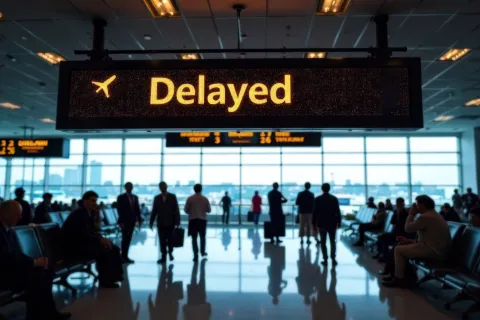
Stay current with our airline news coverage.
Why This Is Happening Now
The math here is pretty straightforward, even if the geopolitics behind it aren't. "As jet fuel prices have doubled since the start of the Iran conflict and some lower profitability routes and flights are no longer economic, we are making schedule adjustments accordingly," an Air Canada spokesman said, according to Fox Business. Jet fuel hit $4.32 per gallon on Thursday, up from around $2.50 before the war started. That's not just a line item adjustment; it fundamentally changes which routes make financial sense to operate. And right now, some of these U.S. connections don't clear the bar anymore. "If the cost of fuel keeps going up, each flight costs more to operate," aviation expert Phyl Durdey noted, according to research reports. It's a blunt reality, and Air Canada isn't the only carrier feeling it. Lufthansa and KLM have been pulling back on unprofitable routes too, all for the same reason.What Gets Cut, What Stays
The JFK suspension runs from June 1 through October 25, 2026, hitting service from both Toronto Pearson and Montreal-Trudeau. Salt Lake City goes dark starting June 30, with resumption pushed into 2027. That's a long gap for anyone with loyalty to these specific routes or who prefers nonstop options. But here's the thing: Air Canada isn't abandoning the New York market entirely. The airline will keep flying to LaGuardia and Newark, with roughly 34 daily departures still heading to the broader NYC area from across Canada, according to local outlet CTV News. So if you're flexible on which airport you land at, you've still got plenty of options. Newark, in particular, often prices competitively and has solid ground transportation into Manhattan. For those already booked on the axed flights, Air Canada says it'll rebook passengers on partner airlines like United and Delta. That's standard practice, but it can mean longer connections, different airport terminals, and potentially missing out on any Air Canada-specific perks you were counting on.Beyond JFK and SLC
These aren't the only cuts hitting the summer schedule. Air Canada is also suspending Vancouver to Fort McMurray service starting May 28, Toronto to Yellowknife on August 30, and has shelved plans to launch Montreal-Guadalajara altogether. All told, the changes affect about 1% of the airline's total 2026 flying capacity. That might sound small in percentage terms, but for the passengers on those specific routes, it's 100% of their original plan.The Bigger Fuel Crisis Looming
This isn't just an Air Canada story; it's a snapshot of a much larger industry stress test. The International Energy Agency's Fatih Birol warned that "Europe has maybe six weeks of remaining jet fuel supplies," underscoring just how tight global supply has gotten. The Strait of Hormuz disruptions have sent shockwaves through energy markets, even though oil prices dropped more than 10% on Friday after the strait partially reopened. Airlines across the board are running the same calculations Air Canada just made public. Which routes can absorb higher operating costs? Which ones were marginal even before fuel doubled? Summer 2026 was supposed to be a banner season for travel demand, but now carriers are having to make tough calls about where to deploy their planes.Should You Rethink Your Booking Strategy?
If you've been eyeing summer travel to New York or connecting through these hubs, it's worth acting sooner rather than later. The remaining capacity to LaGuardia and Newark will likely see increased demand now that JFK service is off the table, and prices could adjust accordingly. For travelers with some flexibility, consider Newark as a first option; it's often overlooked but can be a smoother experience than the chaos of JFK anyway. For Salt Lake City travelers, the picture is tougher. With nonstop service vanishing until 2027, you're looking at connections through U.S. hubs, which adds time and potential hassle. If you're planning a ski trip or national parks visit, you might want to explore flying into Las Vegas or Denver and driving, or shifting your plans to destinations Air Canada is still serving reliably. The broader takeaway here is that fuel volatility is going to keep shaking up route networks for the foreseeable future. Airlines are in reactive mode right now, and that means schedules that felt locked in a few months ago are suddenly up for revision. If you've got critical travel dates, consider booking on airlines with multiple daily frequencies or routes served by several carriers, so you've got backup options if your original flight gets pulled. One more thing to watch: WestJet and Delta have both been adding capacity on some Canada-U.S. routes, and the U.S. Department of Transportation is reportedly monitoring consumer impacts. If this fuel situation persists, we could see more aggressive schedule changes industry-wide, possibly opening opportunities for travelers willing to shop around across carriers and airports. For now, Air Canada passengers should check their itineraries carefully and be ready to pivot. The airline says it's working on rebooking affected travelers, but getting ahead of that process yourself is never a bad idea.More travel news
Major Airlines Battle Airspace Bans and Travel Chaos
TORONTO, Canada - Air Canada joins Delta, British Airways, Lufthansa, and other major carriers navigating Middle East airspace restrictions that threaten international route networks.

Air Canada Calls Seat Scraping a Federal Crime
WILMINGTON, Del. - Air Canada's lawsuit against popular award search tool Seats.aero escalates, with the airline claiming data scraping violates federal computer fraud law and the startup countering with antitrust allegations.
Major Airlines Cancel Dozens of Japan Flights in 2026
TOKYO, Japan - ANA, Air Canada, KLM, Jetstar, and Skymark grounded 17 flights across Japan's busiest airports, disrupting major routes to Toronto, Amsterdam, and key domestic cities.
Middle East Tourism Collapses Amid Regional Conflict
DUBAI, United Arab Emirates - Iran joins Israel, Saudi Arabia, UAE, Qatar, Iraq, Bahrain, Jordan, Syria, Egypt, and neighboring countries in an unprecedented tourism collapse, losing $600 million daily as conflict reshapes the region's travel landscape.

About the Author

Dana Lockwood
Dana Lockwood is a rising journalist who specializes in budget-friendly solo travel.