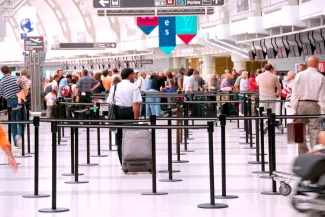
If you've spent any time in airports this spring, you've witnessed the ritual: passengers hovering near the gate podium 45 minutes before boarding, eyeing each other's bags with territorial suspicion. When Zone 3 finally gets called, there's a frantic shuffle as travelers jostle for overhead bin space, stuffing roller bags sideways, cramming backpacks into already-full compartments, and ignoring flight attendants who've begun their familiar plea: "If you can't find space, we'll need to gate-check those bags."
Twenty-five minutes later, the door finally closes. The flight attendants look exhausted. Half the passengers are annoyed. And you're still sitting at the gate, waiting for pushback clearance that won't come for another fifteen minutes because the departure slot was missed during the boarding chaos.
This scene plays out thousands of times daily across U.S. airports, and it's getting worse. What most travelers don't realize is that the airline industry's latest move; raising checked baggage fees yet again ahead of peak summer travel; is making this problem significantly worse, not better.
This spring, American Airlines raised its first checked bag fee from $30 to $35. United followed with its own $5 increase. JetBlue now charges $10 extra if you check a bag within 24 hours of departure rather than at booking. Alaska adjusted its fee structure upward. Even Southwest, the last holdout with its "Bags Fly Free" policy, ended that perk in 2025, signaling an industry-wide commitment to extracting more revenue from luggage.
For airlines, this seems like sound business logic: unbundled pricing means passengers only pay for what they use. But there's a fundamental problem with that reasoning, one that becomes glaringly obvious when you watch what actually happens at gates across the country.
The $7.27 Billion Question
U.S. airlines aren't raising baggage fees on a whim. According to the Bureau of Transportation Statistics, domestic carriers collected a record $7.27 billion in baggage fees during 2024, up from $7.07 billion in 2023. This isn't pocket change; each of the Big Three airlines (American, United, and Delta) individually tops $1 billion in annual baggage fee revenue.
This money has become integral to airline profitability. As ticket prices face competitive pressure and fuel costs fluctuate, ancillary fees provide a reliable revenue stream that helps shore up bottom lines. The industry calls this "unbundling," framing it as consumer choice: you're free to travel light and pay less, while those who need to check bags cover their own costs.
The timeline of recent increases tells the story of an industry doubling down on this strategy. American's jump from $30 to $35 for the first checked bag represents a nearly 17% increase in a single year. United's similar bump puts first-bag fees at $35 to $40 depending on route and booking channel. JetBlue's late check-in penalty; an extra $10 if you wait until the last day; pushes travelers toward advance decisions that lock in revenue earlier.
When Southwest abandoned its signature "Bags Fly Free" policy in 2025, it marked a watershed moment. The carrier that built its brand identity on inclusive pricing had concluded that leaving baggage fee revenue on the table was no longer viable. If Southwest couldn't make free checked bags work, the signal to the rest of the industry was clear: there's no turning back.
Airlines justify these fees by pointing to operational costs. And to be fair, baggage handling isn't free. IATA industry data shows airlines spend approximately $29 billion annually on baggage operations, which works out to roughly $10 per bag per journey. But here's where the math gets interesting: those same airlines only collect about $10 billion in baggage ancillary revenues. There's a $19 billion gap, meaning baggage operations are already subsidized by ticket prices regardless of fee increases.
So if the fees aren't truly covering costs, what are they accomplishing? The answer becomes clear when you shift your focus from airline spreadsheets to airport gate areas.
What Actually Happens at the Gate
Samuel Engel, senior vice president at ICF and a lecturer at Boston University's Questrom School of Business, has studied airline operations extensively. He identifies luggage as the "single driver of boarding time" on modern flights. It's not finding your seat that slows things down; it's the overhead bins.
The mechanism is straightforward but relentless. Overhead bin space is finite, and on most flights, it's insufficient for the number of passengers trying to bring roller bags aboard. Regional jets are particularly problematic, with bin configurations designed for an era when fewer passengers traveled with wheeled carry-ons. But even mainline aircraft with supposedly generous overhead space face challenges when every passenger boards with a bag sized to the maximum allowable dimensions.
The result is what industry insiders call the "bin hog" phenomenon: passengers violating the one-carry-on-plus-personal-item rule, loading bags inefficiently (wheels-out instead of wheels-first, horizontally instead of vertically), or claiming space in bins near the front of the plane even when seated in back. Flight attendants become bin police, moving bags, asking passengers to consolidate items, and losing precious minutes with each intervention.
Gate agents face intense pressure to meet departure times, which are tied to performance metrics and arrival slot coordination. This pressure often forces premature decisions: even when overhead bins aren't completely full, agents will start demanding gate checks once boarding stretches past a certain point. But there's rarely real-time communication between the gate and cabin crew about actual bin capacity, leading to situations where bags get unnecessarily checked while empty space exists toward the rear of the aircraft.
Multiply these delays across thousands of daily departures, and you're looking at a systemic efficiency problem. Each flight might only lose five to ten minutes, but when airlines operate on tight turnaround schedules with aircraft making multiple flights per day, those minutes compound into missed connections, crew scheduling disruptions, and cascading delays throughout the network.
The Perverse Incentive
Here's where airline pricing strategy collides with operational reality in the most counterproductive way possible: higher checked baggage fees push more passengers to carry bags on board.
Consider a family of four planning a week in Florida this summer. With checked bag fees now at $35 per bag each way, checking luggage for the whole family costs $140 to $180 round-trip. That's real money for most households, especially when you're already spending hundreds or thousands on airfare and accommodations. The rational response? Stuff everything into maximum-size carry-ons and personal items, even if it means Tetris-level packing and schlepping overweight bags through security and across terminals.
So airlines are financially penalizing the very behavior; checking bags; that would speed up boarding and improve operational efficiency. They're charging passengers extra to do the thing that benefits everyone in the system.
Meanwhile, premium cabin passengers and elite frequent flyers often get free checked bags as part of their ticket class or status benefits. You'd think these passengers would enthusiastically check bags and board with just personal items. But they don't. Why? Because even though checking is free for them, nobody wants to wait at baggage claim on arrival. So they carry on anyway, further overwhelming the overhead bins regardless of ticket price.
I've watched this dynamic play out on hundreds of flights over the years, and the logic just doesn't track. The result is entirely predictable: overhead bins get overwhelmed on nearly every flight, regardless of passenger mix or route. The system actively incentivizes the outcome airlines claim they're trying to avoid.
This April, as families book summer travel for June, July, and August trips, they're doing exactly this math. Airlines have perfectly timed their fee increases to hit right as the summer booking window opens, maximizing revenue extraction at the moment when travelers are most likely to pay. But they're also maximizing the likelihood that those same travelers will cram everything into carry-ons rather than fork over the fees, setting up airport gate areas for a summer of maximum chaos.
The Ripple Effect Nobody Talks About
The consequences of delayed boarding extend far beyond passenger frustration. In the interconnected world of airline operations, a five-minute delay at the gate can cascade into much larger problems throughout the system.
Delayed boarding means delayed pushback from the gate. At congested airports like JFK, Newark, LaGuardia, LAX, and Atlanta, departure slots are carefully coordinated. Miss your slot by even a few minutes, and you're back in line behind a dozen other aircraft. That five-minute boarding delay suddenly becomes a thirty-minute wait on the tarmac, engines burning fuel, passengers growing restless.
Speaking of fuel burn: airlines love to tout their environmental initiatives, from sustainable aviation fuel investments to carbon offset programs. But all of that sits awkwardly alongside the reality of aircraft idling on taxiways because gate operations couldn't get passengers seated efficiently. The extra fuel consumed waiting for departure slots adds cost and emissions that don't appear on any baggage fee cost-benefit analysis.
Crew scheduling presents another hidden cost. Airlines operate on tight turnaround schedules, with crew members assigned to multiple legs throughout the day. When boarding delays throw off the first flight, it affects every subsequent assignment. Flight attendants hit duty time limits. Pilots face scheduling conflicts. What started as a baggage handling issue at Gate 23 in Dallas can end with a cancelled flight in Phoenix six hours later because the crew timed out.
Passenger stress increases measurably during chaotic boarding processes, leading to more confrontations with gate agents and flight attendants. In extreme cases, passengers get removed from flights, causing additional delays and sometimes requiring law enforcement involvement. The viral incidents that make headlines are rare, but lower-level conflicts are common enough that crew members consider gate management one of the most challenging parts of their jobs.
Even TSA checkpoint operations feel the downstream effects. Passengers who know boarding will be chaotic arrive earlier, hoping to secure bin space by boarding with early groups. This concentrates security checkpoint volume in narrow time windows, creating the long lines everyone dreads. Airports have invested hundreds of millions in checkpoint technology and staffing, but they're fighting against passenger behavior driven by downstream boarding anxiety.
The truly hidden cost is opportunity cost. Airlines have sophisticated asset utilization models that depend on aircraft making their scheduled flights without delay. Every minute on the ground is a minute the plane isn't generating revenue. When boarding inefficiency costs five to ten minutes per flight, and aircraft make six to eight flights per day, you're looking at meaningful lost productivity. Industry analysts estimate that improving boarding efficiency by even a few minutes per flight could save airlines hundreds of millions annually in better aircraft utilization.
So even with $7.27 billion in baggage fee revenue, airlines are leaving money on the table by not optimizing the operation that determines whether flights actually depart on time. The revenue model doesn't account for the operational costs it creates.
What If Airlines Had It Backwards?
Let's run a thought experiment: what if airlines flipped their pricing model and charged for carry-on bags while making checked bags free?
Boarding would speed up dramatically. Overhead bins would be available primarily for personal items; coats, laptops, and small backpacks. Passengers could board and sit down immediately without the elaborate dance of finding space, rearranging bags, and negotiating with neighbors about who gets which bin. Flight attendants could focus on safety briefings and departure preparation rather than bin management.
Faster boarding means faster pushback. Faster pushback means better on-time performance, fewer missed departure slots, and reduced tarmac time. Better on-time performance improves crew scheduling reliability and reduces overtime costs. Higher aircraft utilization means better return on assets. The operational benefits compound throughout the system.
This isn't entirely theoretical. Some European budget carriers have experimented with versions of this model. Ryanair and Wizz Air allow a free small personal bag (40 x 30 x 20 cm) that fits under the seat, but larger carry-ons require Priority Boarding fees ranging from €6 to €36 depending on booking timing. While these carriers' overall passenger experience remains controversial, boarding does move faster when fewer people try to cram full-size bags into overhead bins.
The counter-arguments are real. Baggage handling infrastructure requires significant investment; tugs, conveyors, sorting systems, staff. Lost bags create liability and customer service costs. Airlines have sunk billions into their current fee structures and systems. Reversing course would require operational overhauls and revenue model adjustments.
But modern baggage handling technology has dramatically improved reliability. RFID tracking lets passengers monitor their bags in real-time via smartphone apps. Automated sorting systems route bags more accurately than ever. Delta's recent investments in baggage tracking technology demonstrate what's possible when airlines prioritize this area. Mishandling rates have dropped from 18.88 bags per 1,000 passengers in 2007 to 5.57 per 1,000 by 2017, showing steady operational improvement.
The real barrier isn't operational capability. It's the revenue model. Airlines have become dependent on ancillary fees, and baggage charges are too lucrative to abandon without a compelling alternative. Charging for carry-ons could theoretically replace that revenue while improving operations, but it would require courage to be the first major U.S. carrier to make the switch. And in an industry where competitive pricing pressures are intense, nobody wants to be the guinea pig.
The Middle Ground Solutions
If a complete fee reversal isn't realistic in the near term, airlines could implement more modest changes that address the boarding efficiency problem without abandoning baggage fee revenue entirely.
Dynamic bin pricing could match fees to actual operational needs. During peak travel periods when flights are full and bin space is scarce, checked bag fees could drop while carry-on restrictions tighten. During off-peak times when planes are less crowded, the current model could continue. This would use price signals to shape passenger behavior when it matters most.
Better enforcement of carry-on size limits would help immediately. Those "personal items" that are clearly full-size backpacks or overstuffed totes? They shouldn't make it past the gate podium. Installing bag sizers at every gate and requiring agents to check non-compliant items would level the playing field and preserve bin space for legitimately sized bags. The technology for automated size verification already exists; some airports have tested systems that scan bags as passengers board.
Guaranteed bin space for basic economy passengers willing to pay a reasonable fee would remove the gate-check lottery. Right now, basic economy passengers can bring a carry-on but risk having it gate-checked if bins fill up. An option to pay $15 or $20 for guaranteed bin space would give airlines revenue while giving passengers certainty.
Gate-to-plane valet service works remarkably well on regional jets, where passengers hand off carry-ons at the jet bridge and retrieve them upon arrival. Expanding this to mainline aircraft during peak periods could preserve boarding speed while still allowing passengers to travel with carry-ons. It's essentially a gate-check program that feels less punitive because it's built into the boarding process.
Real-time bin capacity monitoring could revolutionize gate operations. If cabin crew could communicate actual bin availability to gate agents via a simple app or communication system, agents would know when to stop accepting carry-ons based on reality rather than guesswork. This would reduce unnecessary gate checks when space exists and prevent overstuffed bins that delay boarding.
Boarding group incentives tied to baggage choices could shape behavior positively. Passengers who check bags could board first within their fare class, guaranteeing access to remaining bin space for personal items. This would reward the operationally beneficial behavior without requiring fee restructuring.
Some of these ideas are already happening in pieces at various airlines, but no carrier has connected all the dots into a comprehensive strategy. The industry remains fragmented in its approach, with each airline tweaking policies around the edges rather than rethinking the fundamental model.
What This Means for Summer 2026 Travel
For travelers booking trips now for June, July, and August, here's the practical reality: baggage fees are high and getting higher, and boarding is going to be chaotic. But you can navigate this environment strategically.
If you're planning to check bags anyway, do it at ticket purchase rather than at the airport. Most airlines charge $5 to $10 less for pre-paid checked bags versus airport bag drop fees. For a family of four on a round-trip flight, that's $40 to $80 in savings. It's also one less decision to make at the airport when you're juggling boarding passes, security, and corralling kids.
Credit cards with free checked bag benefits can save hundreds of dollars for frequent travelers or families. Co-branded airline cards from American, United, Delta, and Alaska typically include free checked bags for the cardholder plus companions on the same reservation. The Citi / AAdvantage Platinum Select card ($99 annual fee, waived first year) saves up to $140 on a round-trip for just the cardholder; if you check bags on even two trips per year, the card pays for itself. United's Explorer card offers similar benefits for $150 annually after the first year. Just remember: you must pay for the tickets with the card and add your loyalty number to the reservation for the benefits to apply.
For carry-on warriors determined to avoid fees entirely, strategy matters more than ever. Arrive early enough to board with your assigned group; late boarders routinely get forced to gate-check bags even on flights with bin space remaining. Know the exact size limits for your airline; an eighth-inch too large and you risk getting called out. Pack strategically with soft-sided bags that compress to fit under seats if needed, giving you flexibility if bins fill up before you board.
Be aware that gate agents are cracking down on oversized "personal items." That full-size backpack that used to slide through as a personal item? It's getting challenged more often now as airlines try to preserve bin space. If you're pushing the size limits, expect scrutiny.
The spring shoulder season we're in right now, from April through May, offers a preview of summer chaos with slightly lower volume. If you have flexibility to travel in early May rather than waiting until peak summer, you'll face less bin competition and potentially lower fees. Of course, families with school-age children don't have that luxury, which is exactly why airlines can charge peak prices during school vacation windows.
For international travelers, be especially mindful of carry-on policies. Those heading to Japan for Golden Week in early May will experience this dynamic on transpacific flights, where long-haul aircraft have better overhead bin capacity but also carry passengers trying to maximize luggage for extended trips. The same calculus applies: pay to check bags or prepare for competitive boarding.
The Boarding Tax We All Pay
Step back from individual travel decisions for a moment and consider the collective cost of this system. Those extra five to ten minutes at every gate represent a tax on everyone's time; passengers, crew, airport workers. It's a completely avoidable inefficiency that exists primarily because airlines have optimized their business model for fee revenue rather than operational efficiency.
The irony is that faster boarding would actually improve airline margins through better aircraft utilization. An airline that could consistently board five minutes faster than competitors could schedule tighter turnarounds, get more flights out of the same aircraft each day, and reduce crew overtime. Those operational savings would compound across thousands of daily flights into meaningful profit improvements.
But the incentive structure points the wrong direction. Revenue from baggage fees shows up immediately on quarterly earnings statements. Operational efficiency improvements from better boarding practices would take time to implement, would be harder to quantify precisely, and would require short-term investment that might not pay off until future quarters. In an industry where executives are measured on quarterly performance and activist investors demand immediate returns, the path of least resistance is to keep raising fees.
Until something changes in that incentive structure, expect more of the same: higher fees, slower boarding, more gate chaos, more passenger frustration. The summer 2026 travel season will stress-test the current model like never before, with record numbers of travelers confronting record-high fees and the resulting operational challenges.
I'll keep watching this space; literally, from gate areas across the country; hoping that eventually someone in an airline executive suite figures out what their own operations people already know. The current model is leaving money on the table while making everyone's travel experience worse. There's a better way. The question is whether the industry has the will to find it.
For now, we're all stuck playing a game where the rules seem designed to make everyone lose: airlines lose operational efficiency, passengers lose time and money, and airport workers lose their sanity managing the chaos. The families booking Florida vacations right now, doing the math on whether to pay $180 to check bags or try to cram everything into carry-ons, are the latest participants in this dysfunctional system. They'll make their choice, board their flight, fight for bin space, and wonder why air travel feels harder than it used to.
The answer is sitting right there in plain sight, if anyone cared to look: we're charging for the wrong thing.
More travel news
First Class Upgrade Costs at Airport Check-In
AIRPORTS WORLDWIDE — Airlines dangle dynamic upgrade offers during check-in, with prices ranging from budget-friendly short-haul deals to eye-watering long-haul premiums based on demand and route.
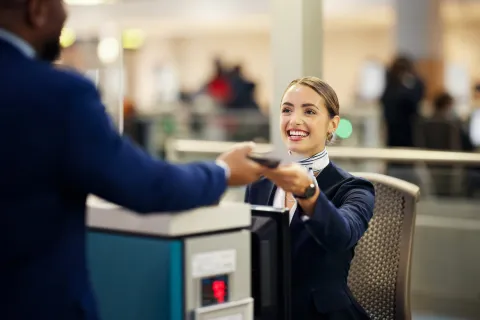
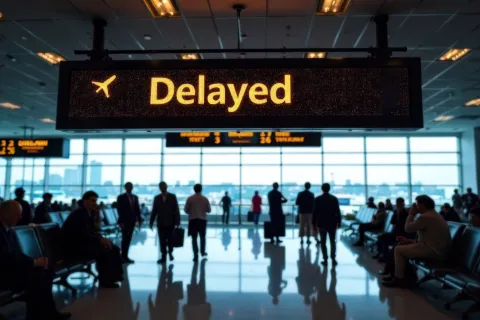
Europe Grinds to Halt With Nearly 2000 Flights Delayed
BERLIN, Germany - Budget travelers face widespread disruptions as France, Norway, Switzerland delay 1,927 flights and cancel 70 more, hitting Eurowings, KLM, and Ryanair.
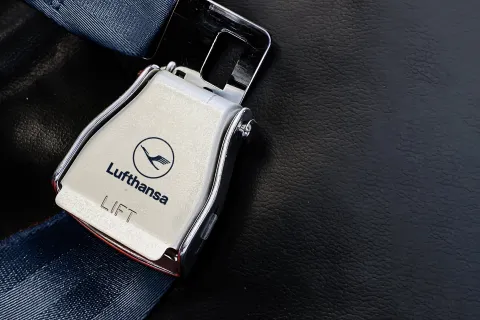
Lufthansa Blocks First Class Awards for Millions
FRANKFURT, Germany - Lufthansa blocks first-class award redemptions for frequent flyers in three major markets, eliminating a prized benefit for millions of travelers who've been banking miles for premium cabin flights.
Iberia Pushes Israel Flights to October Amid Safety Fears
Madrid, Spain - Spanish carrier Iberia extends its Israel suspension through October 24, mirroring British Airways' timeline, while budget operators begin testing the water with gradual service resumptions.

About the Author

Jeff Colhoun
Jeff Colhoun is an acclaimed travel writer, photographer, and filmmaker, whose work is respected both in the United States and internationally.