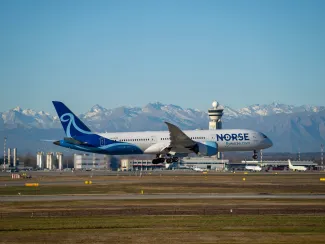
I checked my email on a Tuesday morning in mid-April, scrolling through the usual mix of receipts and newsletters, when a subject line stopped me cold: "Important Update Regarding Your Flight." Norse Atlantic Airways, the budget carrier I'd booked six months earlier for an August trip to Paris, was canceling my flight. Not delaying it. Not changing the time by a few hours. Canceling it entirely. Four months before departure.
The email was polite, almost cheerful, offering a full refund of my $329 fare. What it didn't mention: comparable flights to Paris now cost $847. The charming hotel in the Marais I'd locked in at last year's rates? Non-refundable. The cooking class I'd booked as a birthday surprise? Already paid for, timed to my original arrival date. In the span of reading one email, my carefully planned European summer had become a expensive mess.
Here's the part that made my stomach drop: this wasn't a last-minute operational crisis. It wasn't weather, wasn't a mechanical issue, wasn't even one of those "we oversold the flight" situations you might expect. This was a calculated business decision made months in advance, during the very window when Americans are finalizing their summer European travel. And I'm far from alone.
As we move deeper into April, the critical booking window for summer travel is closing fast. Prices have already climbed from their winter lows. National parks are announcing opening dates. Travelers are committing to plans, paying deposits, coordinating with friends and family. And ultra-low-cost transatlantic carriers are implementing aggressive schedule changes that leave thousands of passengers scrambling to salvage trips that were supposed to be locked in.
If you're finalizing European summer plans right now, especially if you've chased one of those too-good-to-be-true transatlantic fares, you need to understand exactly what you've purchased. Because that $299 ticket to Paris might cost you far more than you ever imagined.
The New Math of Budget Transatlantic Travel
Let me be clear: ultra-low-cost long-haul carriers aren't inherently a scam. Norse Atlantic Airways, PLAY Airlines, and French Bee operate legitimate services that have successfully transported thousands of travelers across the Atlantic. The problem isn't that these airlines exist; it's that many passengers don't understand the fundamentally different risk profile they're accepting when they book.
The economics of budget transatlantic travel are brutal. Unlike the failed experiments of Norwegian Air's long-haul expansion or WOW Air's dramatic 2019 collapse, current budget carriers have refined the model somewhat. They operate point-to-point routes between secondary airports, unbundle every conceivable service, and rely on load factors (percentage of seats filled) that would make legacy carriers nervous. That $329 New York to Paris fare exists because you're flying from Newark to Orly instead of JFK to Charles de Gaulle, because you'll pay $50 for a checked bag and $30 to select a seat, because the flight operates with minimal crew and no connecting passengers to fill empty seats.
But here's the sobering reality: the historical failure rate among long-haul budget carriers over the past decade has been devastating. For every success story, there are collapsed ventures, stranded passengers, and worthless vouchers. Norse Atlantic itself launched in 2022, rising from the ashes of Norwegian's transatlantic retreat, and while it's currently operational, it has shown significant schedule volatility, particularly as it assesses route performance.
Spring 2026 matters because this is when carriers make critical decisions about summer operations. Airlines analyze booking pace, load factors, and yield (revenue per passenger) for flights six to ten months out. When routes underperform projections, budget carriers cut them aggressively. They don't have the luxury of cross-subsidizing weak routes with profitable ones the way hub-and-spoke legacy carriers do. Every route needs to pay for itself, immediately.
According to recent industry data, Norse cut approximately half its US-Europe routes in 2025, slashing overall US flight capacity by roughly 39 to 40 percent for summer operations. All Los Angeles flights were eliminated from the summer schedule. Routes from New York to Berlin, Oslo, and Paris vanished starting in October. Miami to London disappeared. These weren't struggling experimental routes; these were established markets that simply couldn't generate sustainable revenue at budget pricing levels.
What Actually Happens When They Cancel Months Out
So you get the cancellation email four months before departure. What now?
First, understand the critical distinction between airline-initiated cancellations and passenger-initiated cancellations. If you cancel, you're subject to the fare rules you agreed to at booking. Most ultra-low-cost carriers sell non-refundable base fares; you'll get nothing back or at best a future travel credit with restrictions and fees. But when the airline cancels, different rules apply.
For flights departing from the United States, the Department of Transportation has clear requirements. Airlines must provide prompt notification of cancellations or significant schedule changes. They must offer rebooking on the next available flight at no additional cost or provide a full refund. And here's the crucial part: that refund must be in cash (or returned to your original payment method), not a voucher, unless you explicitly accept the voucher.
The DOT defines significant schedule changes as departure or arrival time shifts exceeding three hours for domestic flights or six hours for international flights. Changes to the departure or arrival airport, added connections, downgrades to a lower class of service, or changes to aircraft accessibility for disabled passengers all qualify. If the airline offers an alternative that meets these thresholds and you reject it, you're entitled to a full refund within seven business days for credit card purchases or twenty calendar days for other payment methods.
The catch: you're only entitled to get back what you paid. That's it. No compensation for the fare difference when you rebook. No reimbursement for the non-refundable hotel or the prepaid tour or the rental car you can't cancel without penalty.
Here's where European regulations create a different picture, but only in specific circumstances. If your flight originates in an EU or EEA country, EC 261 passenger rights regulations apply regardless of which airline operates the flight. A Norse flight from London to New York that gets canceled months in advance would entitle you to up to €600 in compensation (approximately $630 to $740) for the disruption, in addition to rebooking or refund options.
But if you're flying from the United States to Europe, EC 261 only applies if the operating carrier is an EU or EEA airline. Norse, being a UK-based carrier operating in the EEA space, would trigger EC 261 rights for US-to-Europe flights it operates. If Delta or United cancels your New York to Paris flight, you're back to DOT rules only with no EU compensation.
Let me walk through the real-world scenario that just happened to me. I booked Norse's Economy Light fare at $329 roundtrip from Newark to Paris Orly. Norse canceled the flight in April for an August departure. Under DOT rules, I get my $329 back. But now, in mid-April, comparable flights for the same August dates cost $847 on legacy carriers. I'm personally out $518 just on the fare difference. Add the $240 non-refundable hotel deposit, the $95 cooking class, and roughly four hours of my time spent rebooking everything, and this "refund" has cost me over $850.
And here's a loophole airlines sometimes exploit: they can avoid the "cancellation" designation by offering wildly inconvenient alternatives. Instead of canceling your nonstop Newark to Paris flight, they might offer to rebook you on a connection through Reykjavik with a 23-hour layover, or change your travel dates by five days. Technically, they've offered an alternative; if you reject it as unreasonable, you get your refund, but they've met their minimum obligation.
Why This Keeps Happening
I spoke with aviation analysts about why ultra-low-cost long-haul carriers struggle with this pattern of aggressive schedule changes, and the structural challenges are significant.
Transatlantic travel is intensely seasonal. July and August flights fill reliably; Americans want to be in Europe during summer vacation, and Europeans travel to the US in peak summer. But shoulder seasons bleed cash. A May or September flight might operate at 60 percent capacity with deeply discounted fares, losing money on every crossing. Legacy carriers can absorb this because they're funneling passengers through hub-and-spoke networks; that half-empty September flight from Paris to JFK connects to dozens of domestic destinations, and the overall network makes money even if individual flights don't.
Budget carriers don't have that luxury. They operate point-to-point service. Every flight needs to cover its direct operating costs: fuel, crew, airport fees, aircraft lease. When fuel prices spiked to $200 per barrel due to Middle East conflicts in 2025, fuel costs consumed over 55 percent of operating expenses on ultra-long-haul routes. Los Angeles to Paris became economically impossible at budget pricing; Norse eliminated all LAX flights entirely.
Fleet utilization compounds the problem. Short-haul budget carriers like Southwest or Ryanair can pivot quickly when a route underperforms. They operate single-aisle aircraft that can be redeployed to different markets within weeks. Wide-body aircraft required for transatlantic service are expensive, less flexible, and harder to optimize. You can't just decide to fly your Boeing 787 from Los Angeles to Paris instead of London without months of planning, airport slot coordination, and regulatory approvals.
The optimization trap is particularly insidious. These carriers rely heavily on sophisticated algorithms to project demand six to ten months into the future based on historical booking patterns, search data, and competitive pricing. When actual bookings fall short of algorithmic projections by even ten or fifteen percent, the route becomes unsustainable. Rather than operate a half-empty August flight that might lose $50,000, the carrier cuts it in April and refunds $329 per passenger. From their perspective, it's a rational business decision.
Competition dynamics have shifted too. After WOW Air collapsed and Norwegian retreated, legacy carriers like Delta, United, and Air France initially faced genuine pressure to lower transatlantic fares. But as budget carrier routes have contracted, legacy airlines have raised prices significantly. When Norse eliminated its Los Angeles to Europe service, legacy carriers increased California to Europe fares by up to 40 percent. There was no competitive pressure to keep prices down, and they capitalized immediately.
The carriers cancel early because the economics favor it overwhelmingly. Better to refund $329 four months out, let the passenger rebook elsewhere, and redeploy that aircraft to a route with better load factors. The passenger absorbs all the cascading costs.
The Rebooking Scramble (And What It Really Costs)
Getting your $329 back sounds reasonable until you start adding up everything else.
It's mid-April 2026. You've just been notified your August flight is canceled. Summer travel is peak season; pricing is at its annual high point. You're not rebooking at the leisurely pace of last November when you snagged that deal; you're rebooking in a market where inventory is tightening and fares reflect peak demand.
Current transatlantic pricing for summer 2026 shows the gap clearly. Budget carriers that still operate routes (like Air Europa or French Bee with connections) offer New York to Paris roundtrips starting around $461 to $470. That's still affordable. But factor in the one-stop routing (often 33-hour total travel time), baggage fees of $50 to $100, and seat selection charges, and your "budget" fare approaches $650. Legacy carriers like Delta or Air France offer nonstop service from JFK to Charles de Gaulle for $577 to $661 roundtrip as of April pricing; that's actually competitive once you add all the budget carrier fees.
But if you booked Norse last November at $329 and need to rebook now in April, you're facing that $577 to $661 range minimum. Your fare difference alone is $248 to $332, and that's if you can find availability at the lower end of current pricing.
Now layer in the hotel situation. Many travelers book non-refundable hotel rates to save money, especially in expensive European cities. That boutique hotel in the Marais you locked in at €140 per night for three nights back in December? Current April rates for the same dates: €220 per night. If you can't get a refund on your original booking, you've lost €420 (about $440). Even if you can cancel with penalty, you're rebooking at €80 per night higher.
Rental cars, if you booked through consolidators months in advance, often carry cancellation fees of $50 to $75. Tour deposits are frequently non-refundable within 60 days; if your cancellation comes in April for August travel, you're likely past that window. I've spoken with travel advisors who've seen clients lose over $3,000 in total trip costs due to a single budget carrier schedule change: the fare difference, hotel penalties, a cooking class deposit in Tuscany, and tickets to a sold-out museum exhibition.
The emotional and time costs aren't trivial either. You've spent hours researching, planning, coordinating with travel companions. Now you're on hold with customer service for 90 minutes, re-researching flight options, contacting hotels to beg for exceptions, explaining to your partner why the trip you promised is falling apart. If you're traveling with a group, the cascading complexity multiplies; everyone needs to adjust, and finding dates and flights that work for multiple people in peak summer is exponentially harder in April than it was in November.
Travel insurance rarely covers this scenario unless you purchased "cancel for any reason" coverage, which typically costs 40 to 50 percent more than standard policies and still only reimburses 50 to 75 percent of prepaid, non-refundable costs. Standard trip cancellation policies cover specific events: illness, death, jury duty, natural disasters. Airline schedule changes? Not usually included.
Smart Strategies for Booking Budget Transatlantic
I'm not here to tell you never to book ultra-low-cost transatlantic carriers. Thousands of travelers fly them successfully every year, save hundreds of dollars, and have perfectly fine experiences. But you need to understand the risk profile and book accordingly.
First, assess whether the savings justify the risk for your specific trip. If you're booking a wedding in France, a cruise departing from Barcelona, or a tour with fixed departure dates, budget carriers are too risky. The potential cost of schedule disruption far exceeds the savings. Pay the extra $300 or $400 for a legacy carrier with better operational reliability and rebooking options.
For flexible leisure travel where you have control over dates and can absorb delays or changes, budget carriers make more sense. If you're visiting friends in London and can shift your trip by a few days without consequence, that $400 savings might be worth the risk.
Here's unconventional advice that runs counter to typical booking wisdom: consider booking closer to departure. I know, I know; conventional wisdom says book international flights three to six months in advance for best pricing. But if carriers are implementing schedule cuts three to six months out, booking only six to eight weeks before travel reduces your exposure to cancellation risk. You're booking after they've made their capacity decisions. The trade-off is higher fares, but sometimes paying $500 for a flight you know will operate is smarter than paying $329 for a flight that might get canceled.
Route selection matters enormously. Established routes with multi-year track records are safer bets than experimental seasonal routes. Norse's New York to London service, for example, has operated more consistently than newer routes to smaller European cities. Before booking, research whether that specific route operated reliably for at least one full season. Use tools like FlightStats or check aviation forums for route history.
If you must book budget carriers far in advance, seriously consider paying for flexible fare types. Norse offers Economy Light, Economy Classic, and Economy Plus. The difference between Light and Classic might be $80 to $100 roundtrip, but Classic includes flexibility to change dates and better rebooking options. That $80 upcharge is dramatically cheaper than eating a $518 fare difference when the airline cancels.
Credit card protections can provide a safety net. Some premium travel credit cards include trip cancellation and interruption insurance when you book the entire trip on the card. The Chase Sapphire Reserve, for example, covers up to $10,000 per trip if your carrier makes significant schedule changes. Read your card benefits guide carefully; coverage varies widely, and you need to understand exactly what triggers protection and what doesn't.
There's an advanced strategy for truly sophisticated travelers, but use it cautiously: book both a budget carrier and a legacy carrier backup, then cancel the more expensive flight within 24 hours if you're confident in the budget option. DOT rules require airlines to allow penalty-free cancellation within 24 hours of booking for flights departing more than seven days out. You could theoretically book Norse at $329 and Delta at $627, hold both for 24 hours while you research Norse's route stability, then cancel one. This only works if you're genuinely undecided and researching; don't abuse it as a free hold system.
What to absolutely avoid: don't book ultra-budget carriers for trips with non-negotiable timing. If you must be in Rome on June 15 for your daughter's destination wedding, don't book a carrier with a track record of schedule volatility to save $300. The risk is asymmetric; you might save $300, but you could lose thousands if things go wrong.
What I'd Tell My Sister Planning Summer Travel Right Now
My sister called me last week asking whether she should book PLAY Airlines from Boston to Reykjavik to Paris for July. Here's what I told her, and it's what I'd tell anyone navigating this landscape in April 2026.
Budget transatlantic carriers aren't evil, but they're fundamentally different products than legacy carrier flights. You're trading a degree of reliability and protection for lower upfront costs. Sometimes that trade makes perfect sense; sometimes it's a terrible idea. It depends entirely on your specific circumstances.
If you're booking right now in April for summer travel in June, July, or August, check the flight's operational track record. Has this exact route and frequency operated consistently for at least one full season? If Norse is advertising Newark to Paris service three times weekly, did that exact schedule run last summer without major cuts? If yes, the risk is lower. If it's a new route or frequency, you're essentially beta-testing their business case.
I've developed a personal rule I call the $400 threshold. If the roundtrip fare difference between a budget carrier and a legacy carrier is under $400, I skip the budget carrier for peak summer travel. The risk-adjusted value isn't there. If Norse is $329 and Delta is $627, that $298 difference isn't enough buffer against potential rebooking costs and hassle. But if Norse is $329 and Delta is $827, that $498 gap might justify the risk if your trip is flexible.
For shoulder season travel in May or September, budget carriers become more attractive. Schedule volatility is lower when demand is steadier; carriers are less likely to cut routes that are consistently profitable year-round. If you're eyeing late May travel to avoid summer crowds, a budget carrier is a safer bet than booking the same carrier for peak July dates.
Always book directly with the carrier, not through online travel agencies. When schedule changes happen, rebooking rights and customer service access are dramatically better if you booked directly. You'll have to deal with the airline eventually anyway; there's no advantage to adding an OTA middleman to the situation.
After you book, set up Google Flights alerts for your route. Monitor fare trends over the next few weeks. If you see widespread availability surging for your travel dates, or if fares drop significantly across multiple carriers, that's a red flag the market is softer than expected. Budget carriers may be considering frequency reductions or cancellations. You can't prevent it, but at least you won't be blindsided.
Consider adopting a "choose your route, not your carrier" philosophy. Instead of fixating on getting to Paris, be open to London, Amsterdam, or Dublin if the flight options are more reliable and the pricing works. European rail and budget airlines make intra-Europe connections easy; sometimes flying into a different city on a stable route beats dealing with schedule volatility to reach your ideal destination.
Above all, read the cancellation email closely if it arrives. Screenshot your itinerary, save all correspondence, and document everything. Airlines have gotten better about proactive refunds under DOT pressure, but you may need to follow up multiple times. Know your rights; the Department of Transportation's Aviation Consumer Protection division handles complaints if airlines don't comply with refund requirements.
The Real Cost of 'Too Good to Be True'
Here's what I've come to understand after my own Norse cancellation and dozens of conversations with travelers who've navigated similar situations: ultra-low-cost long-haul carriers have genuinely democratized European travel. A decade ago, transatlantic flights rarely dipped below $700 roundtrip except during brief fare wars. Now you can realistically fly to Europe for under $400 if you're flexible and careful. That's meaningful. That's real value that enables travel for people who couldn't afford it otherwise.
But the hidden costs are real too, and they're not evenly distributed. Experienced travelers who understand the risks, book strategically, and have flexibility can navigate this landscape successfully. Less experienced travelers who see a $299 fare, assume it's equivalent to a Delta flight except cheaper, and book their dream trip around it are the ones who get hurt when schedule changes hit.
Transparency matters enormously. When you book a budget transatlantic carrier, you should understand that you're accepting meaningfully higher schedule change risk in exchange for lower fares. That's not spelled out clearly enough in the booking process. The fare looks identical to a legacy carrier fare on search engines; the difference only becomes apparent when you dig into the fare rules or experience a disruption.
I don't regret booking Norse for my Paris trip initially. At the time, it made sense: I had flexible dates, the route had operated for months without issues, and I saved $300 that I used for a nicer hotel. What I do regret is not having a backup plan. I should have monitored the route more carefully, should have kept my schedule flexible longer before booking non-refundable hotels, should have understood the total cost of being wrong about the flight's stability.
If you're finalizing summer European plans this month and you've booked a budget transatlantic carrier, take thirty minutes right now to review your situation. Pull up your booking confirmation. Check the airline's recent schedule change history for your route. Look at current rebooking options if your flight gets canceled. Make sure you've booked directly, that you have documentation, that you understand your refund rights. Consider whether the hotels and activities you've prepaid for are actually refundable if timing changes.
This isn't fear-mongering. Thousands of Norse, PLAY, and French Bee flights operate successfully every month. But schedule changes are a known risk with this category of carrier, and April is exactly when carriers make summer capacity decisions. Better to spend half an hour now understanding your exposure than to be blindsided by a cancellation email when you're four months from departure and options have narrowed.
Sometimes the cheapest fare really is expensive in ways you can't see until the cancellation email arrives. And sometimes, paying $400 more for a flight that actually operates is the best deal you can make.
For specific passenger rights information and complaint filing, visit the Department of Transportation Aviation Consumer Protection page. European passengers should consult EC 261 compensation guidelines for flights originating in EU countries. For comprehensive travel insurance comparison, check independent tools that evaluate cancel-for-any-reason coverage options specifically designed for international travel.
More travel news
Europe Grinds to Halt With Nearly 2000 Flights Delayed
BERLIN, Germany - Budget travelers face widespread disruptions as France, Norway, Switzerland delay 1,927 flights and cancel 70 more, hitting Eurowings, KLM, and Ryanair.
Secret Atlas Adds Solo Cabins to Polar Expedition Ship
OSLO, Norway - Secret Atlas has redesigned its flagship polar vessel Freya to offer six dedicated single cabins on a ship that carries just 12 guests, eliminating single supplements for solo Arctic expedition travelers.

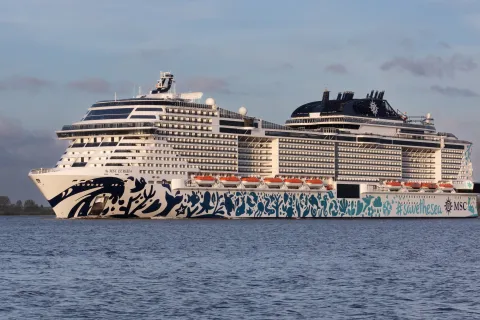
MSC Euribia Launches Norwegian Fjord Cruises from Kiel
KIEL, Germany - MSC Euribia has launched its Northern Europe season with weekly fjords itineraries after completing a Red Sea and Suez Canal transit that kept deployment plans on track.
Texas Travelers Face New Airline Text Scam
TEXAS — A new text message scam targeting airline passengers is circulating across Texas, with experts urging travelers to verify flight status only through official channels.
About the Author

Dana Lockwood
Dana Lockwood is a rising journalist who specializes in budget-friendly solo travel.