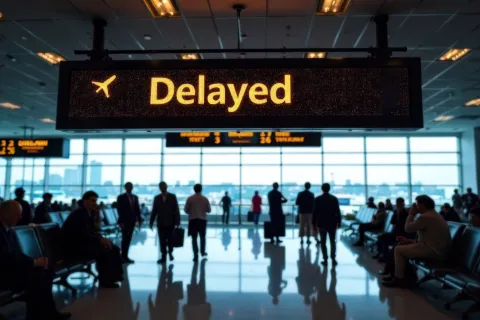
LONDON, United Kingdom - April 2026 will go down as one of the ugliest months in recent aviation history. Three airlines, spanning three continents, collapsed within days of each other, wiping out thousands of flights and stranding over 450,000 passengers in what's become the most dramatic fuel crisis the industry has seen since the early pandemic years.
EcoJet UK entered UK administration on April 14 with £120 million in debts. Royal Air Philippines filed for liquidation two days later with PHP 8 billion (roughly $140 million USD) in liabilities. And Dove Airlines, based in the UAE, slipped into insolvency proceedings on April 13 with an AED 500 million shortfall, about $136 million USD. All three carriers ceased operations entirely, canceling every remaining flight on their schedules.
What Happened to the Fuel Supply
The culprit? A perfect storm of geopolitical chaos, refinery failures, and surging demand that sent jet fuel prices rocketing 45% in just over three months. In January, carriers were paying around $2.10 per gallon. By mid-April, that figure hit $3.05. For low-cost and regional airlines already operating on razor-thin margins, the math simply stopped working.
Tightened sanctions on Russian oil exports following renewed Ukraine-Russia hostilities choked off a major supply artery. Unplanned shutdowns at key U.S. Gulf Coast refineries compounded the problem. Then wildfires tore through Canadian oil sands production regions, further tightening the screws. Global jet fuel inventories plummeted 22% year-over-year to 1.8 million barrels per day by April 15; the lowest level since 2022, according to Daily Star.
Regional supplies took an even harder hit. U.K. jet fuel availability fell 35%, the Philippines saw a 28% drop, and the UAE experienced a 19% decline during the crisis period. Larger carriers like Ryanair and Emirates, with deeper pockets and better hedging strategies, began hoarding alternative supplies, leaving smaller competitors scrambling.
The Damage on the Ground
The human and financial toll was staggering. EcoJet UK alone canceled more than 1,200 flights between April 10 and 18, affecting some 150,000 passengers. Royal Air Philippines scrubbed 950-plus flights, stranding 220,000 travelers. Dove Airlines axed 650 flights, impacting another 80,000 people. In total, 2,800 flights vanished from schedules across the three carriers, and refund claims have already topped $500 million USD.
EcoJet UK's CEO blamed "cartel-like fuel pricing" upon entering administration on April 14. It's a bold accusation, though not an unreasonable one given how quickly larger carriers consolidated control over dwindling fuel supplies. The International Air Transport Association didn't mince words either; IATA warned of "cascading failures" for 20-plus additional carriers on April 15.
Then there's the knock-on economic damage. U.K. tourism losses hit an estimated £250 million. The Philippines saw its GDP forecast dinged by 0.2% in Q2. Dubai hotel occupancy dropped 15% as travelers rerouted or canceled plans entirely.
Government Scrambles and Strategic Releases
Authorities in the U.K., Philippines, and UAE activated emergency protocols, arranging repatriation flights and expediting liquidation proceedings to protect stranded passengers. The U.S. Strategic Petroleum Reserve released 10 million barrels for aviation use on April 17, which nudged prices down about 5%, but persistent shortages kept the crisis simmering.
Fatih Birol, head of the International Energy Agency, stated Europe has as little as six weeks of jet fuel remaining. That's not hyperbole; it's a grim snapshot of how fragile the supply chain has become. Airlines burned through 60% of their 2026 hedging reserves in Q1 alone, leaving them dangerously exposed when prices surged in April.
Where This Leaves Stranded Travelers
If you were booked on one of these carriers, your immediate concern is getting your money back or finding another way home. EcoJet UK passengers with ATOL protection (roughly 80% of bookings) should see refunds processed through the U.K. Civil Aviation Authority, though timelines are anyone's guess right now. EU261 claims have surged 300%, overwhelming regulators and third-party processors.
For Royal Air Philippines and Dove Airlines passengers, government voucher programs and emergency repatriation flights have provided some relief, but the claims process is messy. If you paid with a credit card, start there; chargeback rights are often your fastest route to recovery.
Larger carriers have pounced on the chaos. Ryanair and Emirates picked up discounted slots from the collapsed carriers, gaining between 5% and 7% market share. Insurance premiums surged 25% following the crisis, so expect higher fares and fees as carriers pass those costs along.
Longer term, this crisis exposes how vulnerable low-cost and regional carriers are to fuel shocks. Sustainable Aviation Fuel mandates, which could add 20% to costs by 2030, threaten to trigger similar collapses if supply chains don't stabilize. And for short-haul routes, expect more passengers to migrate to rail and bus services; they've already started.
None of this is comforting if you're stuck in an airport right now, but it's worth knowing the landscape has shifted. Book with larger carriers if you can afford it, layer in trip insurance with fuel disruption clauses, and keep a close eye on your payment protections. April 2026 taught us all a hard lesson about just how fast things can unravel.
More travel news
Lufthansa Blocks First Class Awards for Millions
FRANKFURT, Germany - Lufthansa blocks first-class award redemptions for frequent flyers in three major markets, eliminating a prized benefit for millions of travelers who've been banking miles for premium cabin flights.

Disruptive Flyers Face Industry-Wide Travel Ban
LONDON, United Kingdom - Ministers consider cross-airline ban system to curb persistent disruptive behavior, drawing on India's unified no-fly model.

Airlines cancel 120 UK flights over fuel woes
LONDON, United Kingdom - Rising jet fuel costs forced UK airlines to axe 120 departures in May, with additional cuts hitting June schedules as supply pressures mount.
UK Travelers Face New Greece Entry Rules Starting May 2026
LONDON, United Kingdom - The European Union Entry and Exit System went live May 4, 2026, triggering a UK Foreign Office update for all travelers flying to Greece and its islands.

About the Author

Bob Vidra
Bob Vidra, based in scenic Tahoe, is an esteemed tech editor known for his deep understanding of the dynamic intersection of technology, travel, and the outdoors.